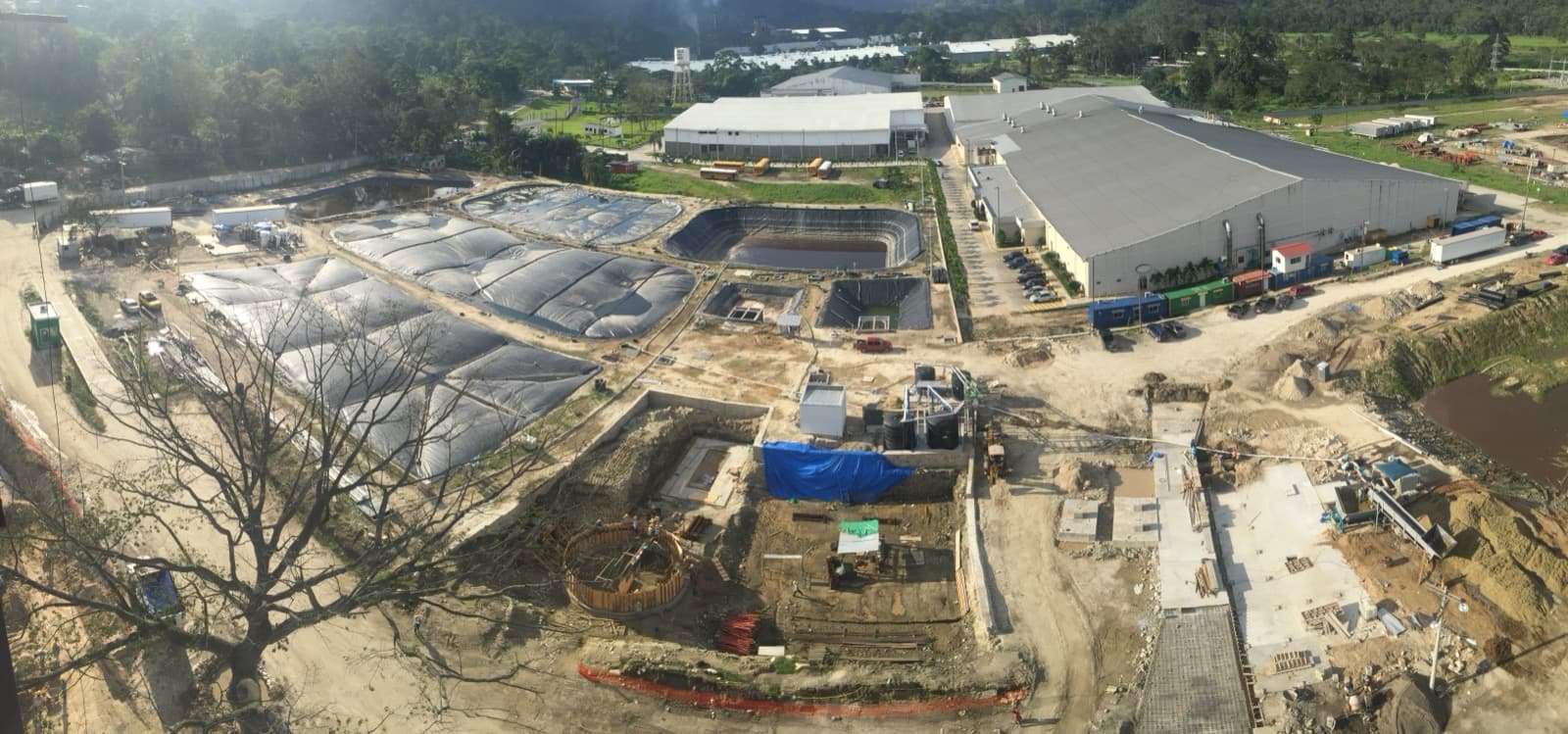
There are projects that test your technical capabilities, and then there are projects that test everything, your engineering, your fabrication, your quality systems, your ability to work inside a security perimeter where a missed specification isn't just a warranty issue but a potential mission risk. EFI's liner installation at NASA's Kennedy Space Center in Florida was that kind of project. It remains one of the clearest demonstrations of what 30 years of geosynthetic experience actually means when the stakes are as high as they get.
The Project Scope
Kennedy Space Center required geosynthetic liner systems for containment applications at the launch complex, infrastructure designed to manage stormwater runoff, fuel handling areas, and secondary containment zones where any failure could contaminate the surrounding environment or compromise launch operations. The specifications called for HDPE geomembrane liners with custom fabrication to fit irregular geometries, penetrations for piping and structural elements, and quality assurance testing that exceeded standard commercial requirements by a significant margin.
Engineering Challenges
Federal facility projects introduce constraints that commercial work doesn't. Every material had to meet Buy American Act requirements and carry full chain-of-custody documentation. The installation site required security clearances for all personnel. Work schedules were dictated by launch windows, when a rocket is being prepared on the pad, adjacent construction activities stop. And the engineering tolerances were tighter than any agricultural or industrial lagoon project, because the containment systems were protecting both environmentally sensitive coastal land and mission-critical infrastructure.
- Custom-fabricated HDPE panels to fit irregular containment geometries
- All materials compliant with Buy American Act and federal procurement standards
- Security clearances required for every crew member on site
- Destructive and non-destructive seam testing on 100% of welds, not the typical sample-based approach
- Work schedules coordinated around active launch operations
- Full documentation package meeting federal quality assurance requirements
Quality Standards That Exceeded the Norm
On a typical commercial liner installation, destructive seam testing is performed on a sample basis, one test per 500 feet of weld is common. At Kennedy Space Center, the testing protocol was far more rigorous. Every weld was tested using non-destructive methods, and destructive testing frequency was increased substantially. EFI's in-house quality assurance program, built over three decades of installations across hundreds of sites, was already structured to accommodate this level of scrutiny. The documentation package alone, material certifications, weld logs, test results, as-built drawings, ran to hundreds of pages.
What It Says About EFI's Capabilities
Any geosynthetic installer can line a rectangular lagoon on flat ground in good weather. The Kennedy Space Center project required something different: the ability to engineer custom solutions for complex geometries, maintain quality systems that satisfy federal auditors, manage a workforce inside a high-security environment, and deliver on a timeline dictated by forces entirely outside the contractor's control. EFI completed the project on specification and on schedule.
For facility owners evaluating liner contractors, the question isn't whether a company can handle your project on a good day, it's whether they have the depth of experience to handle it when conditions are demanding. EFI has installed geosynthetic systems at NASA facilities, mining operations, landfills, agricultural lagoons, and industrial wastewater sites across the country. That range of experience is what allows EFI to show up at your site and solve problems that a less experienced crew would still be figuring out. If it's good enough for NASA, it's good enough for your lagoon.