
Core Capability
Geosynthetic Liner Installation
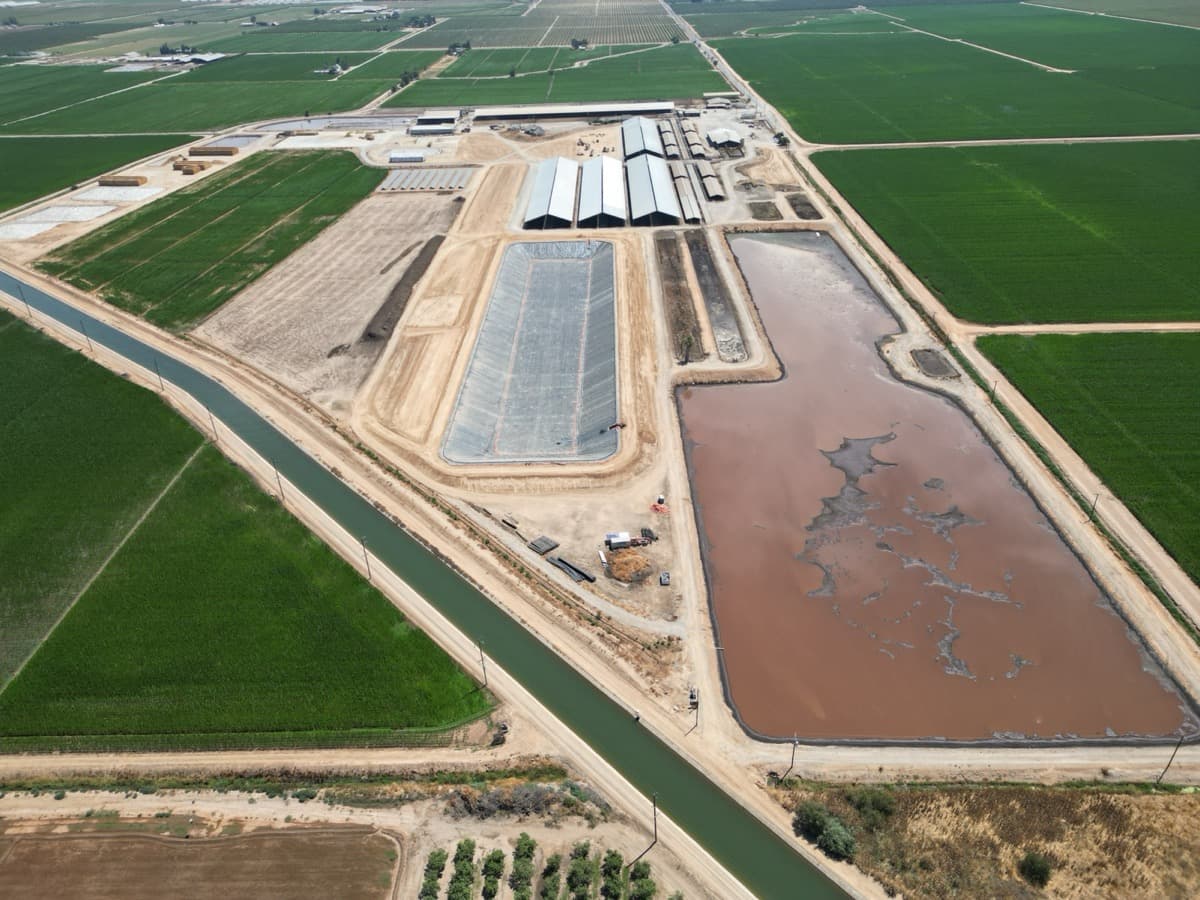
EFI USA fabricates and installs geomembrane liners for wastewater lagoons, landfills, industrial containment, and agricultural ponds across the United States. Based in Gaston, South Carolina, our scope includes material supply, custom fabrication, field installation, and liner repair. Start with the application, then review the installation record and quality-control requirements.
Match the liner contractor to the containment scope
Material selection, fabrication, and field installation are separate decisions. The stored material, subgrade, slopes, penetrations, and permit requirements determine the liner design. Use the project specification to define the work before comparing proposals.
| Application | Scope to define | Service details |
|---|---|---|
| Wastewater and agricultural lagoons | New liner or relining, subgrade preparation, pipe penetrations, and any separate cover scope | Lagoon liner installation |
| Landfill and mining containment | Liner layers, geotextile or GCL components, drainage interfaces, and construction quality assurance | Mining containment systems |
| Tank and secondary containment | Stored-product compatibility, surface preparation, attachments, penetrations, and leak collection where specified | Secondary containment liners |
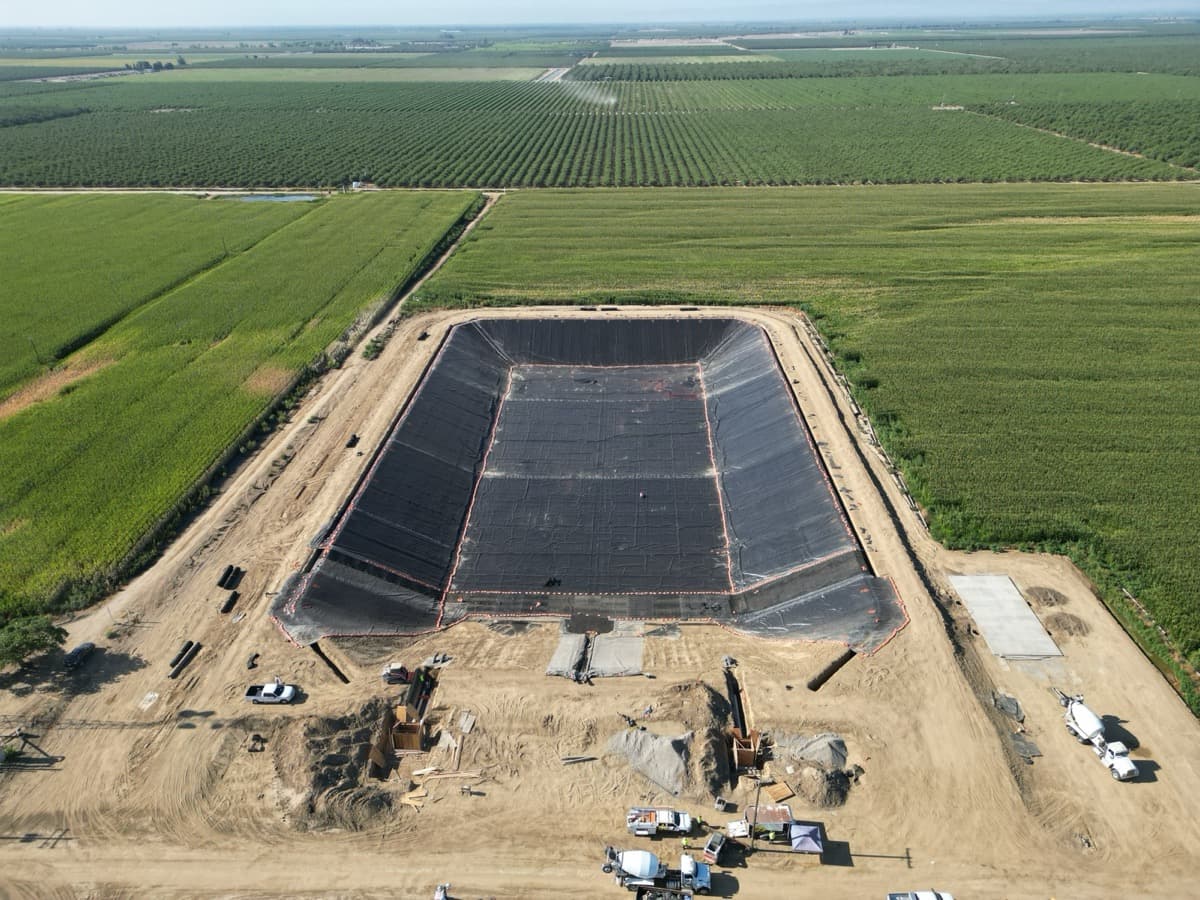
| Ponds and reservoirs | Membrane, thickness, subgrade protection, inlet and outlet details, and water-contact requirements | HDPE pond liners |
For a lined lagoon that also needs gas capture, the digester cover and biogas system are additional scopes. For a reservoir cover, see floating cover installation.
Materials
Liner Material Expertise
Looking for a specific system? See our dedicated pages for HDPE pond liners, lagoon liners, secondary containment liners, and tank liners.
HDPE (High-Density Polyethylene)
30-100 milThe gold standard for chemical resistance and long-term containment. Ideal for landfills, mining operations, and industrial applications where chemical exposure demands maximum impermeability.
- Superior chemical resistance
- UV stabilized formulations
- Highest tensile strength
- 30-100 mil thickness range
LLDPE (Linear Low-Density Polyethylene)
20-80 milSuperior flexibility and elongation make LLDPE the preferred choice for uneven subgrades and applications requiring conformability without sacrificing containment performance.
- Excellent flexibility and elongation
- Conforms to uneven subgrades
- Superior stress crack resistance
- Ideal for settling environments
PVC (Polyvinyl Chloride)
20-60 milHighly conformable liner material that excels in complex geometry applications. PVC liners are factory-fabricated to large panel sizes, reducing field seaming and installation time.
- Excellent conformability
- Large factory-fabricated panels
- Reduced field seaming
- Complex geometry applications
RPP (Reinforced Polypropylene)
30-60 milReinforced scrim construction provides exceptional puncture and tear resistance. The material of choice for biogas covers and applications requiring high dimensional stability.
- Reinforced scrim construction
- High puncture resistance
- Excellent dimensional stability
- Preferred for biogas covers
Quality Assurance
Specify the testing and closeout records
A liner proposal should identify the installation checks, acceptance criteria, and records the owner will receive. The project specification governs test methods and frequency. Our published HDPE installation guide sets out submittals for material qualification, panel layouts, field testing, and installation records.
Review the submittal and closeout checklist in the published HDPE installation guide, section 1.03 (PDF), then confirm the requirements in your project specification. Send the drawings and scope through our project quote form.
Documented liner installations
These dated examples show the material and installation scope recorded in EFI's project histories. They cover landfill, municipal wastewater, and agricultural containment. Use them to identify comparable work, then request references for your own specification and site conditions.
| Project and date | Location | Documented installation |
|---|---|---|
| 40 West Landfill, Cell 12000 | Hagerstown, Maryland | Double layer of 60 mil textured HDPE, a geosynthetic clay liner, and protective geotextile |
| Arlington wastewater treatment plant2006 | Arlington, Tennessee | 328,000 square feet of 60 mil textured HDPE for a sludge storage lagoon |
| Old River Dairy2013 | Bakersfield, California | Two Tier 1 lagoon liner and cover systems using 60 and 80 mil HDPE |
Public records of EFI's work
The California Energy Commission's December 2020 Pixley project report identifies Environmental Fabrics, Inc. as the pond-liner installer at Four J Farms. Read the CEC report, printed page 15 (PDF).
For related cover work, EPA's Patterson Farms profile identifies Environmental Fabrics, Inc. as the digester-cover installer at the New York farm, whose digester began operating in 2005. The profile names RCM, now Martin Construction Resource, as the system designer and developer. Read the EPA Patterson Farms profile.
FAQ
Frequently Asked Questions
Trusted by industry leaders across agriculture, food processing, government, and renewable energy










Need a Liner System?
Get a free site assessment and material recommendation from our engineering team.
Or call us directly: (307) 264-0309
Get a Quote