Loading...
Loading...

Biogas Capture
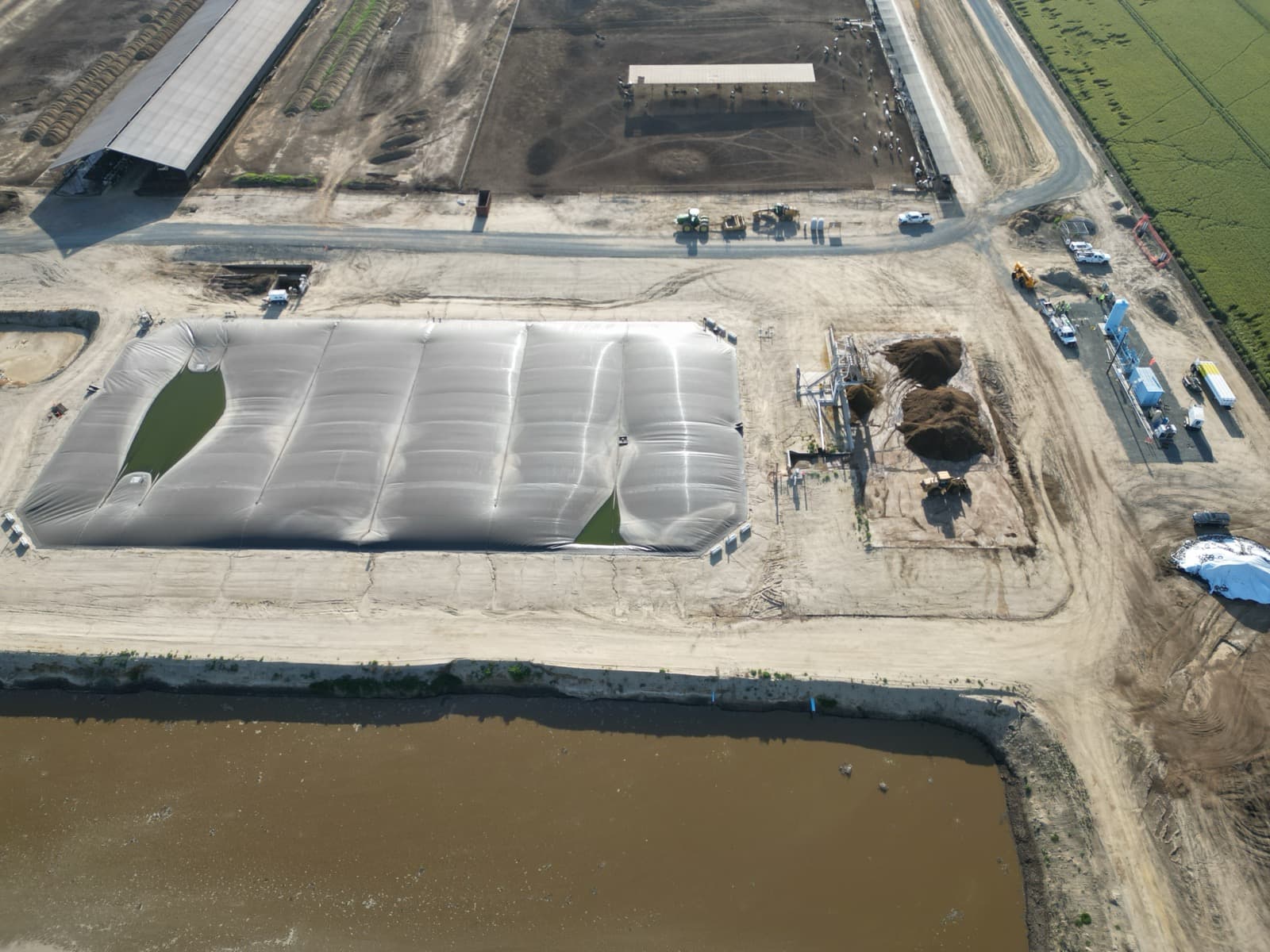
Gas-tight covers that turn a lagoon into a covered lagoon digester and capture biogas, from the most experienced CLD contractor in the country.
Why a Gas-Tight Cover
The cover is what makes a covered lagoon digester work: seal the lagoon, capture the methane, and route it to a flare or energy system. EFI designs the full system, from the liner below to the cover above. See the complete biogas and digester program.
A gas-tight seal traps biogas in the headspace instead of letting methane escape, so it can be destroyed or used for energy.
Sealing the lagoon surface contains the odor compounds that drive neighbor complaints and permit pressure.
Captured biogas can feed a flare, engine, boiler, or RNG system, turning a waste liability into an energy asset.
An operating lagoon can be converted to a digester without building new infrastructure from scratch.
System
A complete cover is more than a membrane. EFI engineers each element for gas-tight performance and long service life. Engineering details are on the anaerobic cover specifications page.
| Component | Function |
|---|---|
| Gas-tight membrane | Impermeable RPP or HDPE cover that seals the lagoon and traps biogas |
| Gas collection header | Piping network that draws biogas from the headspace to the flare or energy system |
| Condensate management | Drains moisture out of the gas path to protect gas quality and flow |
| Rainwater & ballast system | Sheds surface water and tensions the cover against wind and gas pressure |
| Perimeter anchor trench | Seals the cover edge to the bank for a gas-tight perimeter |

Where Digester Covers Work
Pair the cover with EFI O2 injection and H2S removal to clean the biogas for energy use.
FAQ
Trusted by industry leaders across agriculture, food processing, government, and renewable energy


Get a free feasibility assessment and a custom cover and gas-collection design from our engineering team.
Or call us directly: (307) 264-0309
Get a Digester Cover Quote