Loading...

Loading...
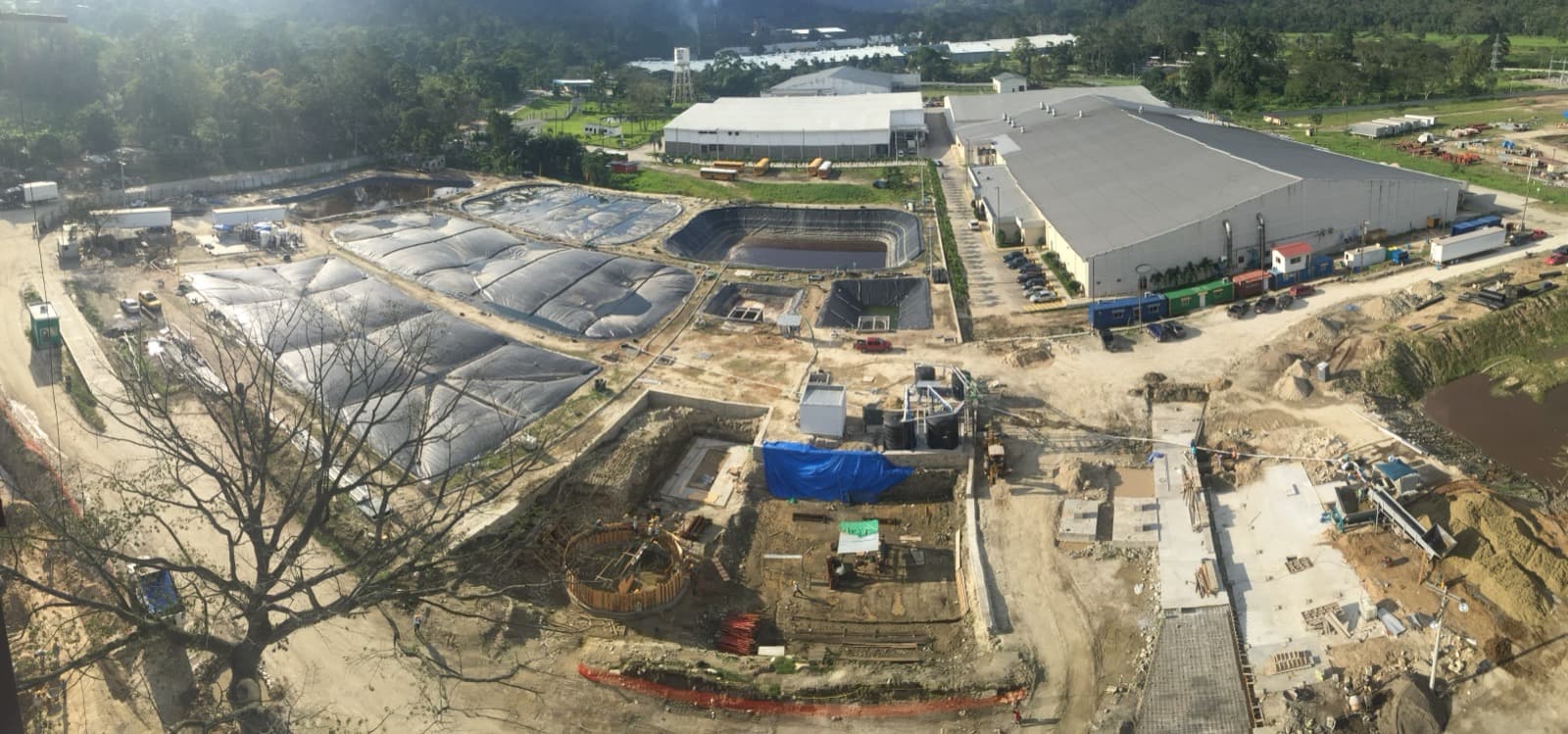
Cover Lifecycle
Assessment, removal, and full replacement of worn-out membrane covers on lagoons and tanks, without draining the basin.
A geomembrane digester cover is engineered for 15 to 25 years. It reaches replacement when the membrane itself has degraded, which shows up as widespread chalking or stress cracking, seam failures in several unrelated places, coupon tests below 50 percent of the original tensile or elongation spec, or gas capture stuck under 70 percent of design. Before that point, almost everything that fails on a covered lagoon is a repair: vents, sump pumps, gas collection piping, anchor trenches.
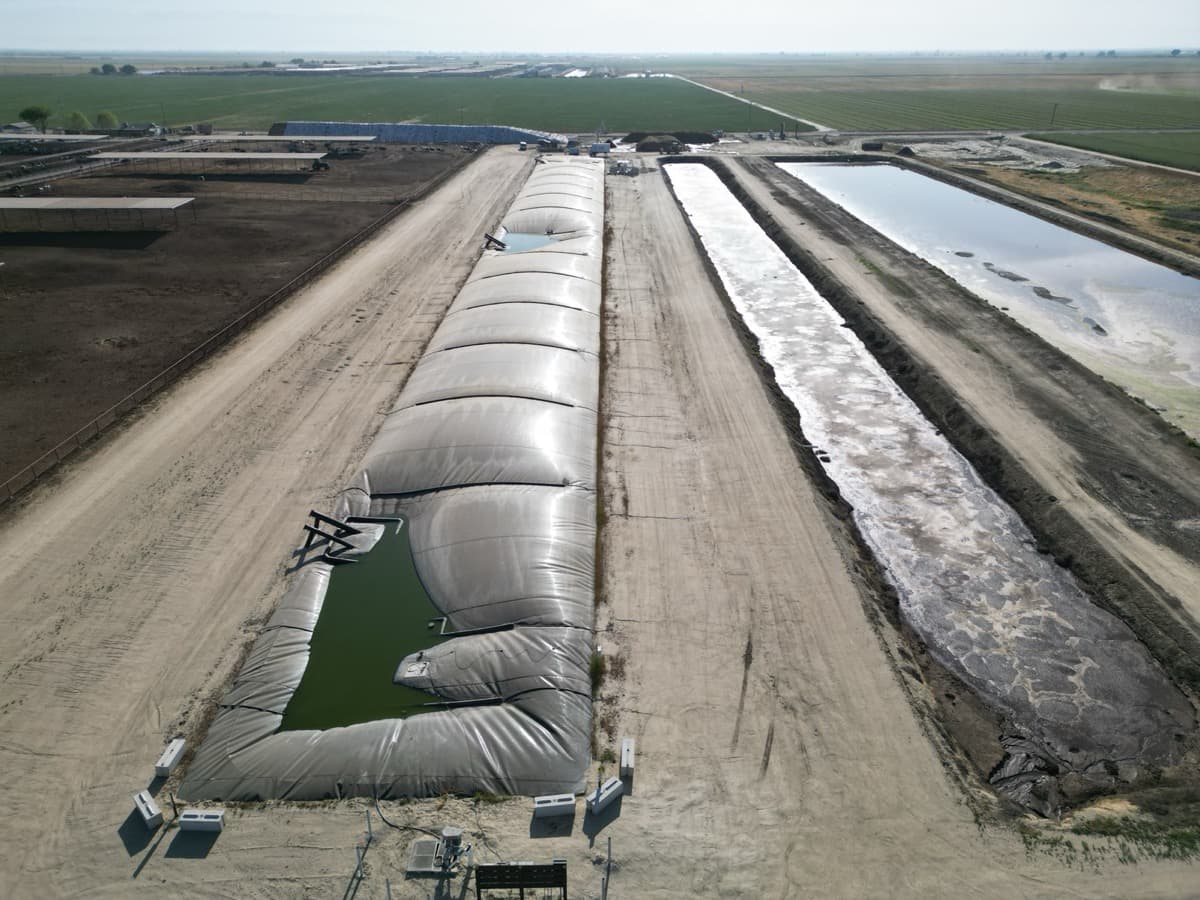
Replacing the cover does not mean draining the lagoon. The work happens from the surface, which is what separates a cover replacement from a liner replacement. EFI has more than 500 covered lagoon systems in the field, processed over 50 repair and replacement proposals in 2025, and tests the membrane before recommending either path.
If your cover is still sound and you are here about a new one, start at anaerobic digester covers instead. For the engineering detail behind either, see the anaerobic cover specifications.
What Fails, and When
Three decades of maintaining covered lagoon systems produces a predictable wear order. Knowing it keeps operators from replacing a cover when a $15,000 component repair would have bought another decade.
| Component | Typical Service | What It Means |
|---|---|---|
| Vents and pressure relief | Years 5 to 10 | Repair. H2S, UV, and thermal cycling take the vent assemblies first. |
| Sumps and rainwater pumps | Years 5 to 12 | Repair. Continuous water, UV, and mechanical cycling wear them out. |
| Gas collection system | Years 8 to 15 | Repair. Piping, condensate drains, and manifold connections develop leaks. |
| Anchor trench | Years 10 to 15 | Repair. Settlement and erosion let the cover edge shift and open leak paths. |
| Cover membrane | Years 15 to 25 | Replace. UV, H2S, and mechanical stress degrade the sheet itself. |
Inspection
These are the findings that move a system from the repair column to the replacement column. Anything short of them usually points at a targeted fix.
A whitish, powdery surface is UV degradation. Once cracking spreads across large areas rather than isolated spots, patches stop holding.
One failed seam is a repair. Failures in several unrelated locations point at systemic weld or material condition, not local stress.
Lab testing of samples cut from the cover for tensile strength and elongation. Below half the original specification, the sheet is past service.
Methane capture measured against the system's design capacity. A sustained shortfall means leaks the cover geometry can no longer close.
Inspection cadence, checklists, and the repair techniques behind each finding are in the cover inspection and maintenance guide.
Process
Visual survey, coupon sampling and lab testing, gas capture efficiency check, and a component-by-component rating of what is worth keeping.
Panels engineered to the current lagoon geometry and fabricated at an EFI facility, with the gas collection layout updated to what the system actually needs today.
Gas collection safely purged, the old membrane cut, folded, and hauled out for disposal as industrial waste, and the anchor trench opened and inspected.
New panels field-welded and seam-tested, ballast and rainwater systems rebuilt, gas collection reconnected, and the flare or energy equipment brought back online.
Two Different Jobs
Search results for cover replacement are dominated by firms that rebuild fixed steel and concrete lids on tanks. That is a mechanical and structural job: demolition, crane picks, confined space entry, and the tank out of service while it happens.
Replacing a membrane cover is a geosynthetics job. Panels are fabricated in a shop to the current basin geometry, field-welded and seam-tested on site, and held down by ballast and an anchor trench. The basin stays full. EFI is a geosynthetics contractor, so this is the side of the work it does, on lagoons and on tanks.
The one case where the basin does come out of service is a liner replacement underneath the cover, which means draining, sludge removal, new liner, and then the cover system back on top. Below-grade HDPE liners are protected from sunlight and typically last 30 to 40 years, so that is a much rarer project than a cover swap. Details on the liner side are on lagoon liners.
Economics
The full decision framework, including how EFI weighs cover condition, capture efficiency, present value, and regulatory status, is in when to repair vs. replace a covered lagoon system.
FAQ
Trusted by industry leaders across agriculture, food processing, government, and renewable energy















A condition assessment tells you whether you are buying a repair or a replacement. Ask for one before you budget either.
Or call us directly: (307) 264-0309
Request a Cover Assessment