
Biogas Treatment
O2 Injection & H2S Removal
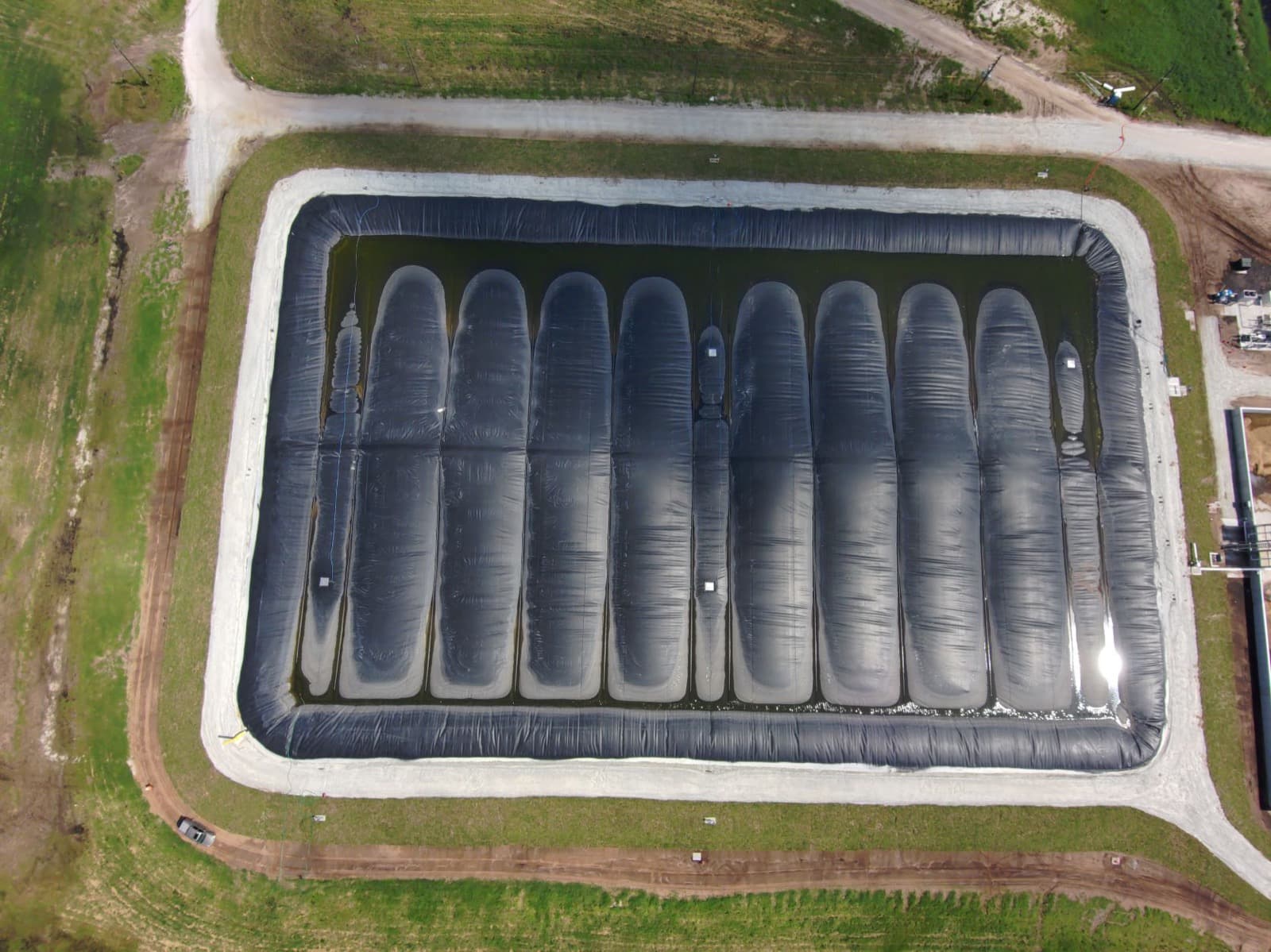
EFI USA engineers, sizes, supplies and installs oxygen and air injection systems for covered anaerobic lagoons and digesters. Controlled micro-aeration reduces the hydrogen sulfide load in biogas before downstream treatment or use. The system is designed around your gas flow, inlet H2S, existing equipment and required outlet quality.
Oxygen and air injection systems for covered lagoons and digesters
EFI's scope combines oxygen or air supply, metering, distribution and integration with the covered lagoon. For a retrofit, the starting point is the existing cover, gas piping, treatment equipment and controls. For a new installation, define those interfaces before selecting equipment.
Biological H2S reduction can lower the sulfur load reaching a scrubber. It does not establish the final quality of gas delivered to an engine, upgrader or pipeline. Keep downstream polishing in the design wherever the end-use specification requires it.
EPA's AgSTAR Operator Guidebook, section 7.9 describes headspace air injection as one biological H2S treatment option and identifies gas flow, H2S concentration and downstream use as selection factors.
Use the project design-input checklist to prepare a scope for EFI engineering.
Biogas treatment and water aeration
The treatment objective determines the equipment. Biogas desulfurization and wastewater aeration have different design inputs and acceptance requirements.
| Biogas H2S reduction (EFI) | Water-column aeration (not EFI) | |
|---|---|---|
| What gets treated | The biogas in the headspace under a gas-tight cover. | The liquid in the lagoon. |
| What it is for | Taking hydrogen sulfide, and the odor and corrosion that come with it, out of captured biogas before a flare, engine or upgrader. | Raising dissolved oxygen so aerobic bacteria can work down BOD and ammonia. |
| What happens to the biogas | Designed to preserve anaerobic digestion while reducing H2S in the gas. | Designed for aerobic wastewater treatment rather than biogas recovery. |
| Where it fits | Covered anaerobic lagoons and digesters at dairies, swine and poultry farms, and meat and food processing plants. | Uncovered aerobic or facultative cells, polishing ponds, and lagoons that are not capturing gas. |
| Equipment | Air or oxygen supply, metering, distribution and project-specific monitoring and controls. | Surface aerators, diffused-air blowers and diffuser grids, mixers. |
| Acceptance basis | Required gas quality at defined sample points and operating conditions. | Wastewater treatment performance and the applicable discharge requirements. |
| Who supplies it | EFI USA, engineered and installed with the cover and gas handling as one scope. | Aeration equipment manufacturers. EFI does not design or sell aeration. |
Call EFI when
The lagoon is covered, or you are ready to cover it, and the problem is H2S: rotten-egg odor, flare or engine corrosion, scrubber media bills, or an upgrader that needs cleaner inlet gas. EFI uses your gas data and site layout to define the treatment scope and engineering requirements.
You need an aeration vendor when
The lagoon is open and staying open, the permit problem is effluent BOD, ammonia or a dissolved oxygen limit, and there is no biogas to keep. That is water-column aeration. EFI can line that cell or cover an anaerobic cell ahead of it, but the aeration design and equipment come from an aeration manufacturer.
How It Works
Micro-Aeration Technology
Micro-aeration supports sulfur-oxidizing bacteria in the covered digester system. The aim is controlled biological H2S reduction. Injection layout, oxygen delivery and monitoring must suit the site and its operating conditions.
Product Line
Define the Package Around the Site
A biogas flow rate, an oxygen-generator rating and an injection-air flow are different specifications. The engineering review connects them to the sulfur load and gas-use requirements.
Prepare for an Engineering Review
Send normal and maximum biogas flow, inlet H2S readings, the required outlet specification, a site layout and available utilities. Identify the existing cover, mixers, gas treatment and control system. EFI can then define equipment and installation responsibilities for the proposal.
Review Design InputsEconomics
Compare the Complete Treatment Train
Existing Treatment
- Measured inlet and outlet H2S
- Media type, quantity and changeout history
- Biogas flow and operating variability
- Spent-media handling and disposal requirements
- Current monitoring and maintenance responsibilities
Proposed Injection and Polishing
- Engineered biological H2S load reduction
- Remaining polishing and media requirements
- Agreed gas-quality acceptance criteria
- Power, maintenance and residuals management
- Defined operator tasks and service scope
Applications
Where O2 Injection Works
Dairy Biogas
Reduce H2S in dairy digester biogas to protect engines, boilers, and RNG upgrading equipment from sulfur corrosion.
Swine Operations
Assess inlet H2S variability and the treatment needed for captured gas from covered swine lagoons.
Food Processing
Define the expected H2S load and operating changes in food processing digester biogas.
RNG Upgrading
Pre-treat biogas before RNG upgrading to protect sensitive membrane and PSA equipment from sulfur contamination.
FAQ
Frequently Asked Questions
Trusted by industry leaders across agriculture, food processing, government, and renewable energy















Plan Your Biogas H₂S Treatment
Bring your gas data, site drawings and outlet requirements. EFI will review the oxygen injection scope and its interfaces with your existing treatment system.
Or call us directly: (307) 264-0309
Get O₂ System Assessment