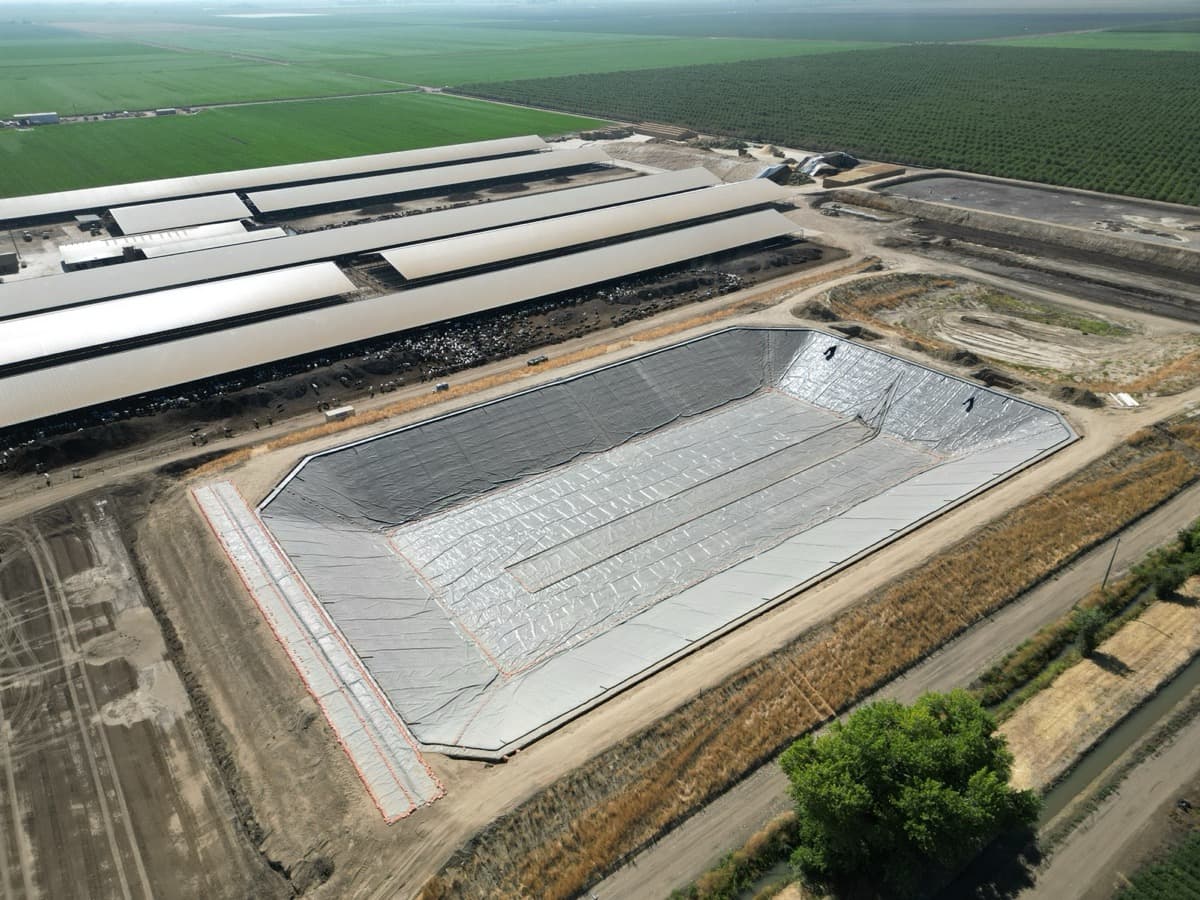
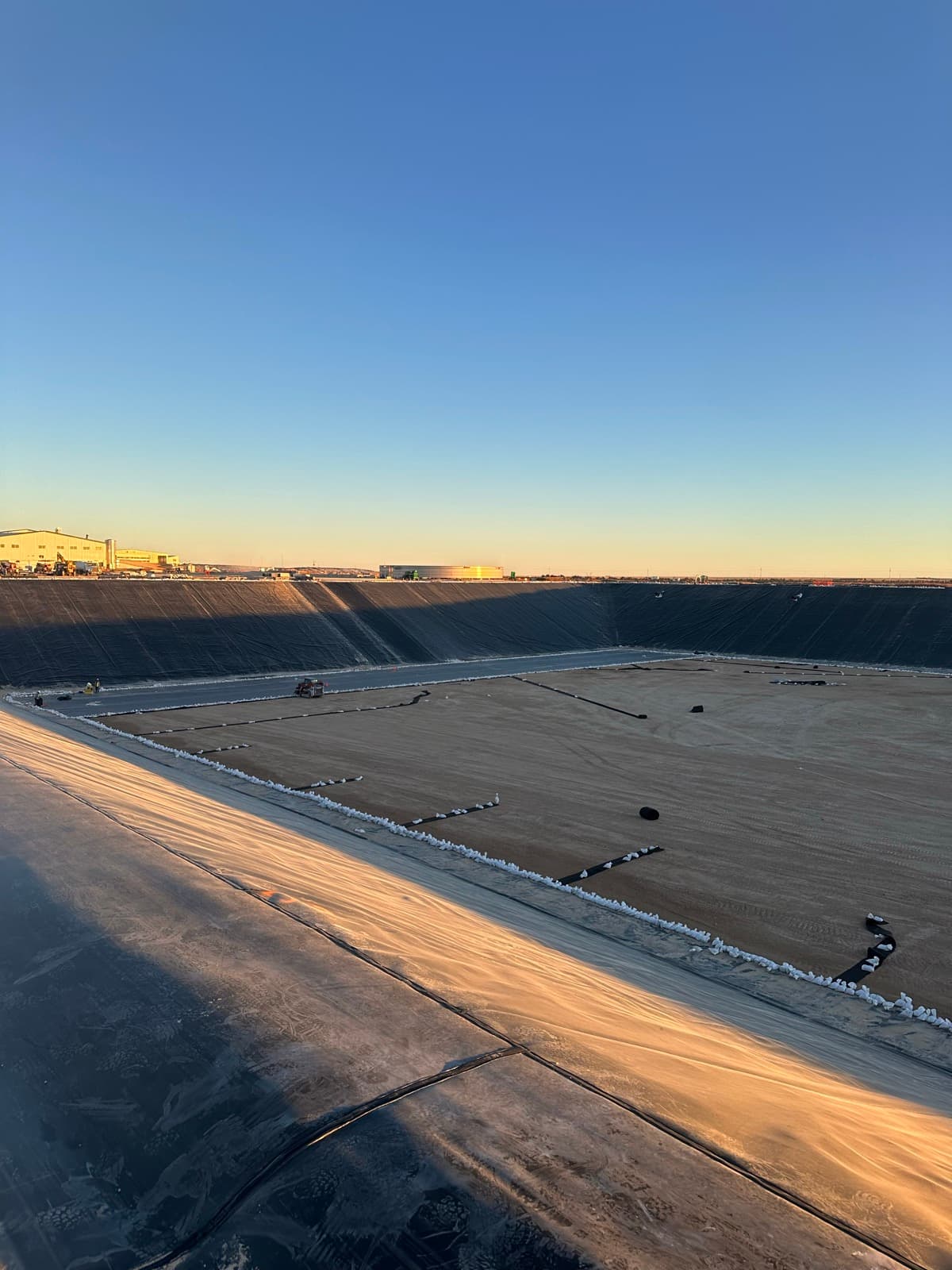
Aerial view of EFI USA lagoon liner installation at a dairy

Agricultural & Municipal Containment

Lagoon Liners

Liner installation and relining for manure, wastewater and industrial lagoons. Plan the membrane, subgrade and construction scope together.

Why EFI

Liner Installation Starts with the Lagoon Design

EFI supplies and installs geosynthetic liner systems. Define the liquid containment requirements, subgrade condition and seam-testing plan before installation. For pond-specific projects, see our HDPE pond liners.

Stops Seepage

A welded geomembrane seals waste and water in the lagoon and keeps nutrients and contaminants out of the soil and groundwater.

Regulatory Compliance

Material, installation and testing requirements coordinated with the project specification and permit.

Built for Waste Chemistry

HDPE and LLDPE selected for resistance to manure, process effluent, and the chemistry of your specific operation.

Inspection and Repair

Plan access, inspection records and repair procedures around the selected material and lagoon operation.

Applications

Lagoons We Line

Agricultural & Manure Lagoons

Dairy, swine, and poultry waste storage and treatment lagoons lined to agricultural-waste containment standards.

Municipal Wastewater Lagoons

Facultative, aerated, and polishing lagoons at municipal treatment facilities, lined and relined to permit requirements.

Industrial Process Lagoons

Process water, cooling, and industrial effluent lagoons with chemical-resistant geomembrane liners.

Fresh Water & Storage Lagoons

Irrigation supply, fire-water, and raw-water storage lagoons that need to hold every gallon.

Food & Beverage Lagoons

Wastewater lagoons for food and beverage processing managing high organic loads and odor in populated areas.

Lagoon Relining

Assessment and rehabilitation of existing lagoons, with substrate preparation and liner replacement defined by site conditions.

Material Selection

Which Liner for Your Lagoon

EFI matches the geomembrane to your lagoon's chemistry, subgrade, and design life. Full material data is on the HDPE specifications page. Required liner thickness and testing differ from state to state; EC Applications keeps a summary of liner requirements by state.

MaterialQuestion for the DesignerInformation to Review
HDPEDoes the design require smooth or textured sheet, and what seam tests are specified?Liquid chemistry, temperature, slope design, sheet thickness and installation quality plan
LLDPEWhat movement must the liner accommodate, and how will the subgrade be prepared?Expected settlement, allowable deformation and the proposed product’s compatibility data
Reinforced geomembraneWhich reinforced product and joining method suit the liquid and connection details?Product data, chemical exposure, panel layout, seam method and penetration details

Quality Assurance

Welded, Tested, and Documented

Agree on the installation quality plan before mobilization. Material records, subgrade acceptance and seam tests make the completed scope reviewable against the project specification.

Destructive Seam Testing
Peel and shear testing at the frequency specified for the project
Non-Destructive Testing
Test methods matched to the seam type and approved quality plan
Experienced Crews
Submit qualifications for the installation supervisor and seam technicians
In-House Fabrication
Panel layout and fabrication plan coordinated with material and site conditions
Full QA Documentation
Complete quality package with test results and as-built drawings
EFI lagoon liner installation and replacement in the field

Lagoon liner work in the project record

These historical installations show two different containment scopes. Their material choices describe those projects; the design for your lagoon needs its own review.

Arlington wastewater lagoon, Tennessee, 2006

EFI installed 328,000 square feet of 60 mil textured HDPE for a sludge-storage lagoon at Arlington Wastewater Treatment Plant. Fisher & Arnold handled process and civil design.

The source describes aerators within the lagoon. Include equipment locations and interfaces in the liner layout supplied for review.

Read the Arlington installation history
Old River Dairy, California, 2013

EFI’s statement of qualifications lists two Tier 1 lagoon liner and cover systems at Old River Dairy in Bakersfield, using 60 and 80 mil HDPE.

A combined project still needs separate liner and cover details. Identify the containment layers, perimeter connections and responsibility for each scope.

Read the Old River scope in EFI’s qualifications

Prepare a lagoon liner scope for review

  • Provide the survey or plan dimensions, slope geometry, operating levels, penetrations and subgrade information.
  • Identify the liquid, temperature range, specified material and any permit or engineering requirements already established.
  • Separate liner installation from dewatering, sludge handling, earthwork and access preparation in the requested scope.
  • Request the quality records listed in the project specification, including material certificates, seam tests and installation drawings. EFI’s reference HDPE installation specification provides a submittal checklist for review.
Start a lagoon liner quote

FAQ

Frequently Asked Questions

A lagoon liner is a geomembrane installed across the floor and slopes to contain manure, wastewater or stored water. EFI installs liner systems for agricultural, municipal and industrial lagoons. The project design determines the membrane, supporting layers and connection details.

Material selection starts with the stored liquid, temperature, subgrade, slopes and permit requirements. The project engineer should specify the polymer, thickness, surface texture and supporting layers. A previous installation can show relevant experience, but its thickness is not a specification for a different lagoon.

EFI provides geosynthetic repairs and rehabilitation. A relining review needs the existing liner condition, leak history, sludge-removal plan, available shutdown window and subgrade information. Those findings determine whether local repairs, a replacement liner or further civil work belongs in the proposal.

Ask for material certificates, installer qualifications, panel and seam layouts, subgrade acceptance, seam-test records, repair records and installation drawings. The governing project specification sets the methods, frequency and acceptance criteria. Permit approval remains with the responsible authority.

Send the location, lagoon dimensions or survey, liquid and temperature data, existing liner details, design drawings and required installation window. Identify who will handle dewatering, sludge removal, earthwork and quality assurance. EFI can then define the proposed liner scope and unresolved design inputs.

Yes. A liner and a gas-tight cover serve different functions within a covered lagoon digester. The liner contains the liquid; the cover and gas collection system contain and collect biogas. The proposal should identify the scope and interfaces for each system.

Trusted by industry leaders across agriculture, food processing, government, and renewable energy

JBS
Perdue Farms
Tyson Foods
Cargill
Sanderson Farms
Smithfield Foods
NASA
US EPA
USDA
Aemetis
SunMaid Growers
Sonoco
CalBio
HDR Engineering
National Beef
Bunge
JBS
Perdue Farms
Tyson Foods
Cargill
Sanderson Farms
Smithfield Foods
NASA
US EPA
USDA
Aemetis
SunMaid Growers
Sonoco
CalBio
HDR Engineering
National Beef
Bunge

Lining or Relining a Lagoon?

Send the lagoon layout, containment requirements and site schedule so our team can define the installation scope.

Call our team at (307) 264-0309

Get a Lagoon Liner Quote