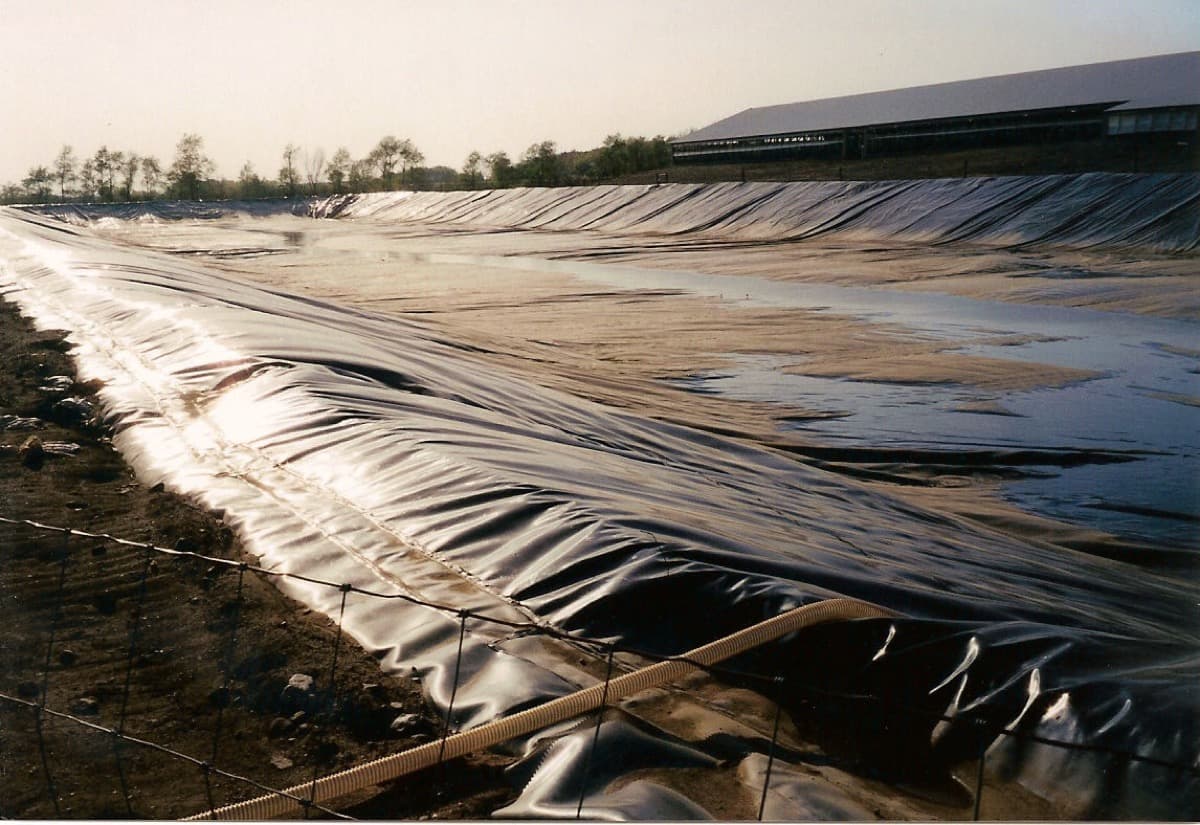
A geosynthetic liner is only as reliable as the quality assurance program that validates its installation. The most expensive HDPE resin, the thickest liner panels, and the most experienced welding crew mean nothing if the seams are not tested, the subgrade is not verified, and the documentation does not prove compliance. Quality assurance is not a checkbox -- it is the difference between a system that performs for decades and one that fails prematurely.
EFI USA's QA program exceeds industry standards at every level. Our protocols were developed over 30+ years and 500+ installations, refined through real-world experience with what works and what causes failures. Every project follows the same rigorous QA process regardless of size.
What Is CQA (Construction Quality Assurance)?
CQA is a systematic program of inspections, tests, and documentation performed during geosynthetic installation to verify that the work meets design specifications and regulatory requirements. CQA is distinct from CQC (construction quality control), which is the installer's internal process. CQA is typically performed by an independent third party -- though on many EFI projects, our QA standards exceed what independent CQA inspectors require.
A comprehensive CQA program covers every phase of installation: material conformance testing upon delivery, subgrade acceptance verification, panel deployment inspection, seam welding verification, destructive and non-destructive testing, penetration and detail work inspection, and final documentation and as-built records.
Destructive Seam Testing: Every 150 Linear Feet
Destructive testing is the gold standard for verifying seam quality. A sample is physically cut from the welded seam and tested in a tensiometer to determine peel strength and shear strength. The sample location is then repaired and retested using non-destructive methods.
Industry practice varies widely on destructive testing frequency. Some installers test every 500 feet. Others test only at the beginning and end of each seam. EFI's standard is every 150 linear feet of weld -- roughly 3x the frequency of many competitors. This frequency catches welding problems early, before they propagate across large areas of seam.
- Peel test: The two liner panels at the seam are pulled apart in a peel configuration. The failure must occur in the parent material (film tear bond), not at the weld interface. Minimum peel strength per ASTM D6392.
- Shear test: The two panels are pulled in opposing directions parallel to the seam. Shear strength must meet or exceed ASTM D6392 requirements for the specific liner thickness and material.
- Pass/fail criteria: If a destructive test fails, the seam is considered defective in both directions from the failed sample until the next passing test. The entire suspect section is cut out, rewelded, and retested.
- Documentation: Every destructive test is logged with location, date, time, operator, machine settings, test results, and pass/fail determination. This record becomes part of the permanent project CQA file.
Non-Destructive Testing Methods
Non-destructive testing is applied to 100% of welded seams -- every linear foot, no exceptions. EFI uses three primary non-destructive methods:
- Air pressure testing: For dual-track hot wedge seams, the air channel between the two weld tracks is pressurized to 25-30 psi and held for a minimum of 5 minutes. Any pressure decay exceeding 2 psi indicates a seam defect. This is the most reliable field test for fusion welds.
- Vacuum box testing: A transparent box is sealed over extrusion weld seams with a soapy water solution applied. A vacuum of 3-5 psi is drawn in the box. Bubbles in the soapy solution indicate leak locations. Every inch of extrusion weld is vacuum box tested.
- Spark testing: A high-voltage, low-amperage electrical current is passed over the seam. A spark discharge at any point indicates a void or thin spot in the weld. Spark testing is used as a supplement to vacuum box testing on critical detail work.
IAGI Certification: Why It Matters
The International Association of Geosynthetic Installers (IAGI) is the industry body that certifies geosynthetic installation technicians. IAGI certification requires demonstrated proficiency in liner installation techniques, welding methods, testing procedures, and safety protocols. Certification must be renewed periodically through continuing education and re-examination.
IAGI certification matters because geosynthetic installation is a skilled trade where technique directly determines system performance. An unqualified crew may produce welds that look acceptable visually but fail under testing. Whatever a welder's credentials, the proof is in the testing: every EFI seam still has to pass destructive testing every 150 feet and non-destructive testing over every linear foot.
Material Conformance Testing
Before installation begins, every roll of liner material delivered to the site is verified against the project specifications. Conformance testing includes thickness measurement at multiple points, density and melt index verification, tensile strength and elongation testing, carbon black content and dispersion analysis, and oxidative induction time (OIT) testing for long-term durability prediction. Any material that does not meet specifications is rejected and replaced before installation proceeds.
Documentation and Record Keeping
A complete CQA documentation package is the permanent record of installation quality. EFI's project documentation includes panel layout drawings showing every panel location and seam, daily installation logs with weather conditions, crew composition, and work completed, all destructive and non-destructive test results with locations mapped, material conformance certificates and test reports, and photographic documentation of key installation phases and test results.
“We test every 150 feet because that is what it takes to be certain. Certainty is not expensive -- liner failure is expensive.”
-- EFI USA Technical Team
Contact EFI for your next geosynthetic installation project. Our rigorous QA program ensures that every installation is documented, tested, and built to last.