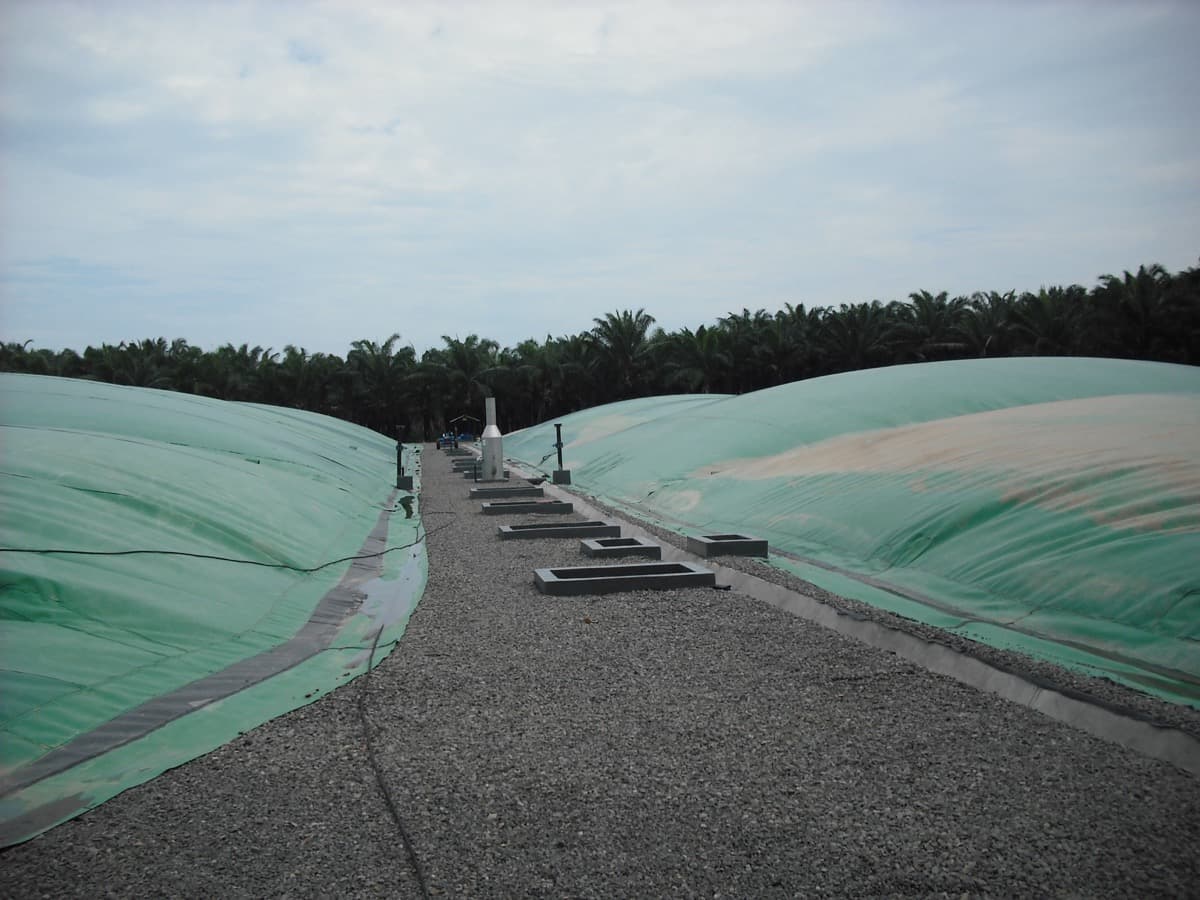
Every containment lagoon, pond, or reservoir has pipes running through the liner. Inlet pipes, outlet pipes, drain lines, monitoring wells, gas extraction ports. Each one creates a hole in an otherwise continuous barrier. And each one is a potential leak path.
In EFI's experience across 500+ liner installations, pipe penetrations account for more leak repairs than any other single cause. Not because the sealing methods are inadequate, but because the details matter more at penetrations than anywhere else in the system. A small error in boot fabrication or welding technique at a 6-inch pipe creates a leak path that would take a 20-foot seam defect to match.
Why Penetrations Fail
Understanding why pipe penetrations leak starts with understanding the forces acting on them. Unlike field seams, which lie flat against the subgrade and experience primarily hydrostatic pressure, penetrations deal with multiple simultaneous stress vectors.
- Differential settlement: The pipe is rigid. The liner and subgrade settle over time. This creates shear stress at the pipe-to-liner junction that a flat seam never experiences.
- Thermal cycling: HDPE liner expands and contracts with temperature changes. The pipe (often PVC, steel, or concrete) has a different thermal expansion coefficient. Over years of daily thermal cycling, this mismatch works the seal.
- Vibration and flow forces: Pipes carrying fluid transmit vibration and hydraulic forces to the penetration point. In biogas systems, pressure fluctuations add cyclic loading.
- UV exposure at grade: Penetrations at or near the lagoon rim are often partially exposed to sunlight, accelerating degradation of the seal material at the most stressed point in the system.
Boot Seal Design and Fabrication
The standard method for sealing pipe penetrations in HDPE liner systems is the prefabricated boot. A boot is a cone-shaped piece of HDPE sheet that fits over the pipe and is welded to both the pipe surface and the surrounding liner panel. Proper boot design requires attention to several factors.
- Material match: The boot should be fabricated from the same resin and thickness as the field liner. Mixing 40 mil boots with 60 mil liner creates differential stress concentrations at the weld.
- Cone geometry: The boot must be sized to allow adequate weld overlap with the field liner (minimum 4 inches) while maintaining a smooth transition up the pipe. Too tight creates stress risers. Too loose creates wrinkles that trap air during welding.
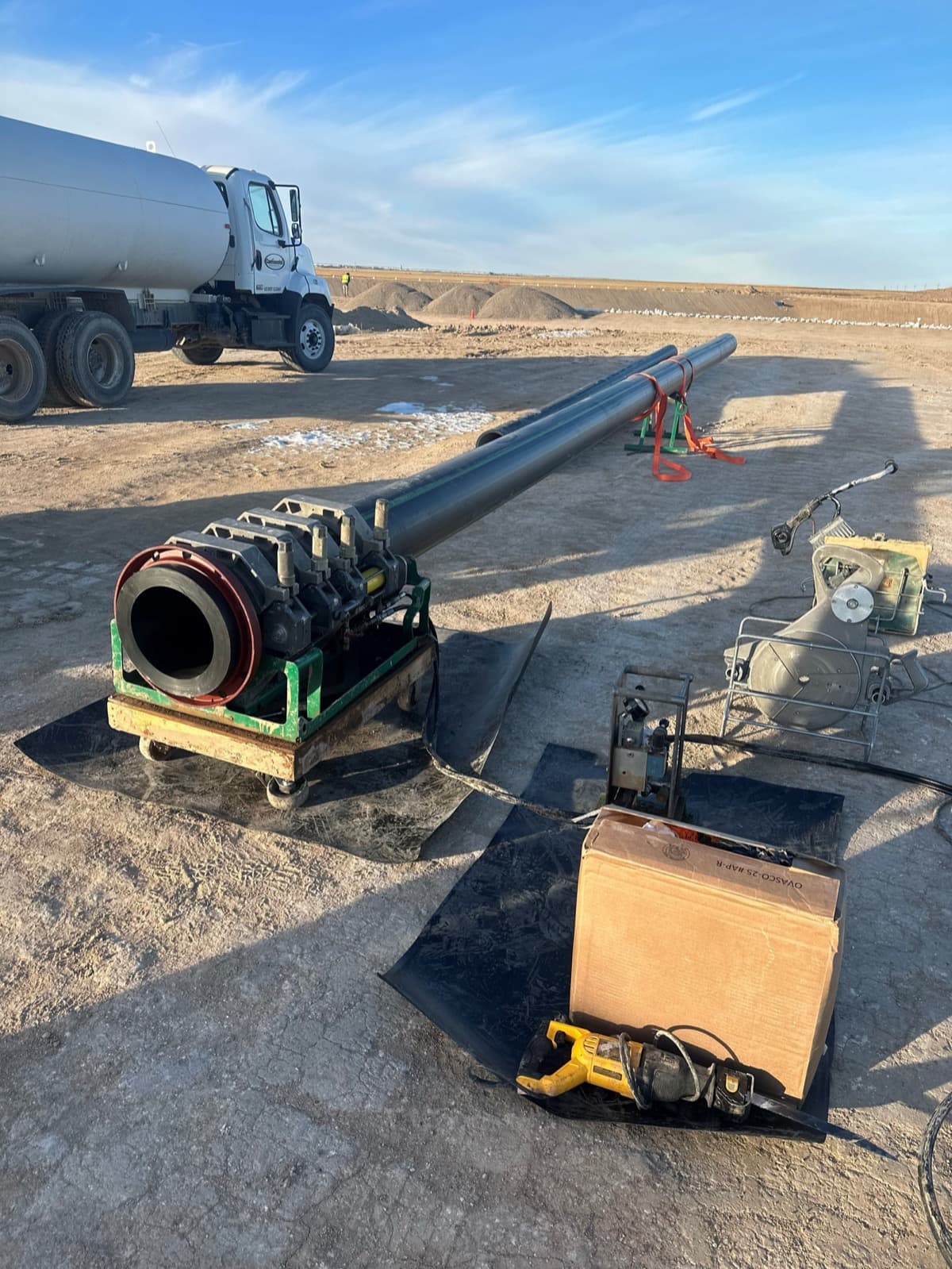
- Pipe preparation: The pipe surface must be clean, dry, and roughened (typically with 36-grit sandpaper or a grinder) to accept the extrusion weld. For HDPE pipe, the surface is ground to expose fresh resin. For steel or concrete pipe, a mechanical clamping system is used instead of direct welding.
- Prefabrication vs. field fabrication: Boots can be prefabricated in a controlled shop environment or fabricated on site. Shop-fabricated boots are more consistent, but field conditions often require custom fitting. EFI prefabricates standard sizes and adjusts on site as needed.
Welding Methods for Penetration Seals
Penetration seals are almost exclusively made with extrusion welding. The hot wedge fusion welder used for field seams cannot navigate the three-dimensional geometry of a boot-to-pipe junction. Extrusion welding deposits a continuous bead of molten HDPE resin that bridges the boot, pipe, and field liner surfaces.
The welding sequence matters. EFI's protocol starts with the boot-to-field-liner weld (the larger, flatter surface), then works up to the boot-to-pipe weld (the more complex geometry). This allows the welder to establish good parameters on the easier weld before tackling the critical pipe seal.
- Surface preparation: All surfaces within 3 inches of the weld path are ground to expose fresh resin. Any oxidized surface layer, dirt, or moisture will contaminate the weld.
- Preheat: In ambient temperatures below 50 degrees F, the boot and surrounding liner are preheated with a hot air gun to ensure proper fusion. Cold welding is the leading cause of penetration seal failure in winter installations.
- Bead profile: The extrusion bead should be uniform in width and height, with no voids, porosity, or undercut. The bead should extend at least 1 inch beyond the boot edge on both sides.
- Multi-pass welding: On pipes 8 inches in diameter and larger, or in high-stress applications, EFI applies a second extrusion pass offset from the first. This creates redundancy at the most critical seal points.
Testing Every Penetration
Every penetration seal on an EFI project is individually tested. No exceptions. The primary test method is vacuum box testing, where a transparent box is sealed over the weld area, soapy solution is applied, and a vacuum is drawn. Any bubbles indicate a leak that must be repaired and retested.
For penetrations that cannot accommodate a vacuum box due to geometry constraints, air lance testing is used. A concentrated stream of compressed air is directed along the weld seam while soapy solution is applied. This method is slower but effective for tight spaces around closely spaced pipes or structural elements.
Special Cases: Non-HDPE Pipes and Retrofit Installations
Not all penetrations involve HDPE pipe through HDPE liner. Steel pipes, concrete structures, PVC risers, and existing infrastructure all require modified sealing approaches.
- Steel and concrete penetrations: These cannot be extrusion welded. Instead, a mechanical clamping system with compression gaskets is used. Stainless steel band clamps with EPDM gaskets provide a durable, adjustable seal that accommodates differential movement.
- PVC pipe: PVC and HDPE are not compatible for fusion welding. A mechanical boot with compression fitting is used, or the PVC pipe is sleeved with an HDPE stub for welding.
- Retrofit installations: When lining an existing lagoon with existing pipes, the penetration locations are fixed. This often requires custom boot geometries and creative approaches to achieve adequate seal area in constrained spaces.
Pipe penetrations are detail work. They take more time per square foot than any other part of a liner installation. But they are also where most leaks start. EFI's approach is straightforward: design the boot correctly, prepare the surfaces thoroughly, weld with proper technique, and test every single one. There are no shortcuts that do not eventually cost more than doing it right.