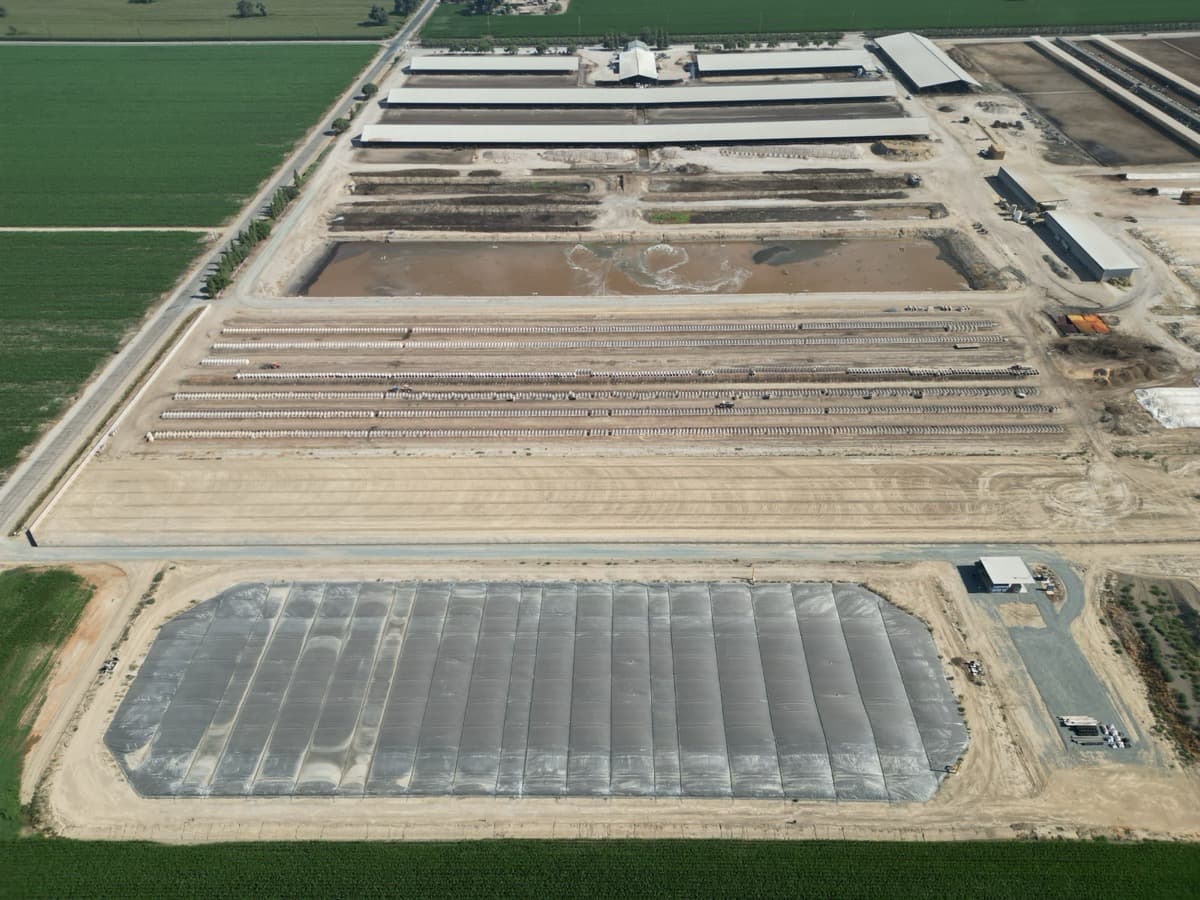
Hydrogen sulfide (H2S) is one of the biggest operational challenges in biogas systems. It corrodes metal components, damages engine internals, creates toxic safety hazards, and produces the unmistakable rotten-egg odor that generates community complaints. In lagoon biogas systems, H2S concentrations can exceed 8,000 parts per million -- levels that will destroy downstream equipment in months without treatment.
Why H2S Is a Problem
- Equipment corrosion: H2S reacts with moisture to form sulfuric acid, which attacks metal piping, flare components, engine blocks, and heat exchangers. Untreated H2S can reduce equipment life from decades to months.
- Safety hazard: H2S is immediately dangerous to life at 100 ppm. At concentrations found in raw lagoon biogas (1,000-8,000+ ppm), exposure can be fatal in minutes. Proper treatment is not optional -- it is a safety requirement.
- Odor complaints: Even at low concentrations (0.5 ppm), H2S produces a strong odor detectable by the human nose. Neighboring residents and regulators have zero tolerance for H2S releases.
- Regulatory compliance: Emissions limits for sulfur compounds are tightening. Untreated H2S in flare exhaust can produce sulfur dioxide (SO2), a criteria air pollutant under the Clean Air Act.
Traditional Approach: Chemical Scrubber Media
The conventional approach to H2S removal uses iron-based chemical scrubber media (iron sponge or iron oxide pellets) in vessel-based systems. Raw biogas passes through the media bed, where H2S reacts with iron to form iron sulfide. When the media is exhausted, it must be replaced.
This approach works, but it is expensive. A typical lagoon biogas system with 3,000+ ppm H2S can consume $35,000 or more per month in scrubber media alone. Over a 20-year system life, that is $8.4 million in media costs -- often exceeding the original system installation cost by multiples. Media replacement also requires shutdowns, creates hazardous waste disposal obligations, and introduces safety risks during handling.
The Alternative: O2 Injection (Micro-Aeration)
Oxygen injection, also called micro-aeration, is a biological H2S removal method that works by introducing a small, controlled amount of air (typically 2-6% by volume) into the biogas headspace beneath the lagoon cover. This oxygen supports sulfur-oxidizing bacteria (Thiobacillus species) that naturally colonize the underside of the cover. These bacteria convert H2S into elemental sulfur, which is harmless and remains on the cover surface.
How O2 Injection Works
- Air is injected into the biogas headspace through a network of small-diameter pipes beneath the cover. The injection rate is precisely controlled based on real-time H2S monitoring.
- Sulfur-oxidizing bacteria (SOB) colonize the moist underside of the geosynthetic cover, forming a biofilm. These bacteria are naturally present in lagoon environments and require no inoculation.
- The bacteria oxidize H2S to elemental sulfur (S0) using the injected oxygen. The reaction is: 2H2S + O2 -> 2S + 2H2O.
- Elemental sulfur accumulates on the cover underside as a yellowish deposit. It is non-toxic, non-corrosive, and does not require disposal.
- Real-time monitoring adjusts air injection rates to maintain optimal H2S reduction while keeping oxygen levels below the lower explosive limit (LEL) of methane.
Results: From 8,000+ ppm to Under 100 ppm
EFI's O2 injection systems routinely reduce H2S from inlet concentrations of 3,000 to 8,000+ ppm down to under 100 ppm at the outlet. In many installations, outlet concentrations are below 50 ppm. This level of treatment is sufficient for most flare and engine applications without any additional scrubbing.
Cost Comparison
The economics of O2 injection versus chemical scrubbing are stark. An O2 injection system has a one-time installation cost of $30K to $80K and annual operating cost of $5K to $15K (primarily electricity for the blower). Compare that to $35K per month ($420K per year) for chemical scrubber media at a high-H2S site. Over 10 years, O2 injection saves $3.5 to $4 million in operating costs at a single site.
“We've replaced $35,000-a-month scrubber media bills with a system that costs less than $1,500 a month to operate. The biology does the work for free.”
-- Griff Walker, EFI USA