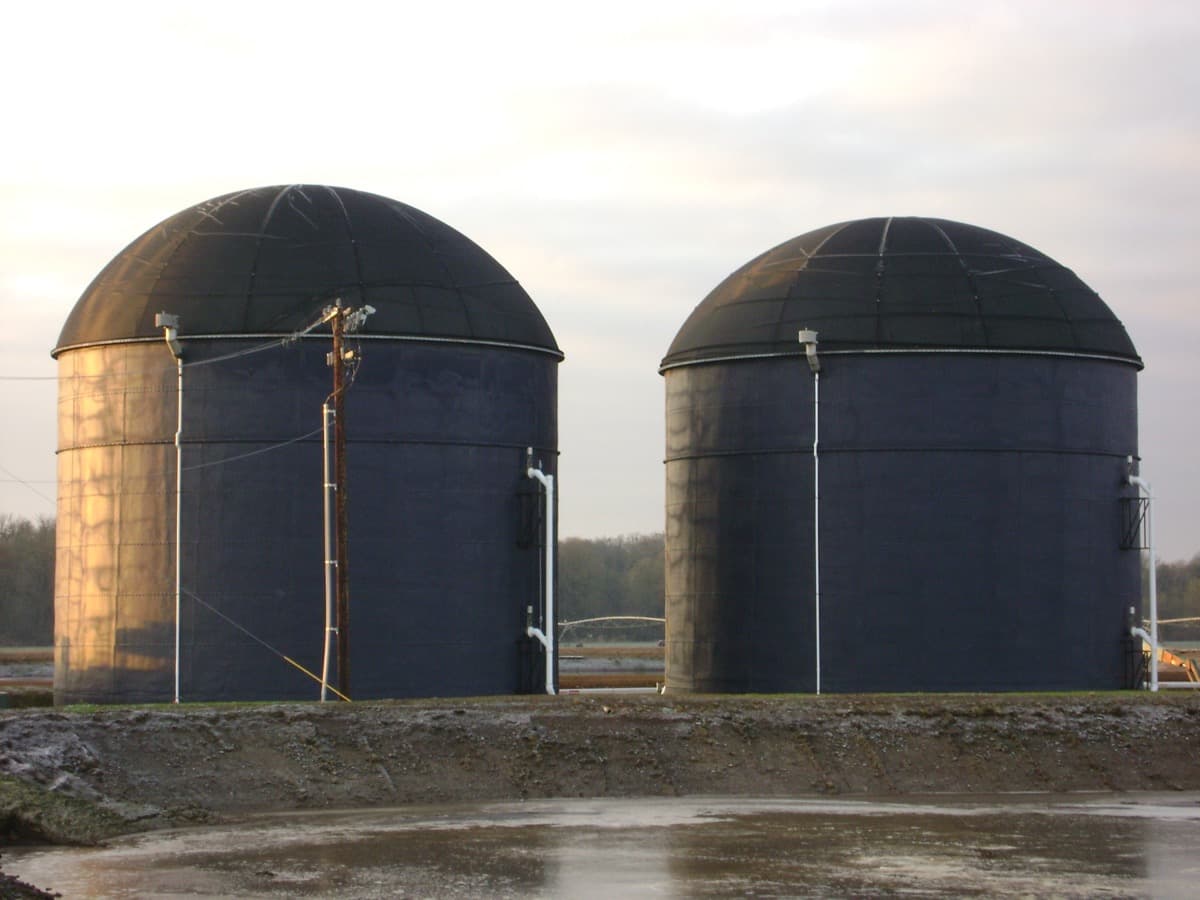
When operators budget for a lagoon liner replacement, they typically focus on the construction cost: materials, labor, mobilization, QA testing. That number is important, and it is the one every contractor quotes. But it is rarely the largest cost the operator will bear during the project.
The larger cost is usually downtime. Taking a lagoon offline means the waste stream that feeds it has to go somewhere else. For a dairy, that might mean daily hauling to a secondary storage facility. For a food processing plant, it could mean reduced production throughput. For a municipal system, it might require temporary bypass pumping at significant daily expense. These costs accumulate every day the lagoon is out of service.
Quantifying Downtime Costs by Sector
Downtime costs vary dramatically by application. The common thread is that they are almost always underestimated in the planning phase.
- Dairy operations: A 2,000-cow dairy generating 25 million gallons per year of wastewater needs somewhere to put roughly 70,000 gallons per day during construction. Hauling costs run $0.03-0.06 per gallon depending on distance. At 70,000 gallons per day, that is $2,100-4,200 per day in hauling alone. A 45-day project means $95,000-190,000 in waste management costs on top of the construction contract.
- Food processing facilities: Plants with continuous wastewater discharge may need to reduce production or install temporary holding capacity. Production curtailment costs vary, but for a mid-size processor, lost production value can run $50,000-100,000 per week. Temporary above-ground storage tanks (frac tanks) cost $1,500-3,000 per tank per month, and a large facility may need 10-20 tanks.
- Municipal wastewater systems: Bypass pumping for a 1 MGD lagoon system runs $5,000-15,000 per day depending on pump capacity and discharge permitting. Regulatory agencies typically require detailed bypass plans and may impose additional monitoring requirements during the bypass period.
- Landfill leachate ponds: Taking a leachate pond offline often requires accelerated leachate hauling to a permitted treatment facility. Hauling and disposal costs for leachate range from $0.05-0.15 per gallon, and volumes can be substantial during wet weather.
Strategies to Minimize Downtime
Downtime is not entirely avoidable during a liner replacement, but it can be managed. EFI has developed several approaches over 32 years of lagoon construction that reduce the offline period and associated costs.
- Phased construction: For multi-cell lagoon systems, cells can be taken offline and relined sequentially rather than simultaneously. This maintains partial treatment capacity throughout the project, though each cell's construction period is longer due to the operational constraints.
- Seasonal timing: Scheduling construction during the lowest-flow season reduces temporary storage requirements. For dairies, this is often late fall. For food processors, it depends on production cycles. Planning 6-12 months ahead allows contractors to schedule optimal windows.
- Pre-construction dewatering: Pumping down the lagoon and managing sludge removal before the liner contractor mobilizes keeps the critical path focused on liner work. EFI has seen projects where sludge removal took longer than the liner installation itself because it was not planned separately.
- Temporary containment: For smaller lagoons, installing a temporary lined containment area adjacent to the work site can be more cost-effective than daily hauling. The temporary system is decommissioned after the primary lagoon is back online.
The Hidden Cost: Deferred Replacement
The irony of high downtime costs is that they often cause operators to defer liner replacement longer than they should. A liner showing signs of degradation, small leaks, or stress cracking gets patched and monitored for another year because the operator cannot afford the downtime for a full replacement.
This deferral creates a different set of costs. Groundwater contamination from a failed liner can trigger regulatory action, remediation requirements, and potential third-party liability. A catastrophic liner failure during peak operations is far more disruptive than a planned replacement during a managed downtime window. And a degraded liner that finally fails during wet season creates emergency conditions that cost multiples of what a planned project would have cost.
Planning the Total Project Budget
When evaluating a lagoon liner replacement, the construction bid is one number in a larger equation. A realistic total project budget should include the construction contract, sludge removal and disposal, temporary waste management during construction, any required permit modifications, production losses or curtailments, and post-construction recommissioning time.
In EFI's experience, the non-construction costs (everything listed above except the construction contract) typically add 30-60% to the total project cost for agricultural and industrial applications. For municipal systems with bypass pumping requirements, the multiplier can be higher.
The best way to manage these costs is to plan early. A site assessment 12-18 months before the target construction date gives operators time to arrange temporary storage, coordinate with regulators, schedule during low-flow periods, and get competitive bids from qualified contractors. EFI provides comprehensive project planning that accounts for the full scope of downtime management, not just the liner installation itself.