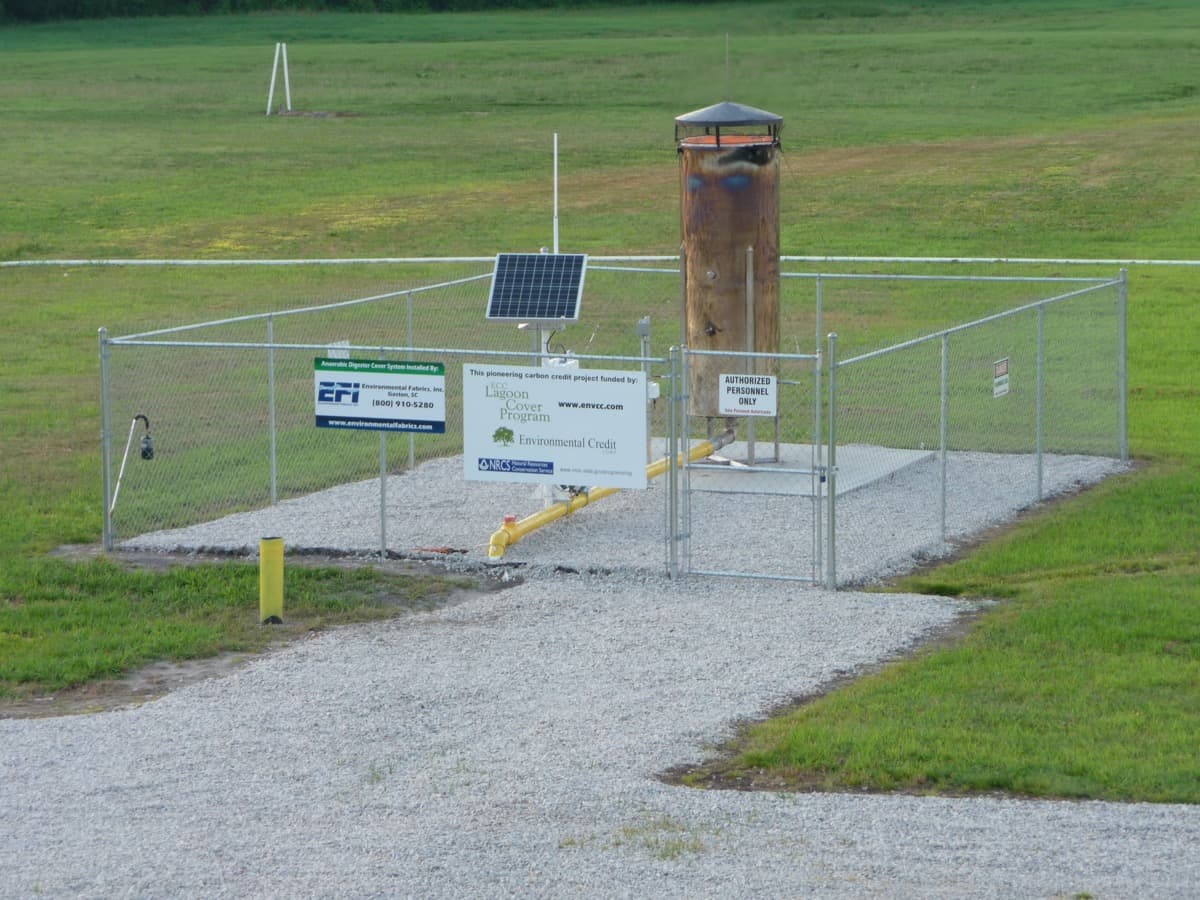
The technology for capturing and destroying methane from agricultural and industrial lagoons is proven. The environmental case is overwhelming. But when a facility owner sits down with their CFO, the conversation almost always stalls at the same question: how do we pay for it? The good news is that the financing landscape for waste-to-energy and methane destruction projects has matured significantly, and there are now multiple paths to get a project built without betting the farm, literally.
Third-Party Ownership: The Zero-Cost Model
Third-party ownership has emerged as the dominant financing structure for methane destruction projects, and for good reason. Under this model, a company like EFI funds 100% of the capital expenditure, engineering, materials, permitting, construction, and commissioning, and retains ownership of the system installed at your facility. The waste generator pays nothing upfront and nothing ongoing. Revenue from carbon credit sales is shared between the system owner and the facility, typically transitioning to a 50/50 split after the investor recovers a target return. This structure eliminates capital risk for the facility owner while aligning incentives for long-term performance.
USDA REAP Grants and Loans
The USDA Rural Energy for America Program (REAP) provides grants covering up to 50% of eligible project costs and loan guarantees up to 75%. For agricultural operations in rural areas, REAP is one of the most attractive funding sources available. A covered lagoon digester with a flare system typically qualifies as a renewable energy project under REAP guidelines. The application process requires an energy audit or assessment, and competition for funds has increased in recent years, but the payoff, a non-dilutive grant that cuts your capital requirement in half, makes the effort worthwhile.
State and Regional Incentives
State-level programs vary dramatically but can meaningfully change project economics. California's LCFS program generates credit values that dwarf most other state incentives, but programs in Oregon, Washington, and several Northeast states offer meaningful support as well. NYSERDA in New York, for example, provides direct grants for anaerobic digester and biogas projects. Many states also offer property tax exemptions for renewable energy equipment, sales tax exemptions on materials, and accelerated depreciation benefits that reduce the effective cost of ownership.
- USDA REAP: grants up to 50% of project costs, loan guarantees up to 75%
- California LCFS: highest carbon credit value in North America
- NYSERDA and state energy programs: direct grants for biogas and digester projects
- Property and sales tax exemptions: available in most states for renewable energy equipment
- Federal ITC and PTC: available for qualifying biogas-to-energy systems
Carbon Credit Pre-Sales
For projects that plan to generate verified carbon credits through methane destruction, pre-selling future credits can provide upfront capital or bridge financing. Corporate buyers with net-zero commitments are increasingly willing to enter multi-year offtake agreements at fixed or floor prices. These forward contracts give the project developer revenue certainty and can be used to secure debt financing from lenders who want to see contracted cash flows. The discount on pre-sold credits versus spot prices typically ranges from 10% to 25%, but the certainty of cash flow often justifies the spread.
Project Finance Structures
Larger waste-to-energy projects, particularly RNG facilities with $5 million to $15 million in capital requirements, often use non-recourse project finance. Under this structure, lenders look to the project's cash flows and assets for repayment rather than the sponsor's balance sheet. This requires detailed financial modeling, contracted revenue streams (from credit sales, gas offtake, or tipping fees), and independent engineering assessments. Project finance is powerful but adds complexity, legal costs, and timeline, typically six to twelve months from engagement to financial close.
Choosing the Right Structure
The right financing approach depends on the project size, the facility owner's appetite for risk and ownership, and how quickly you need to move. For most agricultural and mid-size industrial operations, third-party ownership offers the fastest path to installation with zero financial risk. For larger facilities or those with strong balance sheets and a desire to own the asset, stacking USDA REAP grants with state incentives and carbon credit pre-sales can deliver compelling returns. The worst option is doing nothing, methane regulations are tightening, and the carbon credit market rewards early movers.