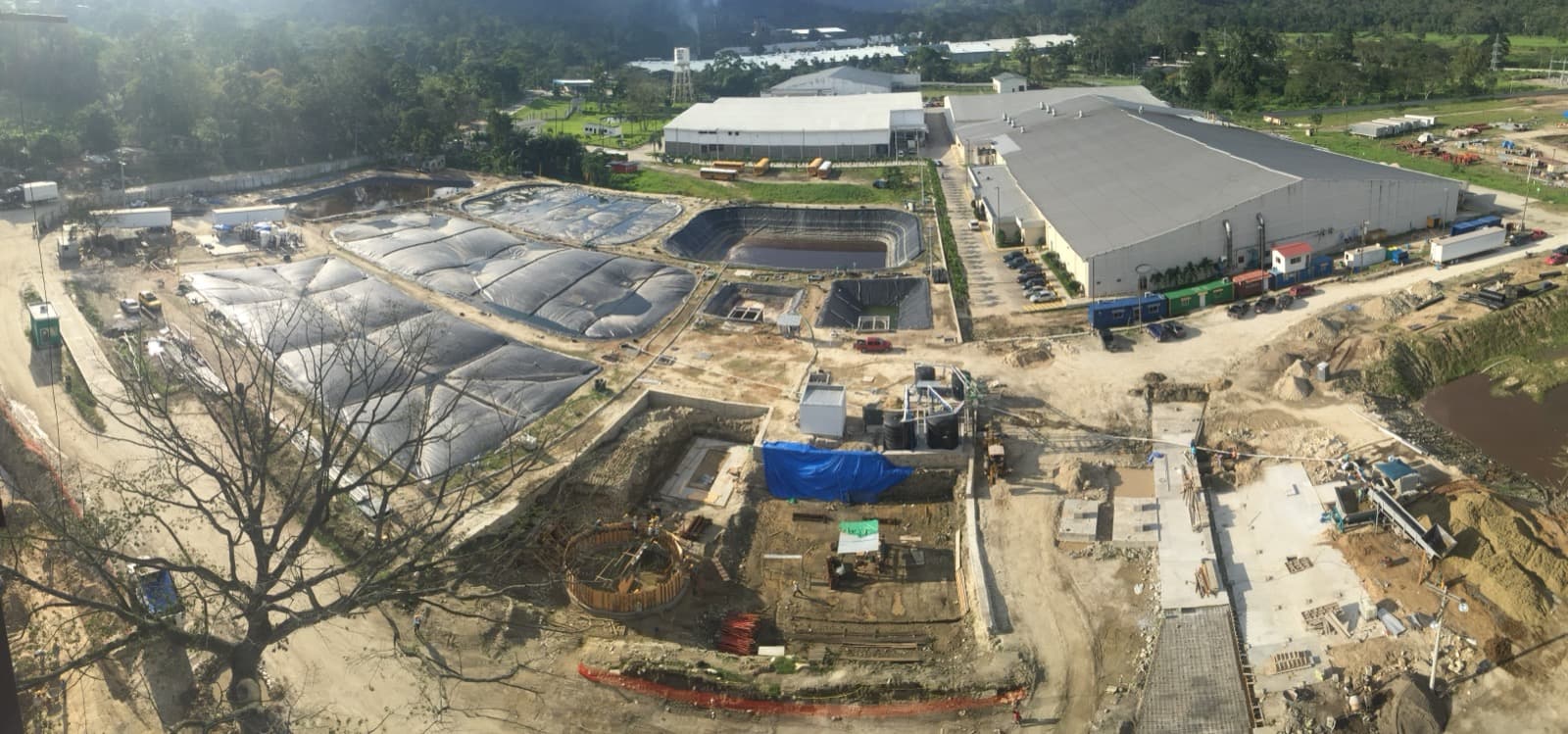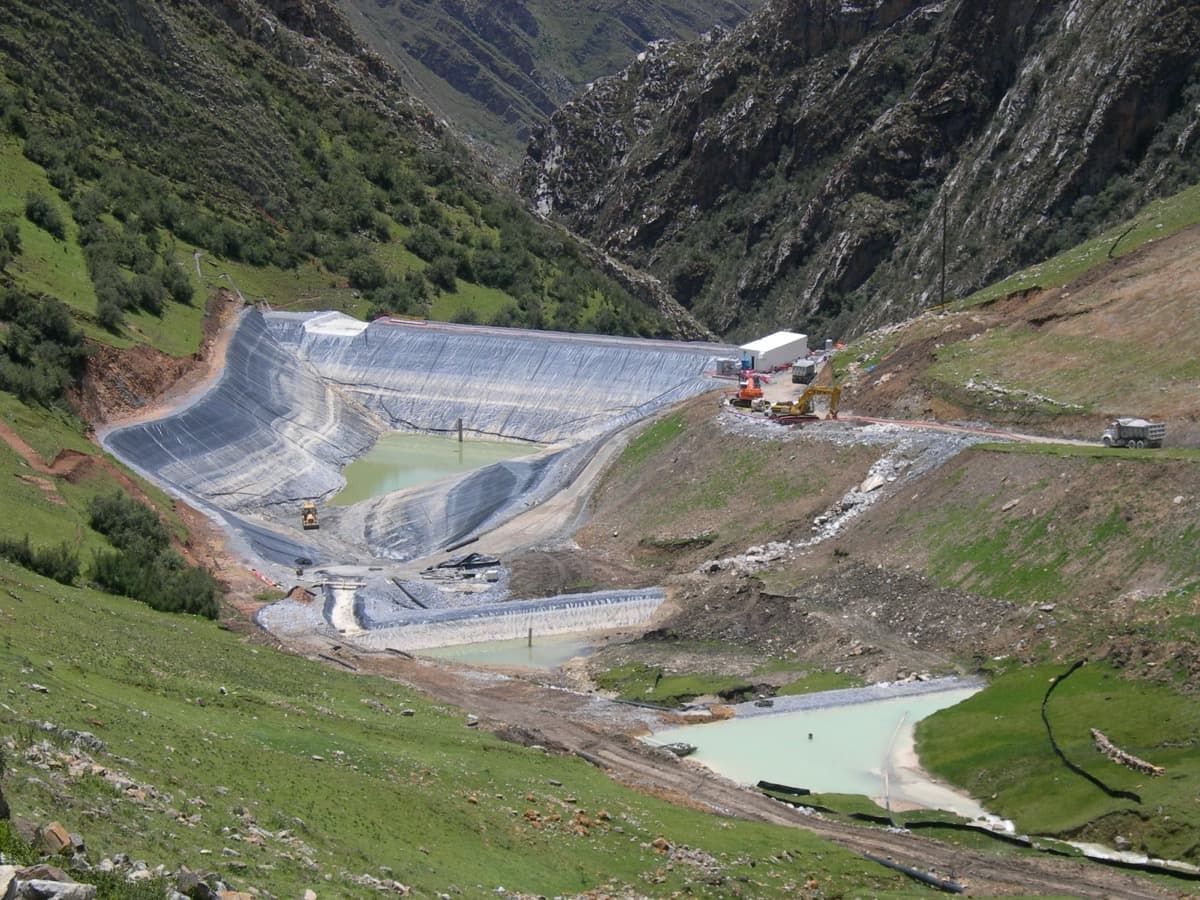
Mining operations generate some of the most challenging containment requirements of any industry. Heap leach pads hold millions of tons of ore in contact with acidic or alkaline leach solutions for months at a time. Tailings storage facilities (TSFs) impound billions of gallons of process water and fine-grained waste material for the life of the mine and beyond. Process solution ponds contain concentrated chemical solutions that would devastate surrounding ecosystems if released. In every case, a geosynthetic liner system is the primary barrier between the mining operation and the environment.
EFI USA has been providing geosynthetic liner solutions to the mining industry since 1993. Our experience spans copper, gold, silver, uranium, lithium, and rare earth operations across the western United States and internationally. This guide covers the principal mining containment applications, the liner systems used in each, and the design and installation considerations unique to mining.
Heap Leach Pad Liner Systems
Heap leach pads are engineered surfaces on which crushed ore is stacked and irrigated with leach solution -- typically dilute sulfuric acid for copper or cyanide solution for gold. The solution percolates through the ore, dissolving target metals, and is collected by a drainage system beneath the ore pile. The liner system must contain this pregnant leach solution (PLS) over the entire life of the heap, which can span 10-20 years of active operation plus closure and post-closure monitoring.
- Primary liner: 60-80 mil HDPE is standard for most heap leach applications. LLDPE may be specified for pads that require greater flexibility to accommodate ore settlement.
- Leak detection layer: A drainage geocomposite or granular drainage layer between the primary and secondary liners allows detection and collection of any leakage through the primary liner.
- Secondary liner: A second geomembrane layer (typically 60 mil HDPE) provides backup containment. Double-liner systems are required by most state mining regulations for new heap leach facilities.
- Overliner drainage: A geocomposite drain or gravel drainage layer above the primary liner collects PLS and routes it to collection sumps. This layer also protects the liner from puncture by coarse ore.
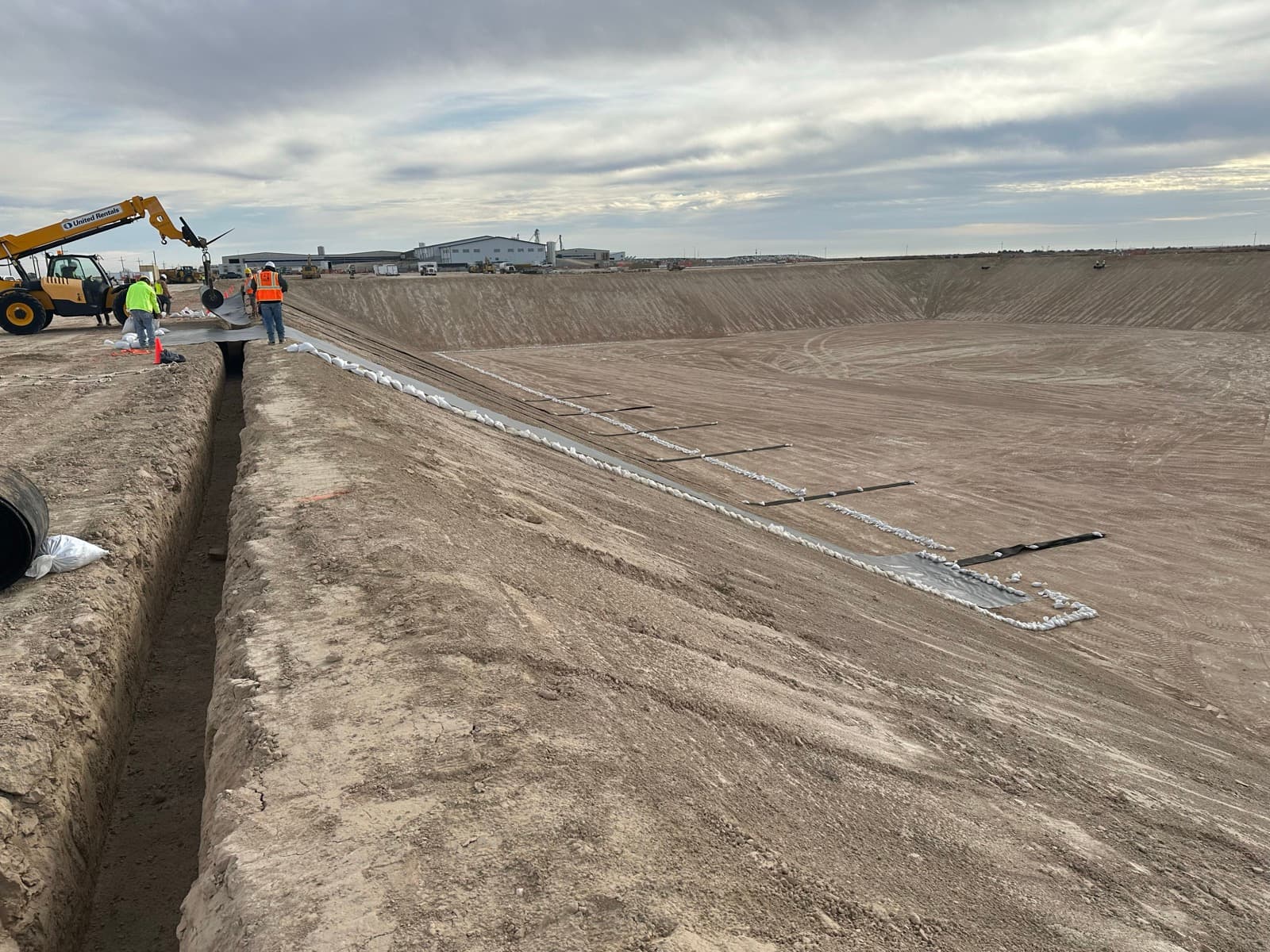
- Subgrade preparation: The foundation must be smooth, compacted, and free of sharp objects. For large pads (100+ acres), earthwork volumes can be enormous.
Tailings Storage Facility (TSF) Liners
Tailings storage facilities impound the fine-grained waste material (tailings) remaining after ore processing. TSFs can cover hundreds of acres and contain billions of gallons of water and tailings slurry. The containment requirements are driven by both the chemical nature of the tailings (which may be acidic, alkaline, or contain dissolved metals) and the physical stability of the impoundment.
TSF liner design must account for the long settlement period of fine tailings, which generates sustained hydrostatic pressure on the liner system. The liner must also accommodate the gradual increase in height as the dam is raised over the life of the mine. In recent years, high-profile TSF failures worldwide have led to significantly increased regulatory scrutiny and design requirements for tailings containment.
- Liner thickness: 60-80 mil HDPE for most applications. 100 mil HDPE may be specified for facilities with high hydrostatic head or aggressive chemical conditions.
- Seam density: TSF liners typically have higher seam density than heap leach liners due to irregular impoundment geometry. All seams must be tested to the same standard regardless of location.
- Dam interface: The liner must be integrated with the dam structure, typically extending up the dam face and anchored at the crest. This interface is one of the most critical details in TSF design.
- Closure design: TSF liners must be designed for permanent containment. Unlike heap leach pads that are eventually closed and reclaimed, TSF containment may be required in perpetuity.
Process Solution Ponds
Mining operations use various process solution ponds for collection, storage, and management of leach solutions, raffinate, and process water. These ponds range from relatively small (less than an acre) pregnant leach solution ponds to large (10+ acre) stormwater and event ponds. The common thread is that they contain solutions that must not be released to the environment.
Process ponds typically use the same double-liner systems as heap leach pads, with the addition of more robust leak detection and recovery systems. Ponds that hold highly concentrated solutions (such as barren cyanide solutions) may use additional protective measures including concrete or shotcrete overlays and chemical-resistant liner formulations.
Regulatory Requirements
- Federal: EPA regulations under RCRA (Resource Conservation and Recovery Act) establish minimum containment standards for mining waste management. NEPA (National Environmental Policy Act) requires environmental impact assessment for mining operations on federal land.
- State: Most mining states (Nevada, Arizona, Utah, Montana, etc.) have mining-specific liner regulations that equal or exceed federal standards. Nevada's Bureau of Mining Regulation and Reclamation requires double-lined systems with leak detection for all new heap leach facilities.
- Financial assurance: Operators must post financial assurance (bonds) sufficient to cover closure and post-closure care of all lined facilities. This requirement drives design decisions toward robust, long-lived liner systems.
- Monitoring: Groundwater monitoring wells downgradient of all lined facilities are typically required. Any detection of constituents of concern triggers investigation and potential corrective action.
Installation Challenges Unique to Mining
Mining liner installations present unique challenges compared to agricultural or municipal projects. Pad sizes can exceed 100 acres, requiring coordination of multiple welding crews working simultaneously. Elevations of 5,000-8,000 feet are common, with associated UV intensity, temperature extremes, and high winds. Remote locations mean that all equipment, materials, and personnel must be mobilized to the site -- there is no running to the supply house for a forgotten part.
EFI USA's mining division has the equipment fleet and experienced crews to handle these challenges. We have installed lined facilities at elevations exceeding 7,000 feet, in temperatures ranging from below zero to over 110 degrees Fahrenheit, and at sites accessible only by unpaved roads. Contact us to discuss your mining containment project.