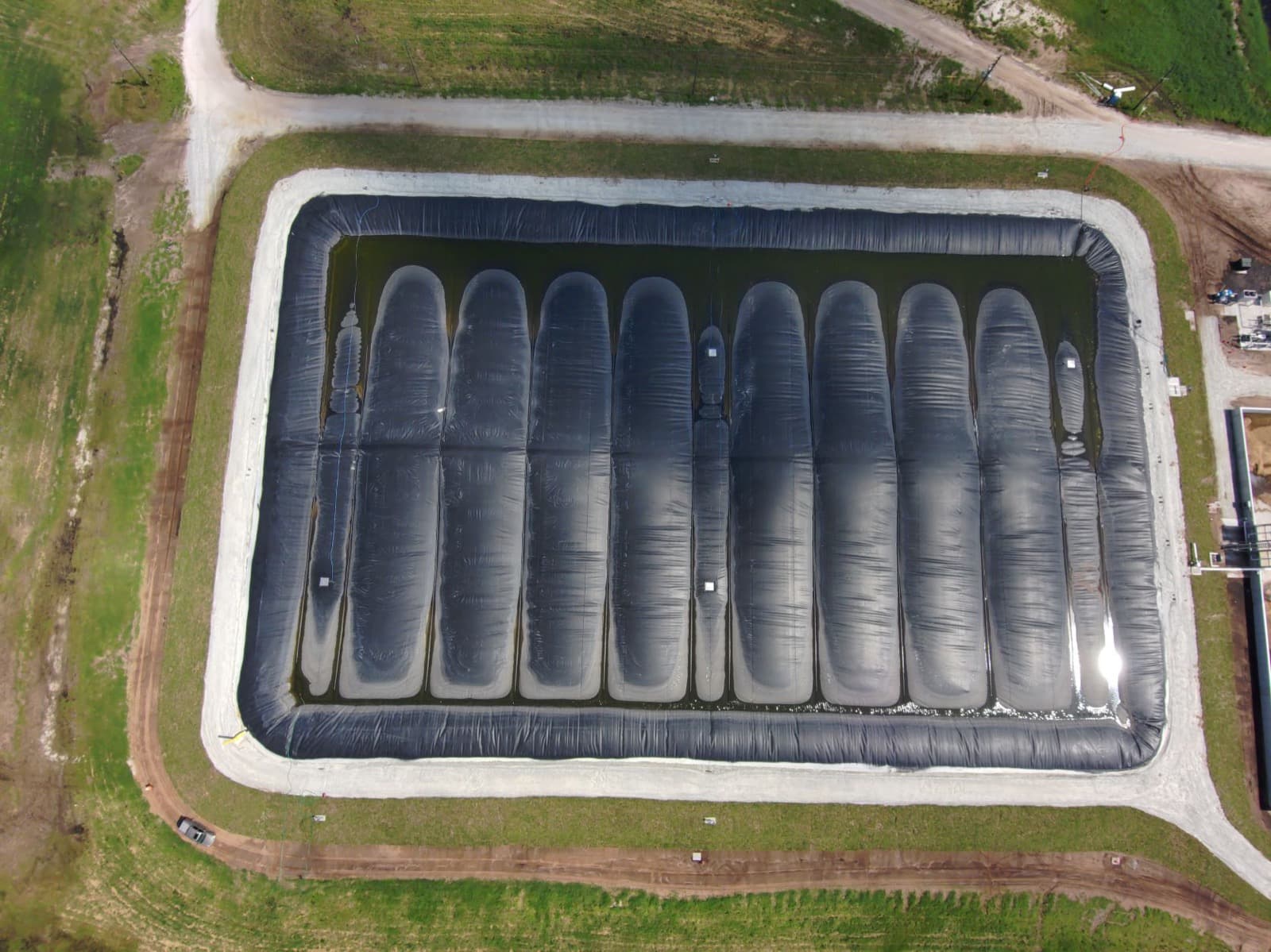
The US dairy industry manages roughly 9.4 million cows producing over 250 million tons of manure annually. Most of that manure ends up in lagoons, where anaerobic decomposition converts organic matter into methane -- a greenhouse gas 80 times more potent than CO2 over 20 years. For decades, that methane simply escaped into the atmosphere. Today, biogas capture technology turns this liability into a revenue stream.
Why Dairy Farms Are Prime Candidates for Biogas Capture
Dairy operations have several characteristics that make them ideal for biogas capture. They produce large, consistent volumes of organic waste. They already use lagoon-based manure management. The waste stream is relatively predictable and well-characterized. And the resulting biogas has high methane content, typically 55-70%, making it valuable for energy recovery or carbon credit generation.
California's Central Valley alone has more than 1.7 million dairy cows concentrated in a region where year-round warm temperatures accelerate anaerobic digestion and maximize biogas production. It is the single most productive region for dairy biogas in the United States.
Capture Methods: CLD vs. CSTR
There are two primary approaches to dairy biogas capture: covered lagoon digesters (CLDs) and continuously stirred tank reactors (CSTRs). Each has its place, but the economics are dramatically different.
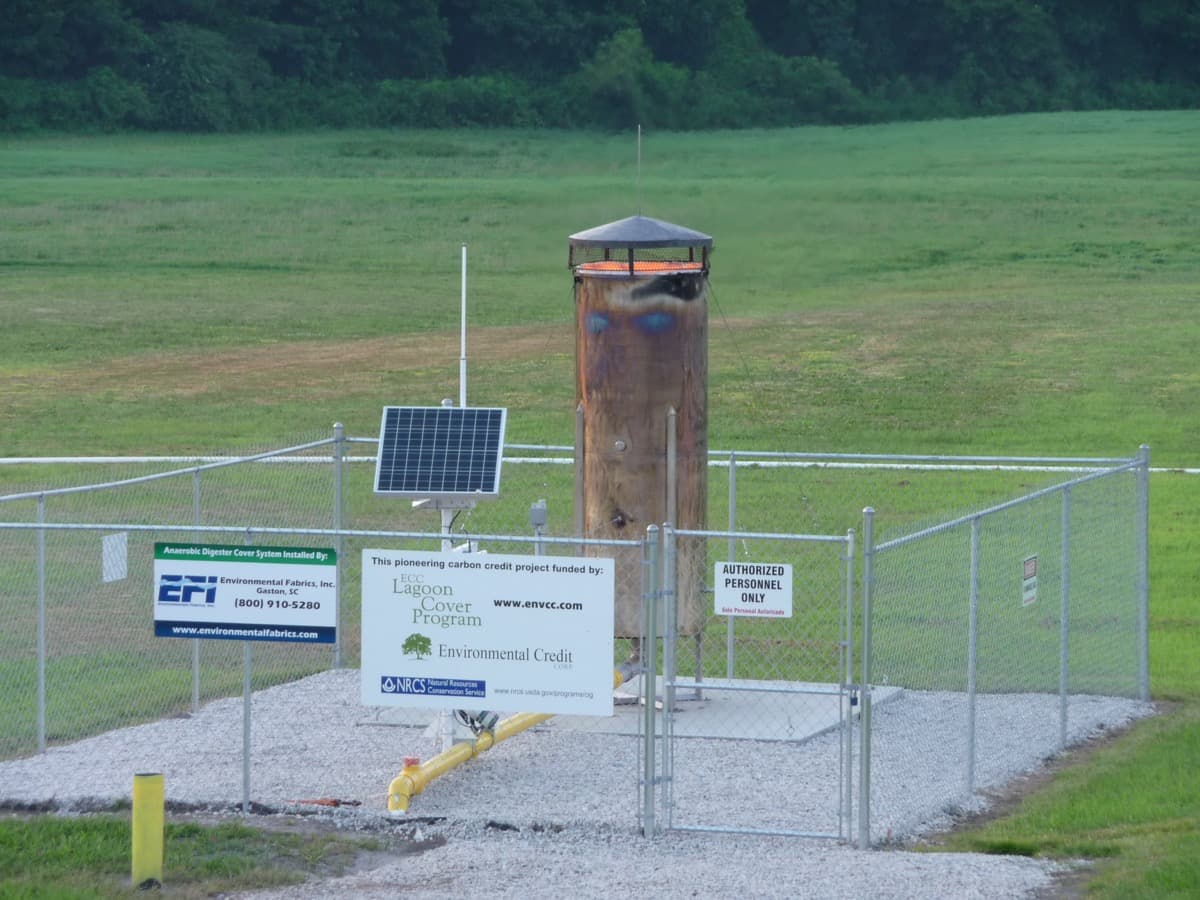
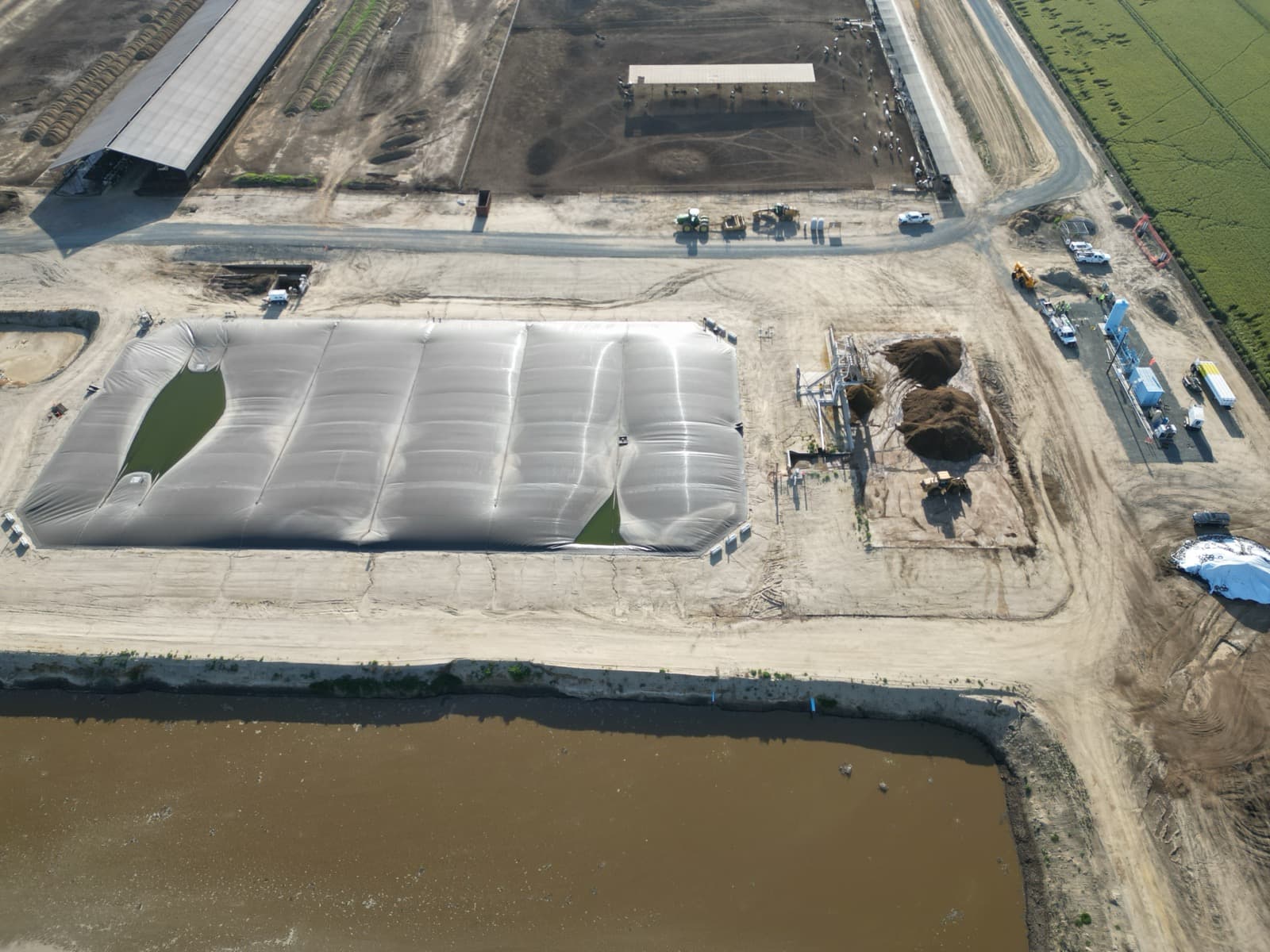
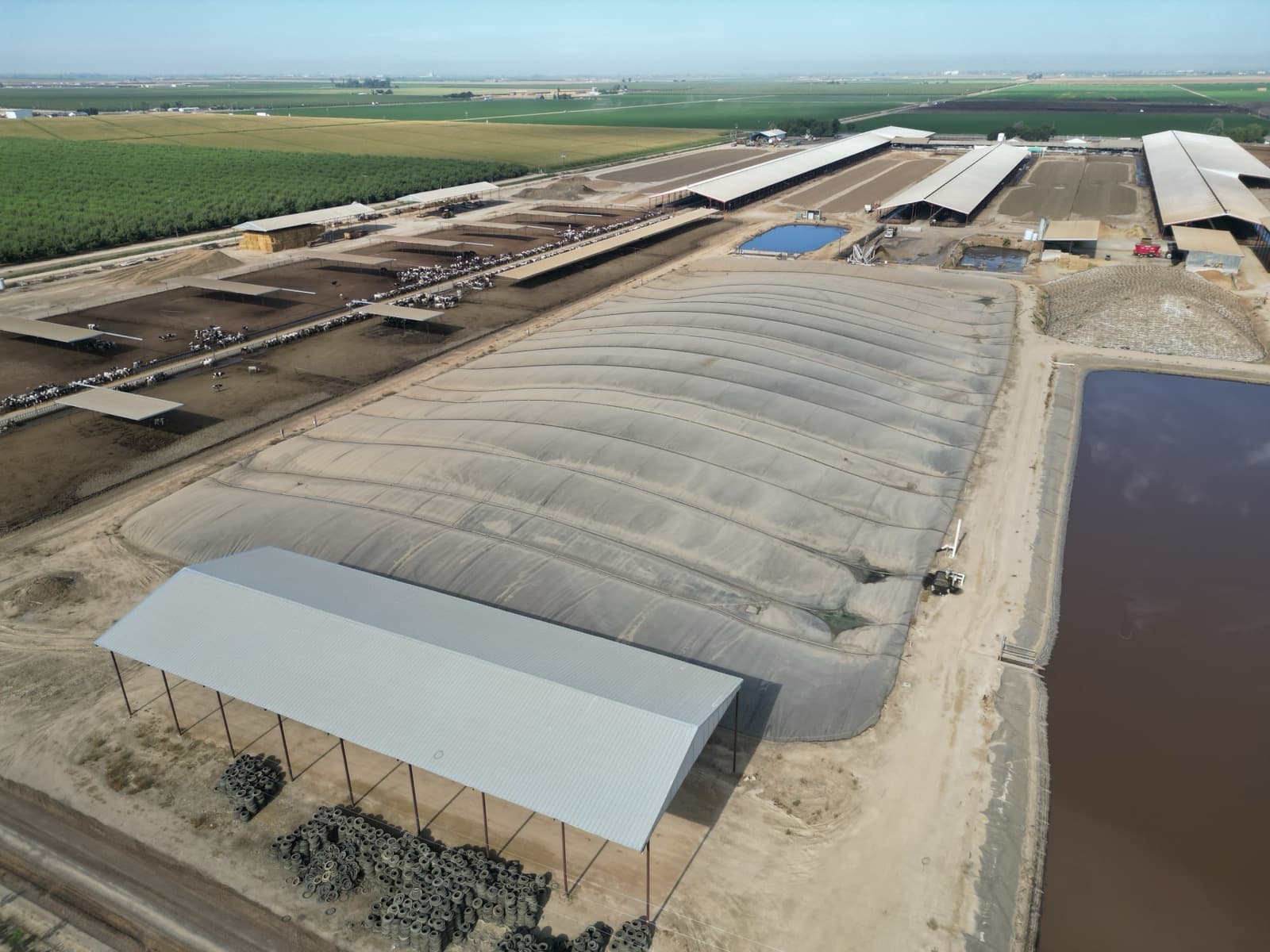
- Covered lagoon digesters (CLDs): Install a geosynthetic cover over existing manure lagoons, capture the biogas, and route it to a flare or utilization system. Capital cost: $300K to $1.5M. Minimal operational complexity. Works with existing lagoon infrastructure.
- CSTRs: Purpose-built heated tanks with mechanical mixing. Higher biogas yield per unit of waste but dramatically higher cost: $10M to $50M+ for a complete installation. Requires dedicated operators, ongoing maintenance, and sophisticated process control.
- Hybrid approaches: Some operations use a CLD for primary digestion and a smaller CSTR for high-strength waste streams. This captures the best of both technologies while managing total cost.
The Economics of Dairy Biogas
Dairy biogas economics depend on what you do with the captured methane. There are three primary revenue paths, each with different risk and return profiles.
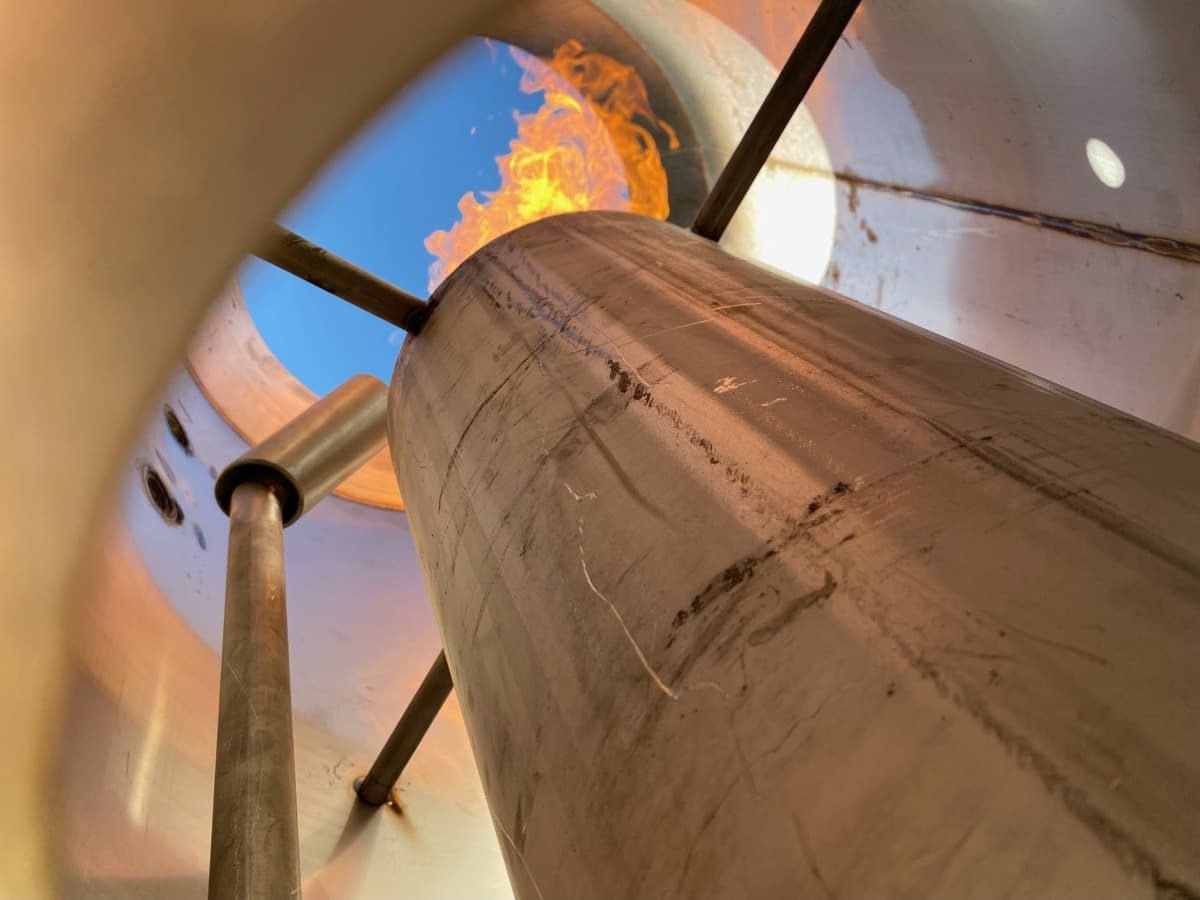
- Methane destruction (cap-and-flare): Capture and destroy methane, generating carbon credits. Lowest capital cost, fastest payback (1-4 years), IRR of 30-80%. Revenue depends on carbon credit markets but is relatively stable.
- Electricity generation: Burn biogas in a generator to produce electricity for on-farm use or grid sales. Moderate capital cost, payback of 3-7 years. Revenue depends on local electricity rates and interconnection agreements.
- Renewable natural gas (RNG): Upgrade biogas to pipeline-quality methane for injection into natural gas infrastructure. Highest potential revenue but also highest cost ($10-50M+) and highest risk. RNG economics have deteriorated significantly since 2023.
Carbon Credits and Regulatory Incentives
Voluntary and compliance carbon credit markets provide significant revenue for dairy biogas projects. California's Low Carbon Fuel Standard (LCFS), federal Renewable Fuel Standard (RFS) D3 RINs, and voluntary offset programs all create value for verified methane destruction. A single large dairy operation can generate hundreds of thousands of dollars in annual carbon credit revenue from a CLD system that costs a fraction of an RNG project.
EFI's Track Record in Dairy Biogas
EFI has installed more than 500 covered lagoon digester systems, with a significant concentration in dairy operations across California, the Midwest, and the Southeast. Our systems include the Verwey Dairy in California, Larson Dairy, and dozens of Central Valley operations working in partnership with CalBio. This track record gives us an unmatched database of real-world biogas production data across different herd sizes, climates, and management practices.
Our cap-and-flare model eliminates the financial barrier for dairy operators. EFI funds the entire installation, shares carbon credit revenue with the farm, and handles all operation and maintenance. The dairy farmer pays nothing upfront and benefits from both emissions reduction and ongoing revenue.
“Every dairy lagoon in America is venting methane right now. The technology to capture it is proven, the economics work, and the environmental impact is immediate. There's no reason to wait.”
-- EFI USA