California's Low Carbon Fuel Standard is the single largest revenue source for dairy biogas projects in the United States. A certified LCFS pathway allows dairy biogas-derived renewable natural gas (RNG) to generate LCFS credits when used as a transportation fuel, and the credit value can exceed the value of the gas itself by a factor of 5 to 10. But obtaining pathway certification is a multi-month process that requires detailed engineering analysis, rigorous documentation, and careful navigation of CARB's regulatory framework.
This guide is based on EFI USA's experience supporting dairy biogas pathway applications. It covers the key steps, common pitfalls, and practical advice for operators and developers pursuing LCFS certification.
Understanding Carbon Intensity Scores
The LCFS assigns a carbon intensity (CI) score to every transportation fuel pathway, measured in grams of CO2-equivalent per megajoule of energy (gCO2e/MJ). The CI score represents the total lifecycle greenhouse gas emissions from feedstock production through fuel combustion. Fuels with CI scores below the LCFS benchmark generate credits; fuels above the benchmark incur deficits.
Dairy biogas pathways typically achieve CI scores between -200 and -500 gCO2e/MJ -- deeply negative because the project avoids methane emissions that would otherwise occur from uncontrolled manure decomposition. This avoided methane credit is the key driver of dairy biogas CI scores. By comparison, petroleum diesel has a CI score of approximately 100 gCO2e/MJ and conventional natural gas approximately 80 gCO2e/MJ.
Step 1: Preliminary CI Score Estimation
Before committing resources to a full pathway application, estimate the project's CI score to confirm economic viability. The key inputs are baseline methane emissions from the existing manure management system, methane capture and destruction efficiency of the proposed system, energy consumption for biogas collection, conditioning, and upgrading, and transportation and distribution emissions.
- Baseline methane: Calculated using IPCC-based emission factors for the specific manure management practice. Lagoon-based dairy systems in warm climates have the highest baseline emissions and therefore the most negative CI scores.
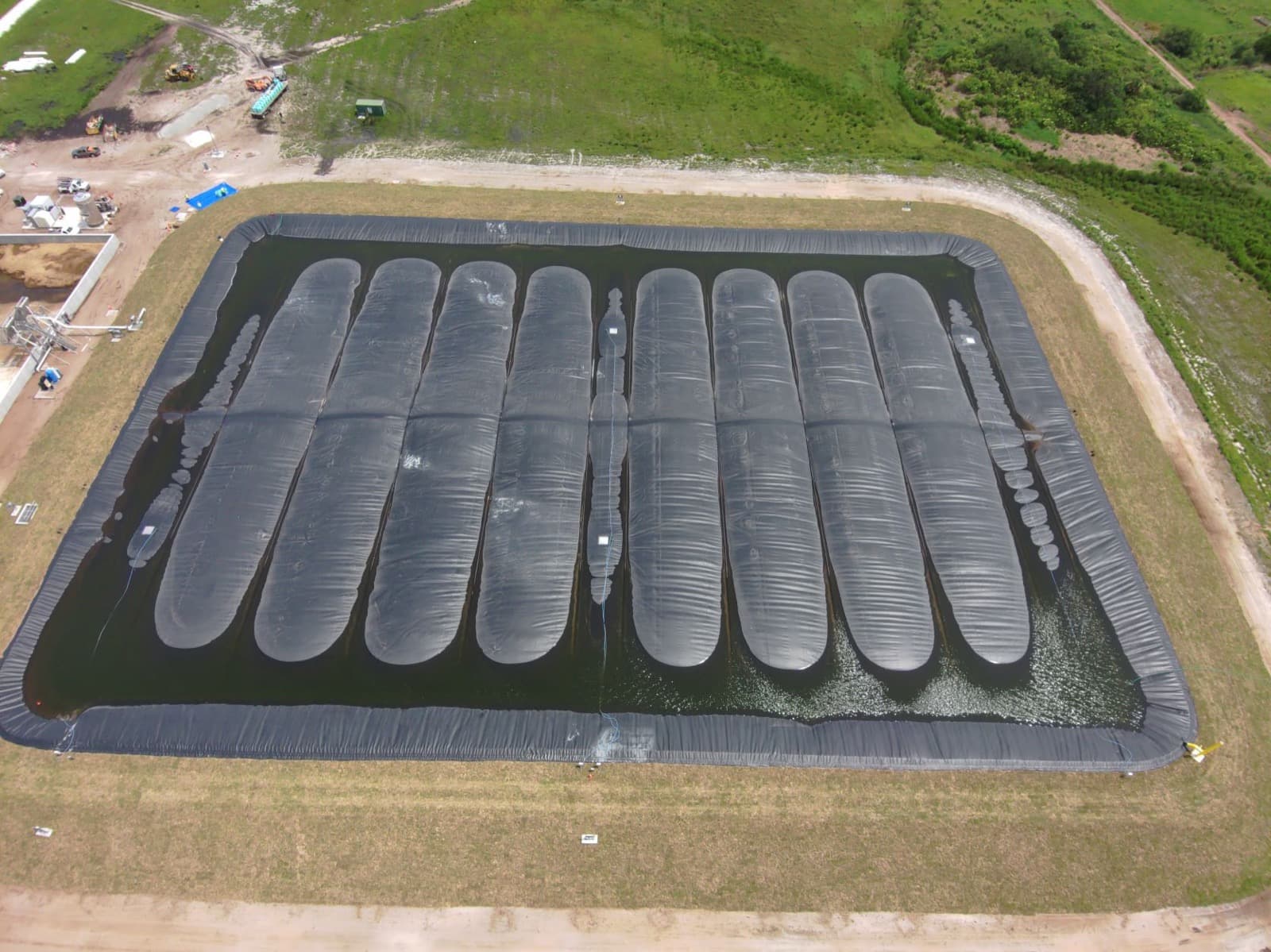
- Capture efficiency: The percentage of total biogas captured by the collection system. Properly designed covered lagoon systems achieve 85-95% capture efficiency.
- Destruction efficiency: For RNG pathways, this is the percentage of captured methane that is converted to usable fuel. For flare pathways, this is the combustion efficiency (typically 98%+).
- Process energy: Electricity and natural gas consumed in gas conditioning and upgrading. Higher process energy raises the CI score (makes it less negative).
Step 2: GREET Model Analysis
CARB requires that CI scores be calculated using the CA-GREET model, a California-specific version of Argonne National Laboratory's GREET (Greenhouse gases, Regulated Emissions, and Energy use in Technologies) lifecycle analysis model. The CA-GREET analysis must account for every significant source of greenhouse gas emissions across the entire fuel pathway.
For dairy biogas pathways, the CA-GREET analysis typically includes the following modules: manure management baseline (avoided emissions), biogas collection system energy, H2S removal, gas conditioning and upgrading (if applicable), pipeline injection or on-site use, transportation of RNG to dispensing facility, and vehicle combustion. Each module requires specific input data supported by engineering analysis and operational data.
Step 3: Tier 1 or Tier 2 Application
CARB offers two pathway application tiers. Tier 1 pathways use standardized CI scores published by CARB for common fuel pathways. Tier 2 pathways allow applicants to calculate a project-specific CI score using actual project data. Dairy biogas projects almost always use the Tier 2 process because their CI scores are significantly more favorable than Tier 1 defaults.
- Tier 2 application components: Completed CA-GREET workbook, pathway description document, process flow diagram, material and energy balance, emissions calculations, and supporting documentation for all inputs.
- Third-party verification: An accredited third-party verifier must review and verify the CI score calculation before submission to CARB.
- Application fee: CARB charges application fees based on the complexity of the pathway. Dairy biogas Tier 2 applications typically incur fees of $5,000-$15,000.
- Processing time: CARB's target processing time for Tier 2 applications is 90-120 days, but actual processing times have ranged from 6 to 18 months depending on application volume and complexity.
Step 4: Provisional Pathway and Credit Generation
Once CARB approves the pathway application, the applicant receives a certified CI score and can begin generating LCFS credits for fuel dispensed under the pathway. Credits are generated quarterly based on fuel volumes reported through CARB's LCFS Reporting Tool (LRT). Credit value equals the volume of fuel dispensed multiplied by the CI deficit (benchmark CI minus pathway CI) multiplied by the energy density of the fuel.
CARB also allows provisional pathway operation, which enables credit generation while the application is under review, subject to a true-up once the final CI score is determined. This provision is important for project economics because it avoids a revenue gap during the application processing period.
Step 5: Ongoing Compliance
- Quarterly reporting: Fuel volumes, energy use, and emissions data must be reported quarterly through the LRT.
- Annual verification: A third-party verifier must conduct an annual site visit and data review to confirm that actual operations match the certified pathway.
- CI score updates: If operational parameters change materially (e.g., herd size, lagoon configuration, process energy), the CI score must be recalculated and resubmitted to CARB.
- Recordkeeping: All data supporting LCFS credit generation must be maintained for a minimum of 10 years.
Revenue Modeling
A 2,000-cow dairy with a covered lagoon system producing 150,000 MMBtu per year of RNG with a certified CI score of -350 gCO2e/MJ can generate approximately 40,000-50,000 LCFS credits per year. At $75 per credit, this represents $3-$3.75 million in annual LCFS revenue alone, before RIN and gas commodity revenue. However, these projections are highly sensitive to credit pricing, and operators should model conservative, base, and optimistic scenarios.
EFI USA works with dairy operators and project developers to evaluate LCFS pathway economics, support the application process, and ensure ongoing compliance. Contact us for a preliminary CI score estimate and revenue projection for your dairy operation.