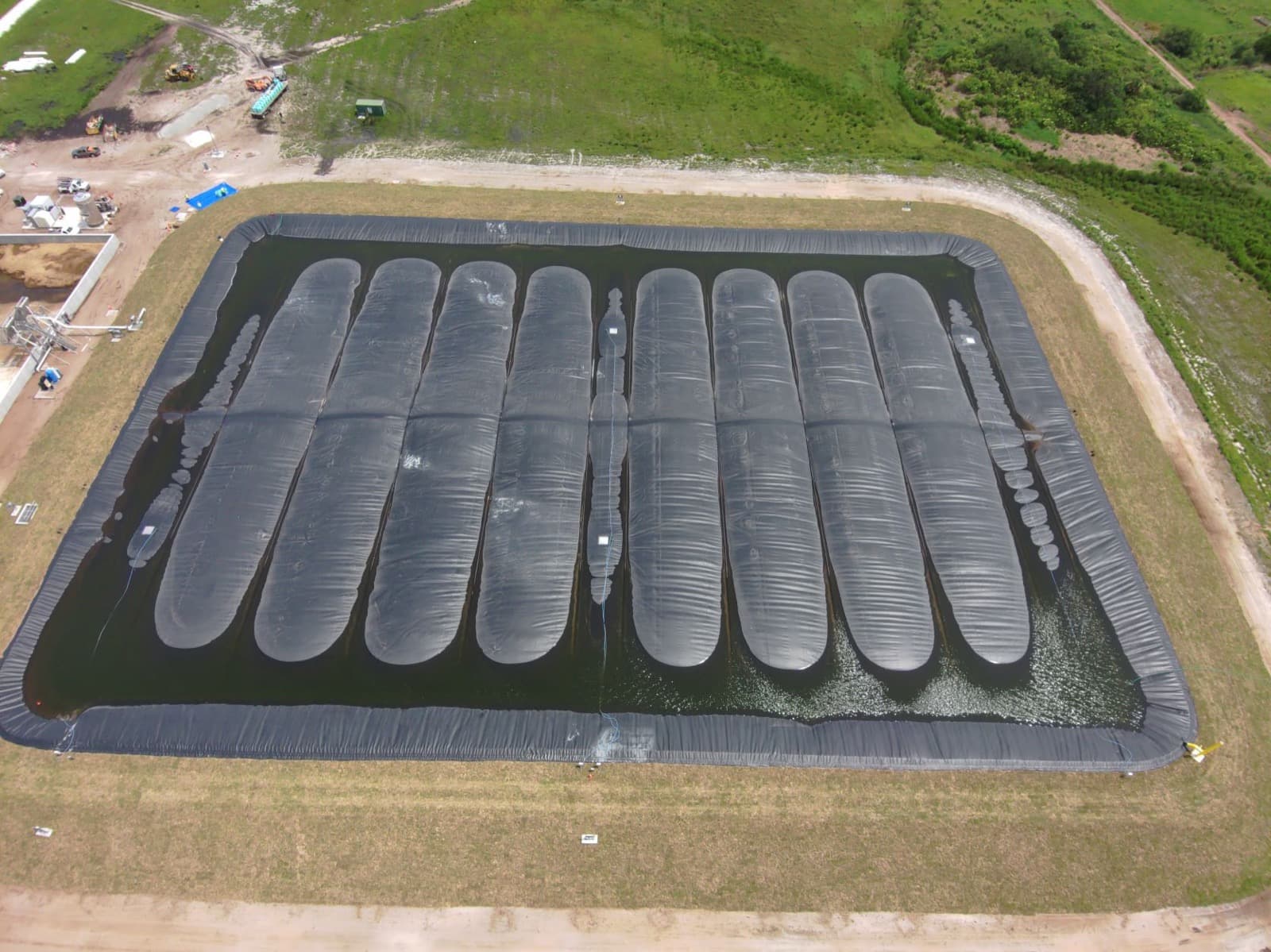
Floating covers are one of the most versatile tools in the wastewater and agricultural engineering toolkit. A single floating cover system can simultaneously control odor emissions, capture biogas for destruction or beneficial use, reduce evaporative water loss, prevent rainwater dilution of waste streams, and satisfy regulatory requirements for emission controls. The design decisions -- material selection, gas collection layout, anchoring system, and rainwater management -- determine how well the cover performs each of these functions over its 20-30 year service life.
How Floating Covers Work
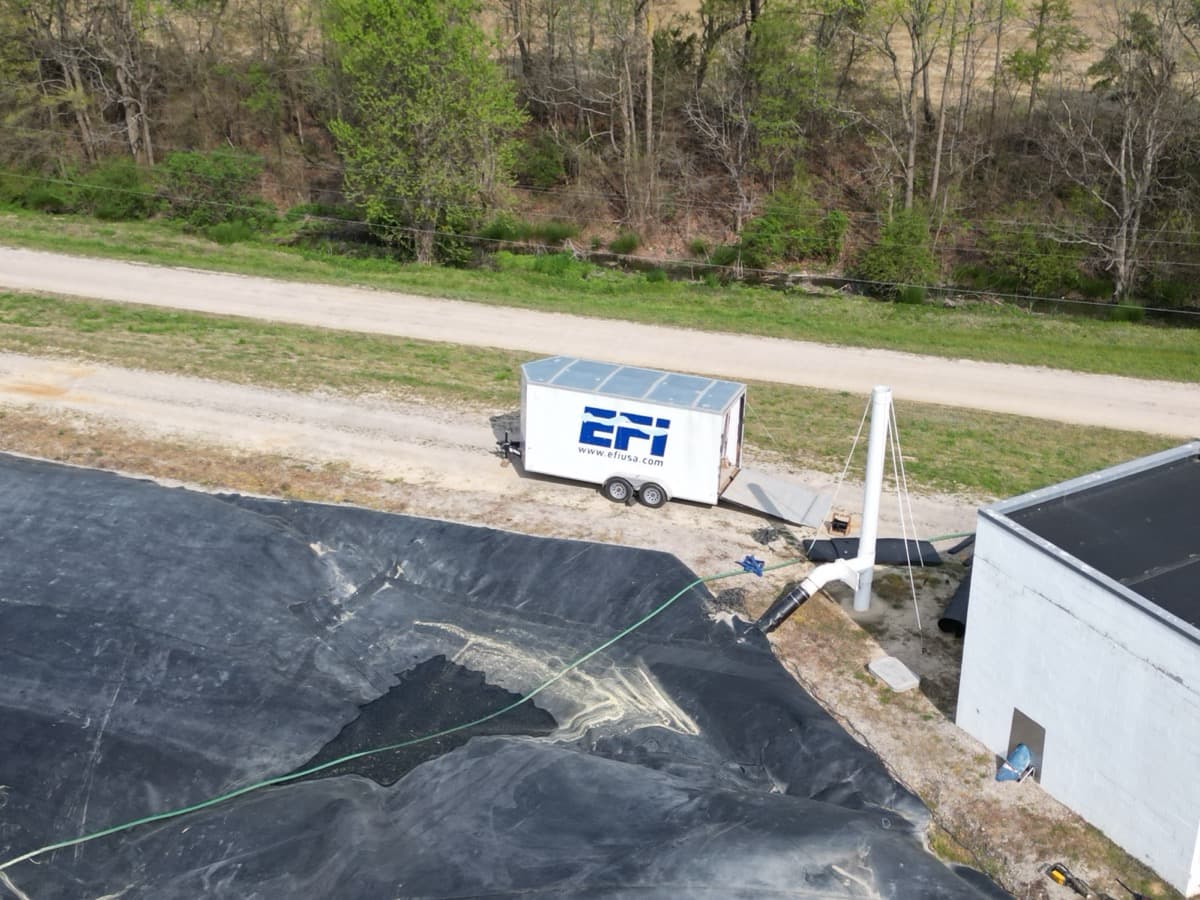
A floating cover is a flexible geomembrane that rests directly on the surface of a liquid impoundment -- a waste lagoon, anaerobic digester, industrial process pond, or water reservoir. Unlike a fixed cover supported by structural elements above the liquid, a floating cover rises and falls with the liquid level. This self-adjusting behavior is what makes floating covers practical for lagoons with significant level variation, which is the norm in agricultural and municipal applications where inflow and withdrawal rates vary seasonally.
The cover is anchored at the perimeter of the impoundment, typically using a concrete or HDPE batten strip system bolted to an anchor trench or perimeter beam. The anchoring system must accommodate liquid level changes while maintaining a gas-tight seal at the edges. For lagoons with large level fluctuations (5+ feet), the perimeter anchoring includes slack material or a flexible skirt that unfolds as the liquid level drops and refolds as it rises. Getting this detail right is critical -- a cover that pulls loose from its anchor during low water conditions will lose gas containment.
Material Options for Floating Covers
HDPE (high-density polyethylene) floating covers are the workhorse option for most agricultural and municipal applications. HDPE covers are typically 40-mil or 60-mil thick, UV-stabilized with 2-3% carbon black, and field-welded from panels using hot wedge or extrusion welding techniques. HDPE is chemically resistant to the hydrogen sulfide, ammonia, and organic acids present in biogas environments. A well-installed HDPE floating cover has a 20-25 year service life in most climates. Material cost runs $0.35-$0.60 per square foot, making it the most economical option for large lagoons.
RPP (reinforced polypropylene) floating covers are the premium choice, particularly for applications where gas collection is the primary objective. RPP is factory-fabricated with a woven scrim reinforcement layer that provides superior dimensional stability, puncture resistance, and resistance to wind uplift compared to unreinforced HDPE. Factory fabrication means most seams are made under controlled conditions with automated welding equipment, resulting in higher and more consistent seam quality than field-welded HDPE. RPP covers arrive on site as large pre-fabricated sections that are unrolled, positioned, and connected with a relatively small number of field seams.
CSPE (chlorosulfonated polyethylene, commonly known by the trade name Hypalon) was historically used for floating covers but has largely been replaced by RPP due to Hypalon's discontinuation by DuPont and the superior cost-performance ratio of modern RPP formulations. EPDM (ethylene propylene diene monomer) rubber is used in some water reservoir applications but is not recommended for biogas environments due to lower chemical resistance to H2S and other biogas constituents.
Gas Collection Design
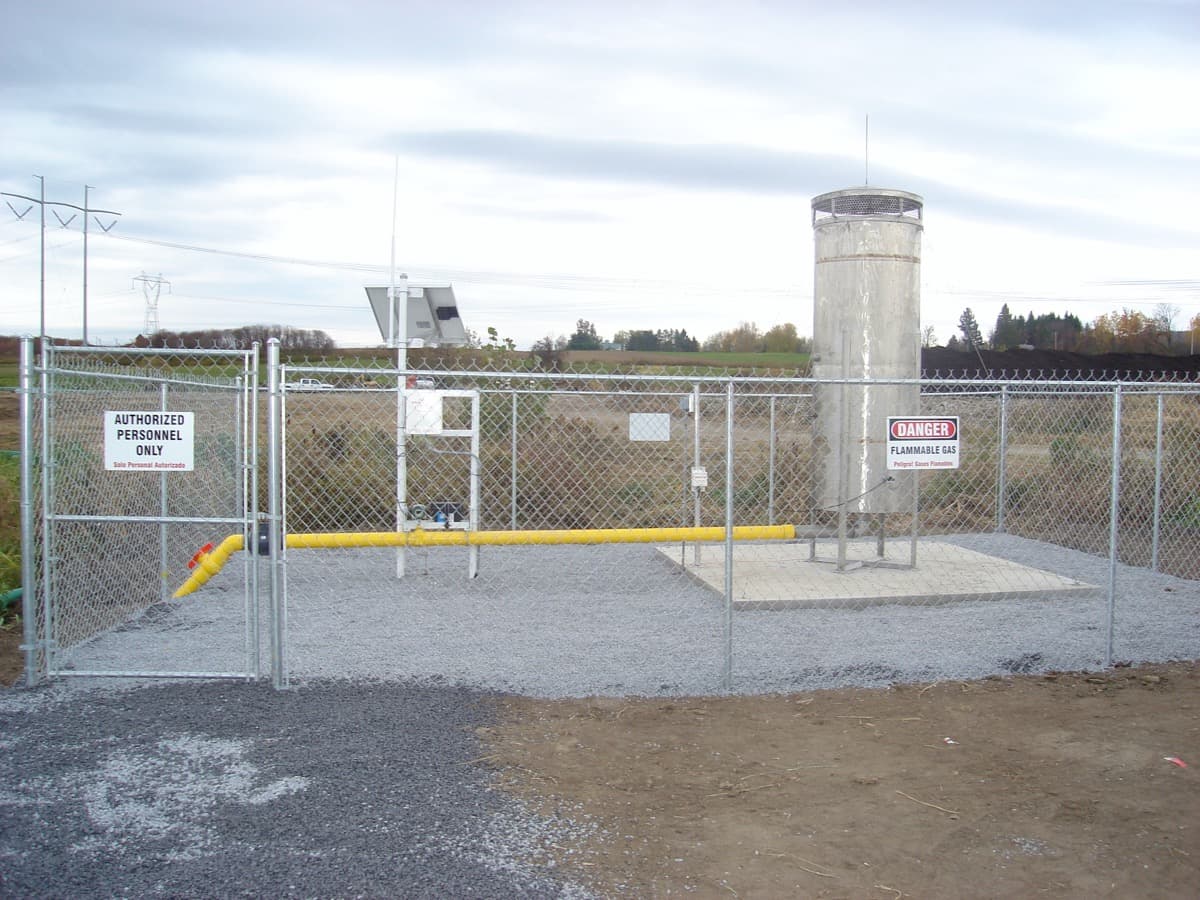
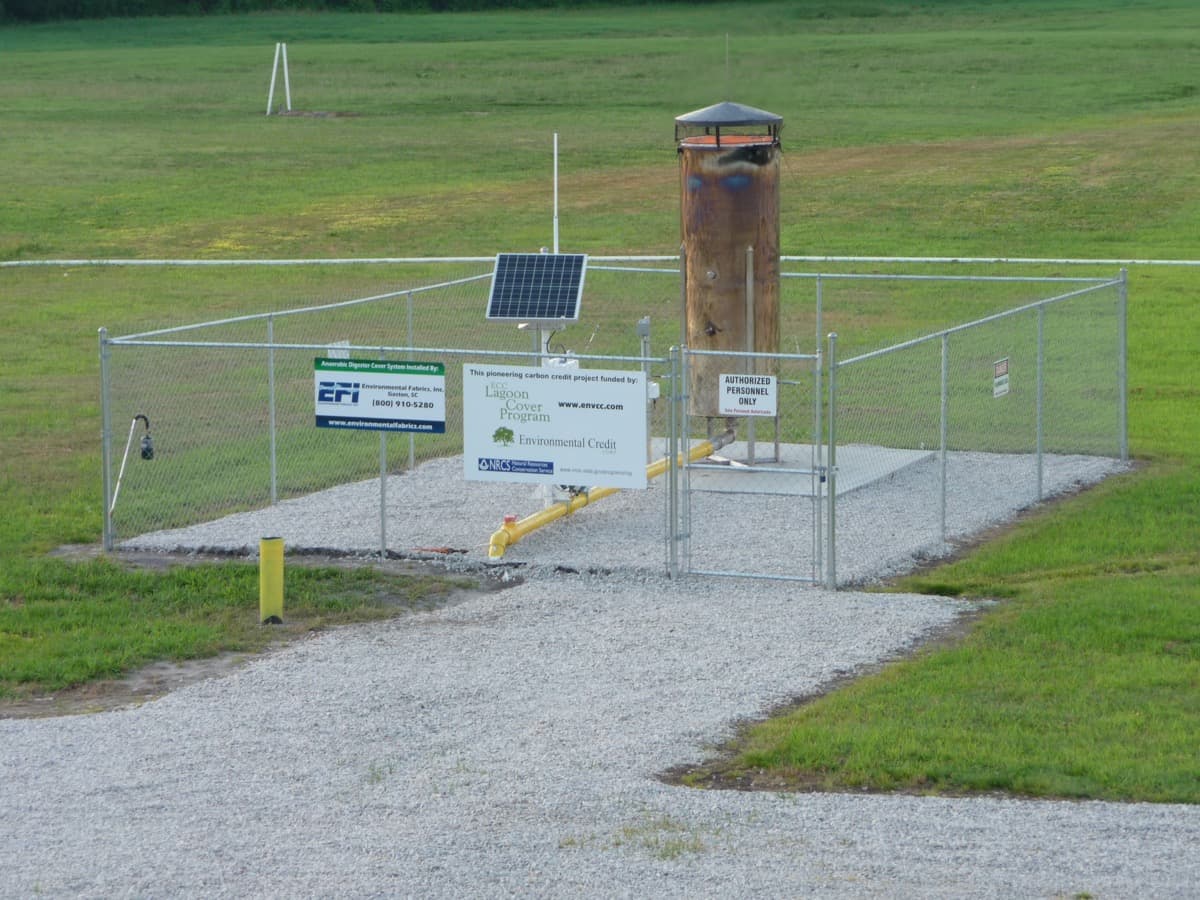
When a floating cover is used for biogas collection, the gas collection system design determines how efficiently the captured gas is routed to the flare or utilization equipment. The most common approach is a network of perforated HDPE gas collection pipes positioned on the liquid surface beneath the cover. As biogas bubbles up through the liquid and accumulates in the headspace between the liquid surface and the underside of the cover, it migrates toward the collection pipes and is routed through header pipes to a central collection point.
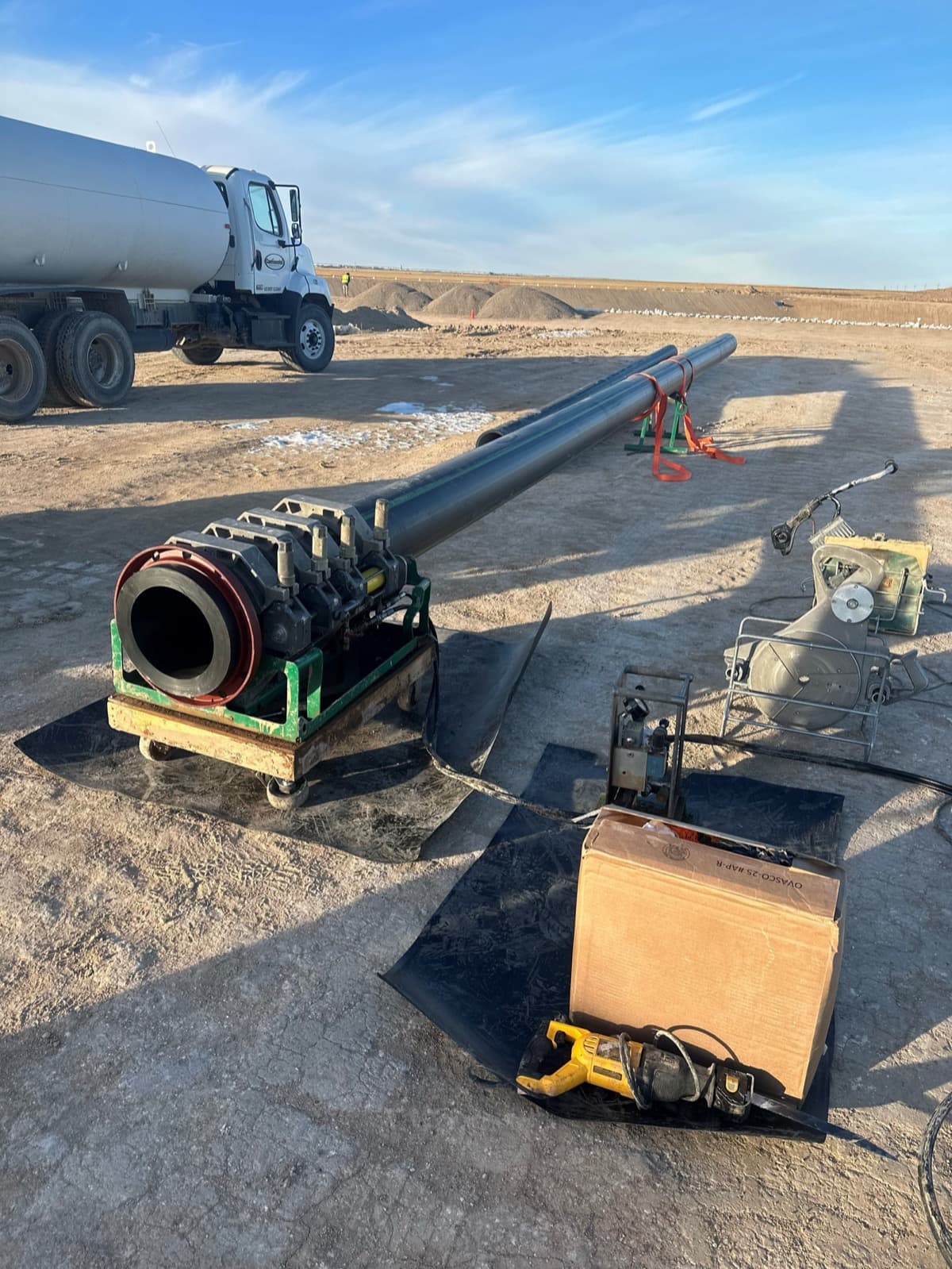
The gas collection piping layout must account for the lagoon geometry, expected gas production distribution, and liquid flow patterns. In rectangular lagoons, a parallel pipe grid with 20-40 foot spacing is typical. In irregular lagoons, the pipe layout is customized based on computational fluid dynamics modeling or empirical experience with similar geometries. The collection pipes are typically 4-6 inch diameter perforated HDPE (SDR 17 or SDR 11) with perforations sized and spaced to balance gas intake velocity with condensate drainage.
Condensate management is a critical and often underestimated element of gas collection design. Biogas from waste lagoons is saturated with water vapor at the liquid temperature. As the gas cools in the collection piping (especially during nighttime and cold weather), water condenses and can block pipe sections, reducing gas collection efficiency and creating pressure imbalances that stress the cover. EFI's standard design includes condensate knockout pots at low points in the piping system, automatic condensate drain valves, and pipe slopes of at least 1% toward drain points.
Rainwater Management
Rainwater accumulation on a floating cover is a serious structural and operational concern. A single inch of rain on a one-acre cover deposits approximately 27,000 gallons (225,000 pounds) of water on the cover surface. Without a rainwater removal system, accumulated rainwater can overload the cover, submerge the gas collection system, and in extreme cases, cause the cover to sink entirely. EFI has responded to emergency calls from operators with other companies' covers that sank after heavy rain events because rainwater management was inadequately designed.
The standard rainwater management approach uses a network of surface drains (inverted siphons or weighted low-point drains) connected to a sump pump system. The cover surface is intentionally designed with a slight crown or multiple crown points that encourage rainwater to flow toward the drain locations. Sump pumps activate automatically based on float switches and discharge rainwater off the cover. For large covers (2+ acres), multiple independent drain and pump systems provide redundancy. EFI's specification requires rainwater removal capacity sufficient to handle a 2-inch-per-hour rainfall event without exceeding 3 inches of accumulated water depth on the cover surface.
Application-Specific Considerations
- Dairy lagoons: High biogas production, high H2S concentrations (500-5,000+ ppm). Specify HDPE or RPP with documented H2S resistance. Include H2S monitoring in the gas collection system and size the flare for peak H2S loading to avoid incomplete combustion and SO2 emissions.
- Swine lagoons: Very high nutrient loading and aggressive chemistry. RPP preferred over HDPE due to superior resistance to the combined chemical environment. Sludge accumulation rates are higher than dairy, requiring periodic sludge management planning.
- Municipal wastewater: Lower biogas production per acre than agricultural lagoons but often subject to stricter air quality regulations. Cover systems must meet NESHAP or state air quality permit requirements. Gas collection efficiency documentation is typically more rigorous than for agricultural applications.
- Food processing wastewater: Highly variable waste stream composition and flow rates. Cover systems must accommodate rapid changes in gas production volume. Design gas collection for peak production, not average, to avoid over-pressurization.
- Industrial process ponds: Applications include oil/water separation ponds, chemical storage ponds, and mine process water impoundments. Material selection must be matched to the specific chemical environment. Consult chemical resistance charts for the specific liner material and chemical exposure conditions.
Floating cover systems are deceptively simple in concept -- put a flexible sheet on water and collect what comes off. The engineering complexity is in the details: anchoring that accommodates level changes, gas collection that works uniformly across the entire lagoon surface, condensate management that prevents blockages, rainwater removal that handles storm events, and material selection that ensures 20+ years of reliable performance in a chemically aggressive environment. Getting these details right is the difference between a cover that performs for decades and one that becomes a maintenance headache within years.