HDPE, LLDPE, PVC and reinforced polypropylene describe material families. A project specification must also identify the actual product, thickness, reinforcement, exposure conditions and connection details. Those choices determine which test results are relevant to the proposed installation.
Begin with the liquid or gas to be contained, its composition and temperature, expected movement, exposed surfaces and the required operating life. Include cleaning chemicals and unusual operating conditions in the supplier review. This guide explains useful distinctions between the four families and the questions to resolve before ordering material.
HDPE: Review the containment duty and deformation
High-density polyethylene geomembranes are used in containment systems. AGRU’s lining-systems literature describes HDPE chemical resistance and mechanical properties alongside LLDPE’s greater flexibility. Treat chemical resistance as a product-and-exposure question: provide the supplier with the actual chemical mixture, concentrations, temperature and contact duration.
GRI-GM13 specifies manufacturing quality-control properties for smooth and textured HDPE geomembranes. Its scope also explains that a particular application may need additional testing or more restrictive requirements. A statement of GM13 conformance is useful material documentation; the engineer still needs to resolve the site design, seams, penetrations and support conditions.
- Ask how the chosen product accommodates the predicted movement and strain at slopes, transitions and structures.
- Confirm the required surface finish and the basis for interface shear properties where slope stability depends on adjacent materials.
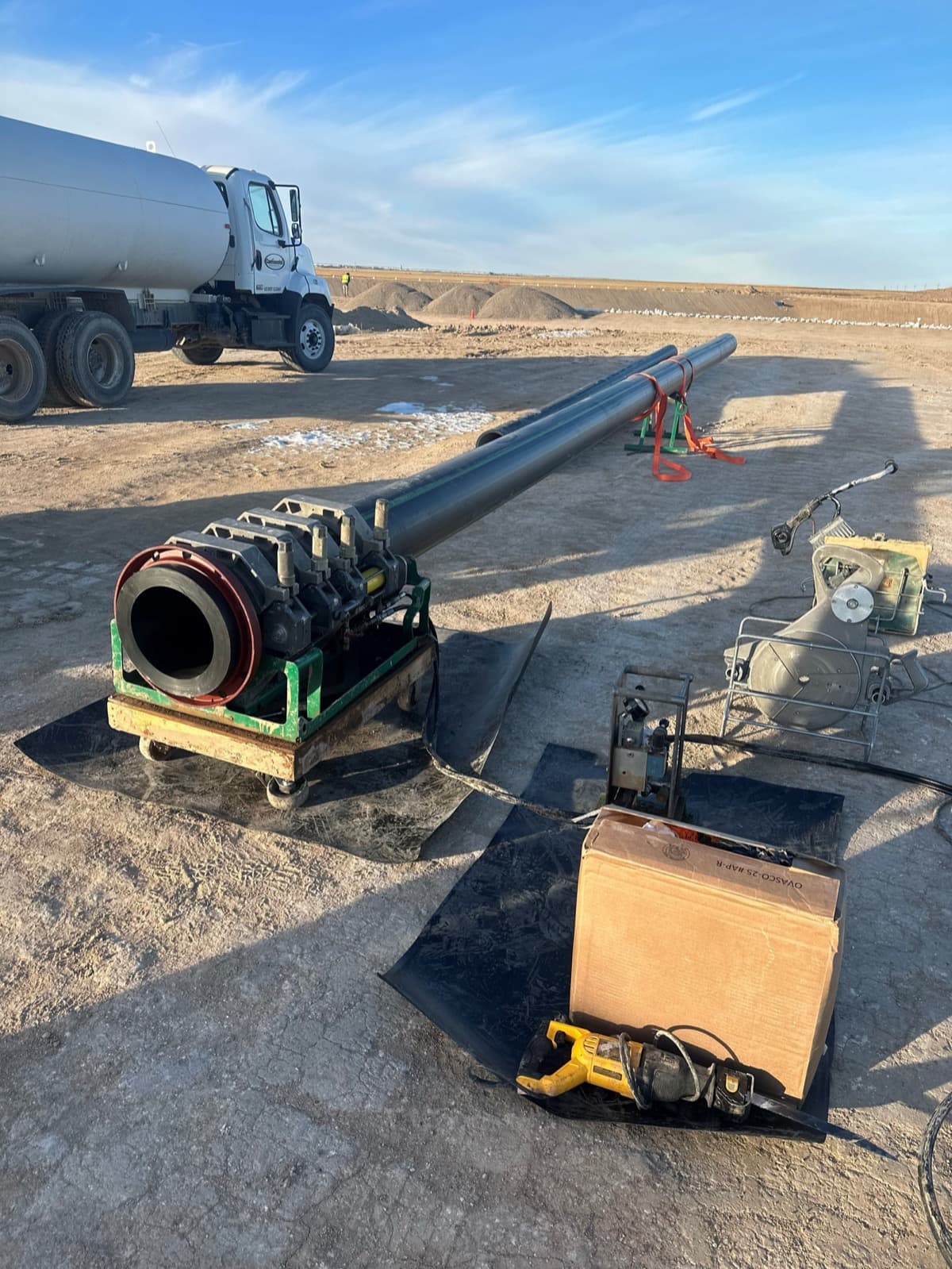
- Obtain the proposed welding procedures, trial-seam requirements and construction quality-assurance plan before installation.
LLDPE: Consider flexibility with the supporting design
Linear low-density polyethylene can be useful where deformation matters. AGRU describes LLDPE as more flexible than HDPE, with greater elongation at break under biaxial stress, and identifies settlement-sensitive applications among its uses. That comparison supports considering LLDPE; it does not establish allowable settlement for a particular liner.
GRI-GM17 provides manufacturing quality-control requirements for LLDPE geomembranes and calls for application-specific requirements where needed. Ask the design team to relate anticipated movement to the chosen sheet, seams and connections. A flexible membrane still needs an appropriate subgrade, protective layers and details at changes in geometry.
- Confirm chemical compatibility for the selected formulation and exposure. Similar polymer names do not establish identical chemical performance.
- Check the specified thickness, surface and test methods when comparing data sheets. Compare measurements made on the same basis.
- Define field-seaming and repair methods for the supplied product. Do not transfer welding settings from another material without qualification.
PVC: Check the formulation and exposure designation
Polyvinyl chloride geomembranes include products with different formulations and reinforcement options. EPI’s PVC product sheet describes factory-fabricated panels and references ASTM D7176 for buried applications. Plastatech also offers PVC geomembranes for exposed or covered applications. The exposure designation therefore needs to be checked for the proposed product.
Ask for chemical-compatibility data, temperature limits, exposure requirements and the proposed seaming method. Where flexibility depends on plasticization, include the formulation’s retention of properties under the intended exposure in that review.
- Confirm whether the proposed sheet is intended for buried, submerged or exposed use, and any required protective cover.
- Review panel sizes, transport, unfolding and field connections with the fabricator and installer.
- Keep factory seam records and field seam acceptance requirements in the same quality plan. Prefabrication does not remove the need to verify site connections.
RPP: Evaluate the reinforced composite
Reinforced polypropylene, also called R-PP, combines polypropylene with fabric reinforcement. EPI describes a three-ply product with reinforcement encapsulated by polypropylene and identifies flexibility and dimensional stability among its properties. Those are product characteristics to evaluate alongside the planned liner or cover duty.
Compare the complete composite, including reinforcement, coatings and seams. Do not treat tensile or elongation values from a reinforced sheet as directly interchangeable with results for an unreinforced membrane. Ask which test methods and loading directions apply. Wind restraint, anchorage and penetrations remain part of the system design; selecting RPP does not settle them.
Use weathering tests within their limits
ASTM D7238 describes controlled fluorescent-UV and condensation exposure for unreinforced polyolefin geomembranes. Its public scope and significance sections identify limitations, including effects it does not simulate and the fact that results for one thickness cannot be used for another thickness of the same formulation.
For selection, that means a UV test result should not be converted into a generic promise of years outdoors. Request evidence relevant to the actual formulation, thickness and exposure, with the supplier’s stated limits. Review any warranty separately from the design-life requirement and the proposed inspection plan.
Turn the comparison into a project specification
Prepare a short selection record with the engineer and supplier. State the containment duty, temperature range, chemical exposure, predicted movement, subgrade, protection layers and proposed product. Record why the selected material fits those requirements and what still needs confirmation.
Then define fabrication, installation access, seam testing, repairs, inspection and handover documents. Evaluate the complete installed scope, including operational constraints and maintenance access. A commodity price per square foot would omit those decisions. Send EFI the design basis and proposed materials to review the installation scope.