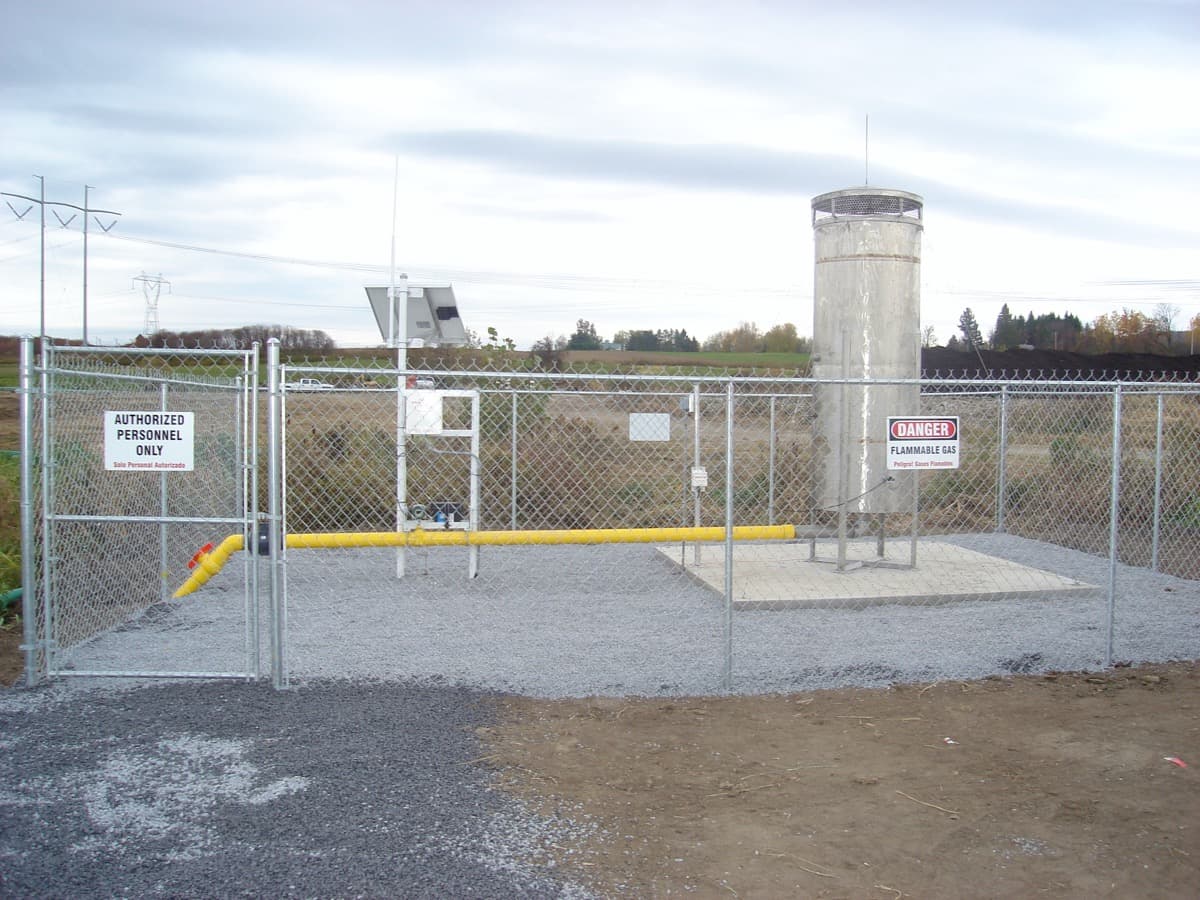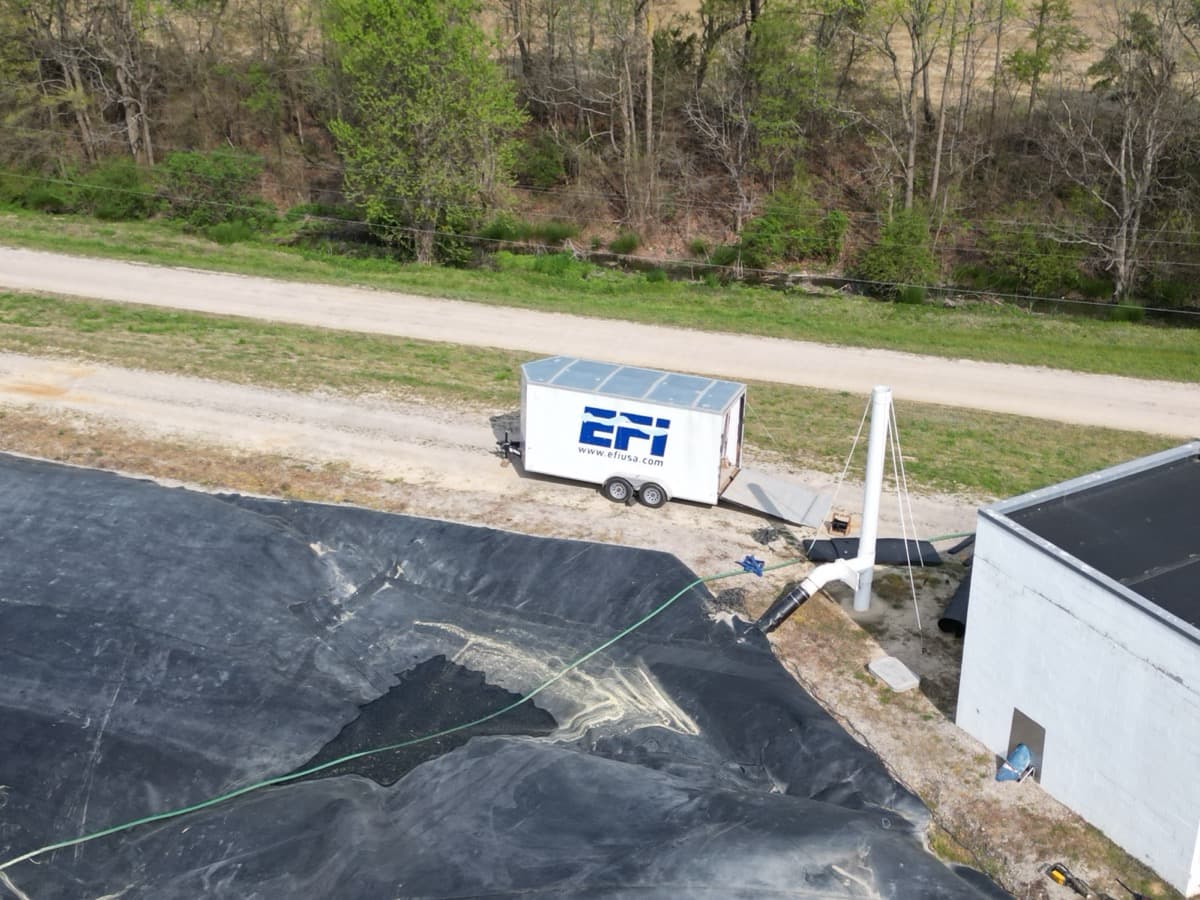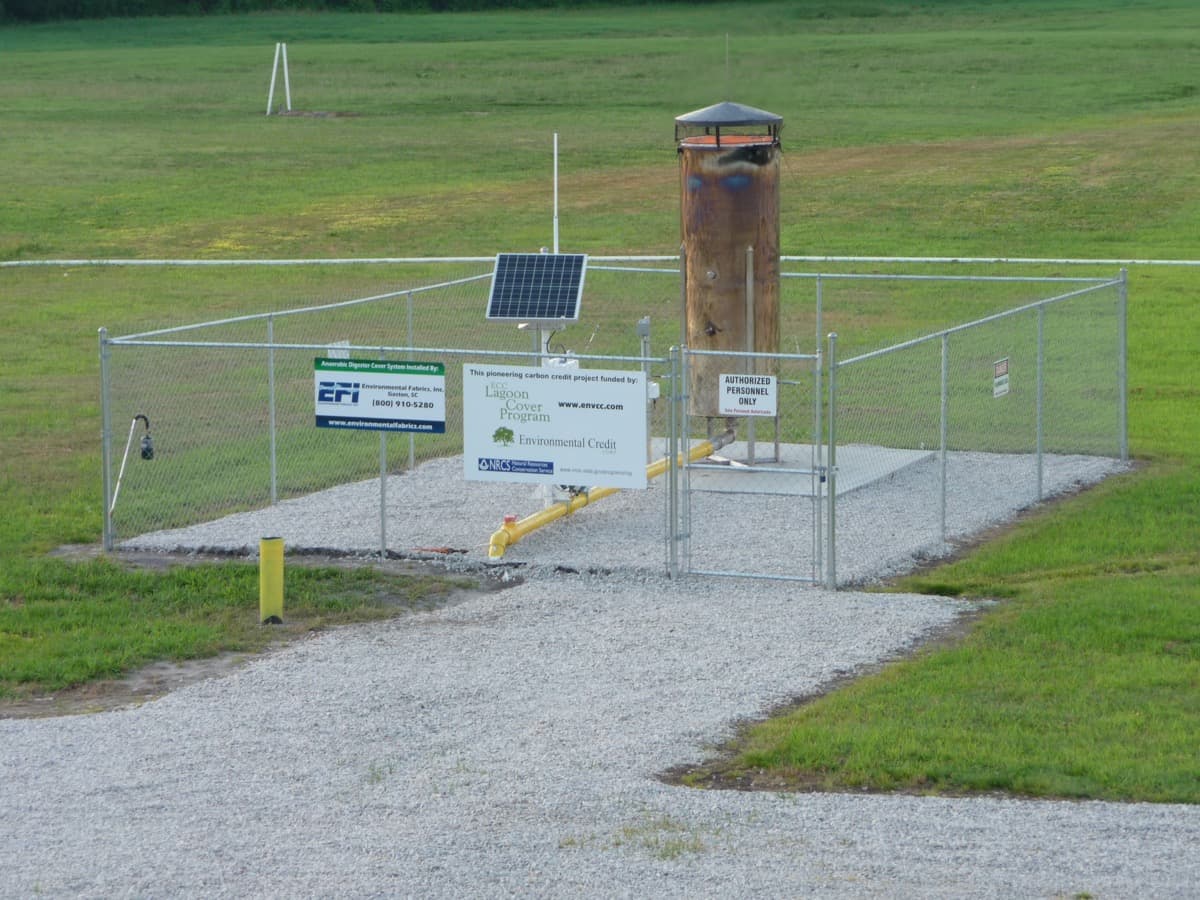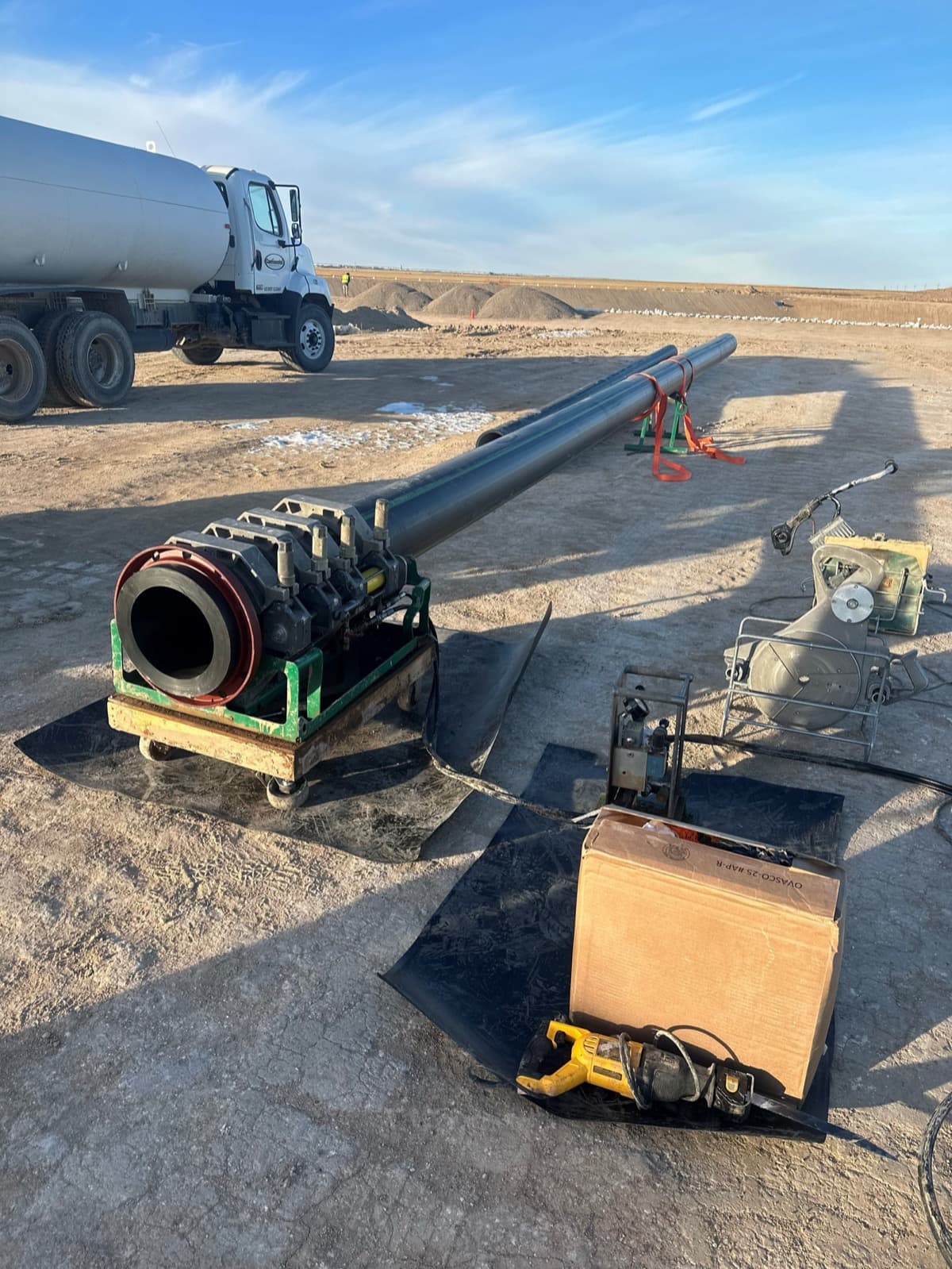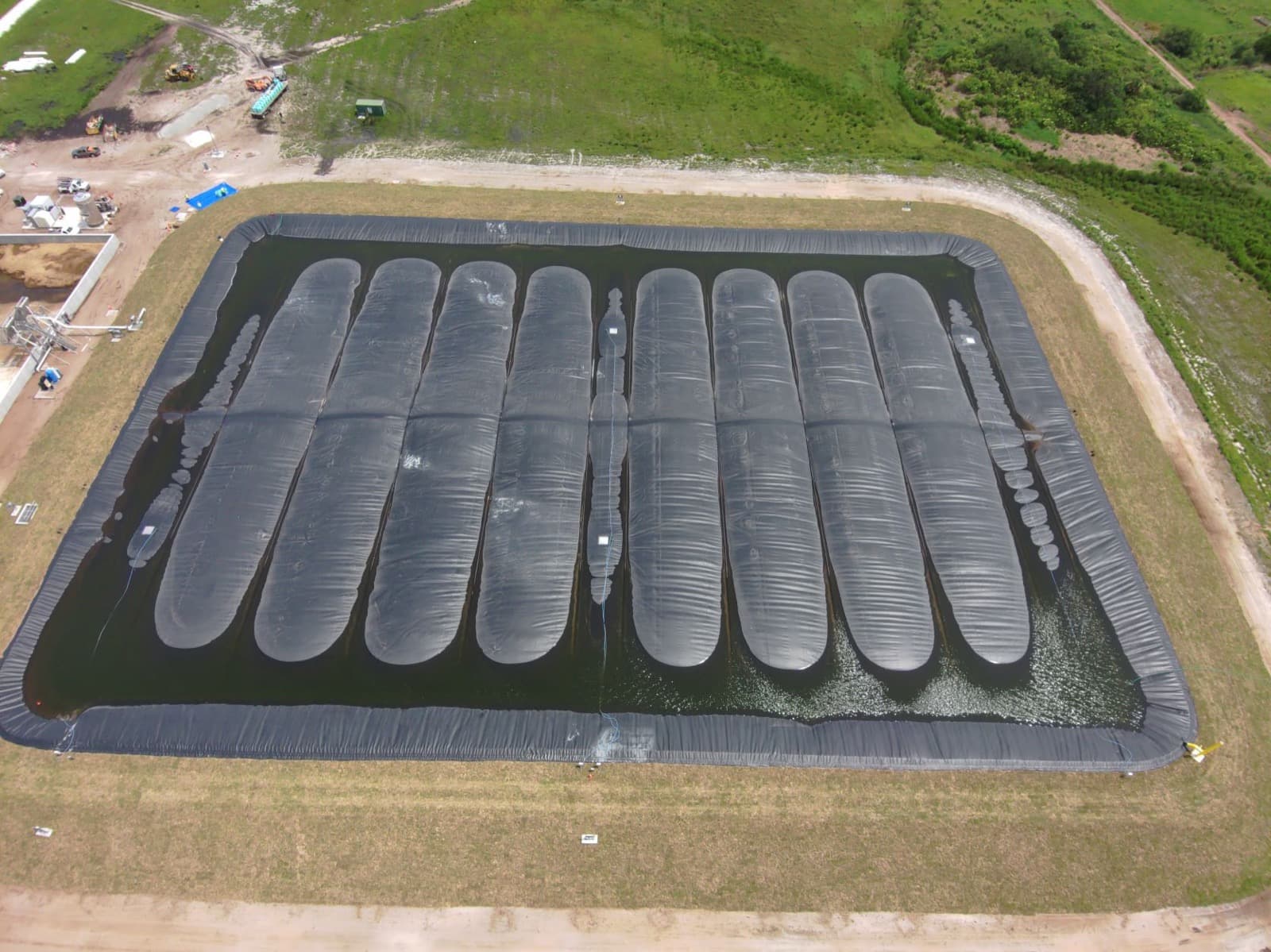
The geosynthetic liner is the most critical component of any covered lagoon digester system. It serves dual functions: containing the liquid waste below and capturing biogas above. A liner failure means gas leakage, environmental contamination, and lost carbon credit revenue. After installing liners on 500+ systems across every climate zone in the continental United States, EFI has developed installation procedures that minimize failure risk and maximize system lifespan. This guide covers the key decisions and procedures that determine liner performance.
Material Selection: HDPE vs LLDPE vs RPP
High-density polyethylene (HDPE) is the most common liner material for covered lagoon digesters and the default choice for most EFI installations. HDPE liners are typically specified at 40-mil or 60-mil thickness for lagoon bottoms and sidewalls, and 40-mil for floating covers. HDPE offers excellent chemical resistance to the hydrogen sulfide, ammonia, and organic acids present in agricultural waste streams. It has high tensile strength (minimum 26 kN/m for 40-mil per ASTM D6693), good UV resistance when carbon black is included at 2-3% by weight, and a well-established welding protocol using both hot wedge and extrusion methods.
Linear low-density polyethylene (LLDPE) is specified when the application requires greater flexibility than HDPE can provide. LLDPE has superior elongation characteristics (700%+ break elongation vs 100-700% for HDPE) and better stress crack resistance. This makes LLDPE the preferred choice for lagoons with irregular geometry, steep sidewalls, or installations where the liner must conform to uneven subgrade conditions. The trade-off is lower puncture resistance and somewhat more challenging welding -- LLDPE requires tighter temperature control during hot wedge fusion because its melt range is narrower.
Reinforced polypropylene (RPP) is the premium option for floating cover applications. RPP liners are factory-fabricated with a woven scrim reinforcement layer that provides exceptional dimensional stability and resistance to wind uplift. RPP covers do not require field welding of large panels -- they arrive as pre-fabricated sections with factory seams, which dramatically reduces field QA risk. RPP is specified at 36-mil or 45-mil thickness for most agricultural applications. The higher material cost ($0.80-$1.20/sq ft vs $0.35-$0.60/sq ft for HDPE) is partially offset by reduced field labor and lower seam failure rates.
Site Preparation
Site preparation is where liner installations succeed or fail. The subgrade must be smooth, compacted, and free of any objects that could puncture the liner -- rocks, roots, construction debris, rebar, or organic matter that could decompose and create voids. EFI's standard specification requires the subgrade to be proof-rolled with a smooth drum roller to a minimum 95% standard Proctor density, with all stones larger than 1/2 inch removed from the upper 6 inches.
For new lagoon construction, the subgrade is typically native soil that has been excavated, shaped, and compacted. For retrofit installations on existing lagoons, the process is more complex. The lagoon must be dewatered, sludge removed or consolidated, and the existing bottom and sidewalls prepared to receive the liner. Sludge management is often the most time-consuming and expensive element of a retrofit project. EFI typically specifies a minimum 6-inch sand bedding layer over compacted subgrade to provide puncture protection and facilitate leak detection.
Anchor trenches are excavated around the full perimeter of the lagoon to secure the liner edges. The standard anchor trench specification is 12 inches wide by 12 inches deep, located a minimum of 24 inches back from the top of the lagoon slope. The liner extends into the trench and is backfilled with compacted soil. For floating covers, a separate anchor system -- typically a concrete or HDPE batten strip bolted to an anchor trench or concrete perimeter beam -- secures the cover edges while allowing for water level fluctuation.
Welding Procedures
Field welding of geosynthetic liner panels is the highest-risk operation in any liner installation. EFI uses two welding methods depending on the application: hot wedge (dual-track fusion) for long straight seams, and extrusion welding for patches, detail work, and connections to penetrations (pipes, vents, instrumentation ports). Every welder must complete a trial weld at the beginning of each work shift that passes destructive testing before production welding begins.
Hot wedge welding uses a heated metal wedge that travels between two overlapping liner panels, melting the contact surfaces which are then pressed together by trailing rollers. The dual-track configuration creates two parallel weld beads with an unbonded channel between them. This channel is the key to field QA: it can be pressurized with air to test seam integrity without destructive sampling. Hot wedge parameters for 40-mil HDPE are typically 700-850 degrees F wedge temperature, 6-12 feet per minute travel speed, and 30-50 psi roller pressure, though exact settings depend on ambient temperature, humidity, and wind conditions.
Extrusion welding deposits a bead of molten polyethylene (from a welding rod fed through a heated barrel and die) over the edge of an overlapping seam or around a penetration detail. Extrusion welding is slower than hot wedge but essential for irregular geometries, T-joints, and repairs. The weld surface must be ground (abraded) immediately before welding to remove oxidized material and ensure a clean bonding surface. EFI specifies a minimum 1.5-inch extrusion bead width with full fusion to both the upper and lower liner surfaces.
QA Testing: The Every-150-Foot Protocol
EFI's quality assurance program exceeds industry minimums. The standard specification requires destructive testing of seam samples every 150 linear feet of weld, under the project quality plan. GRI-GM19a specifies seam properties and does not prescribe a single sampling interval; section 1.4 refers to GRI-GM14 and GM20 for sampling guidance. Each sample is a 12-inch strip cut perpendicular to the weld seam and tested for both peel adhesion (ASTM D6392) and shear strength (ASTM D6392). Peel adhesion must achieve film tearing bond (FTB) -- meaning the liner material itself fails before the weld separates. Shear strength must meet or exceed the parent material specification.
Non-destructive testing complements the destructive sampling program. All dual-track hot wedge seams are air pressure tested at 25-30 psi for a minimum 5-minute hold. Pressure decay of more than 2 psi indicates a seam defect that must be located and repaired. Extrusion welds are tested using vacuum box testing -- a transparent box sealed over the weld with soapy water, with a vacuum of 5 psi applied. Bubbles indicate a leak point. Every inch of every extrusion weld is vacuum box tested.
The QA testing program adds cost and time to the installation -- roughly 10-15% of the total liner installation budget. It is non-negotiable. A single undetected seam defect can result in gas leakage that compromises carbon credit verification, creates odor complaints, or allows liquid waste to contaminate groundwater. The cost of a liner repair after the system is operational is 10-50x the cost of catching and fixing a defect during installation.
Common Failure Modes and Prevention
- Stress cracking at folds and creases: HDPE is susceptible to environmental stress cracking, especially at sharp bends. Prevention: maintain minimum bend radius of 15x liner thickness at all transitions, use LLDPE at high-stress points.
- Wind uplift damage during installation: Exposed liner panels act as sails. Prevention: never deploy more liner than can be anchored or weighted in a single work day, monitor wind forecasts, have sand bags staged for emergency ballasting.
- Subgrade settlement: Differential settlement creates stress concentrations that can crack or tear the liner. Prevention: proper compaction testing, geotechnical evaluation of fill areas, settlement monitoring during the first year of operation.
- UV degradation on exposed surfaces: Liner above the waterline or on floating covers receives UV exposure. Prevention: specify minimum 2% carbon black for HDPE, use RPP with UV stabilizer package for floating covers, maintain minimum 40-mil thickness for any UV-exposed application.
- Chemical attack from H2S: Concentrated hydrogen sulfide in the headspace above the liquid surface can degrade some liner materials. Prevention: specify HDPE or RPP (both highly resistant), avoid PVC or unreinforced PP in biogas applications.
Proper liner installation is not glamorous work, but it is foundational. Every other component of a covered lagoon digester -- gas collection, flare performance, carbon credit generation -- depends on a liner system that does not leak. EFI's 150-foot destructive testing protocol and three decades of installation experience exist to ensure that the liner performs for its full 20-30 year design life.