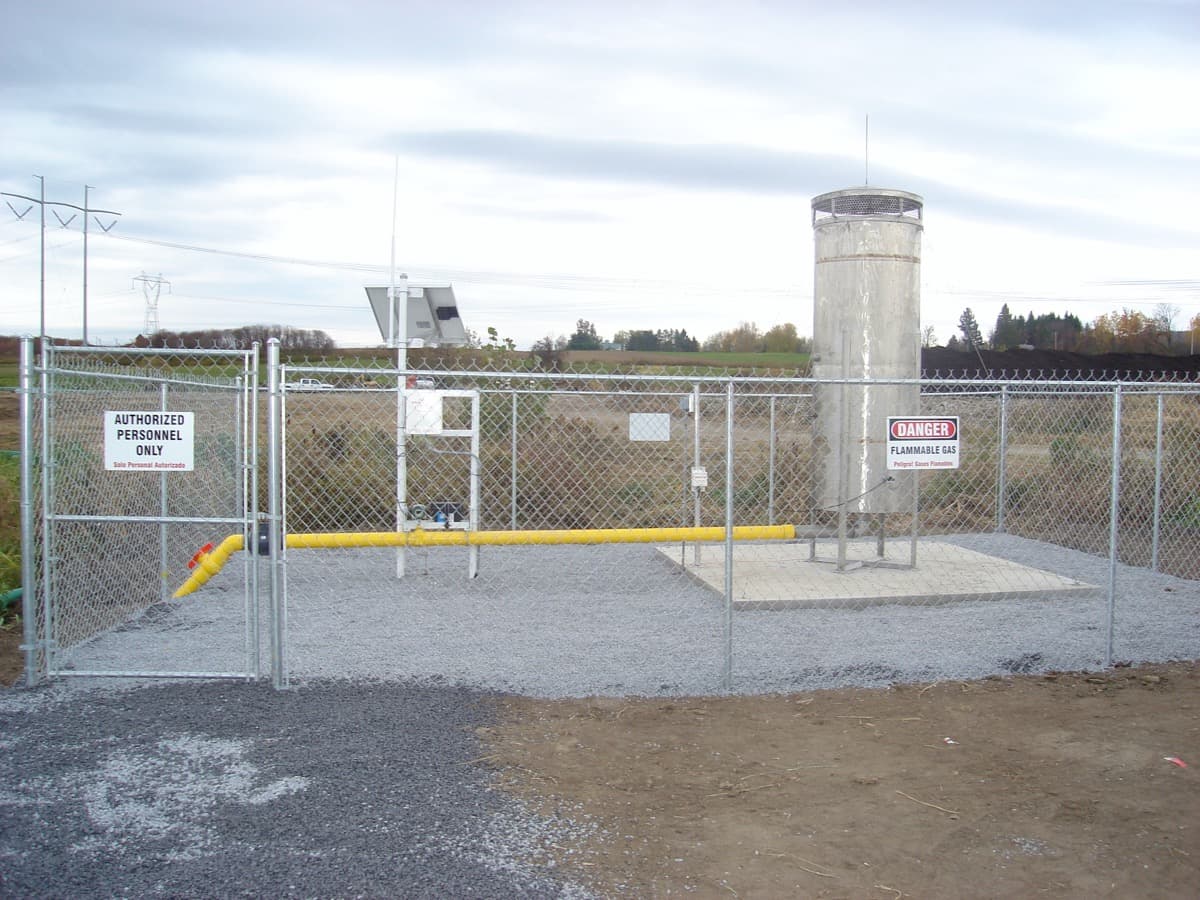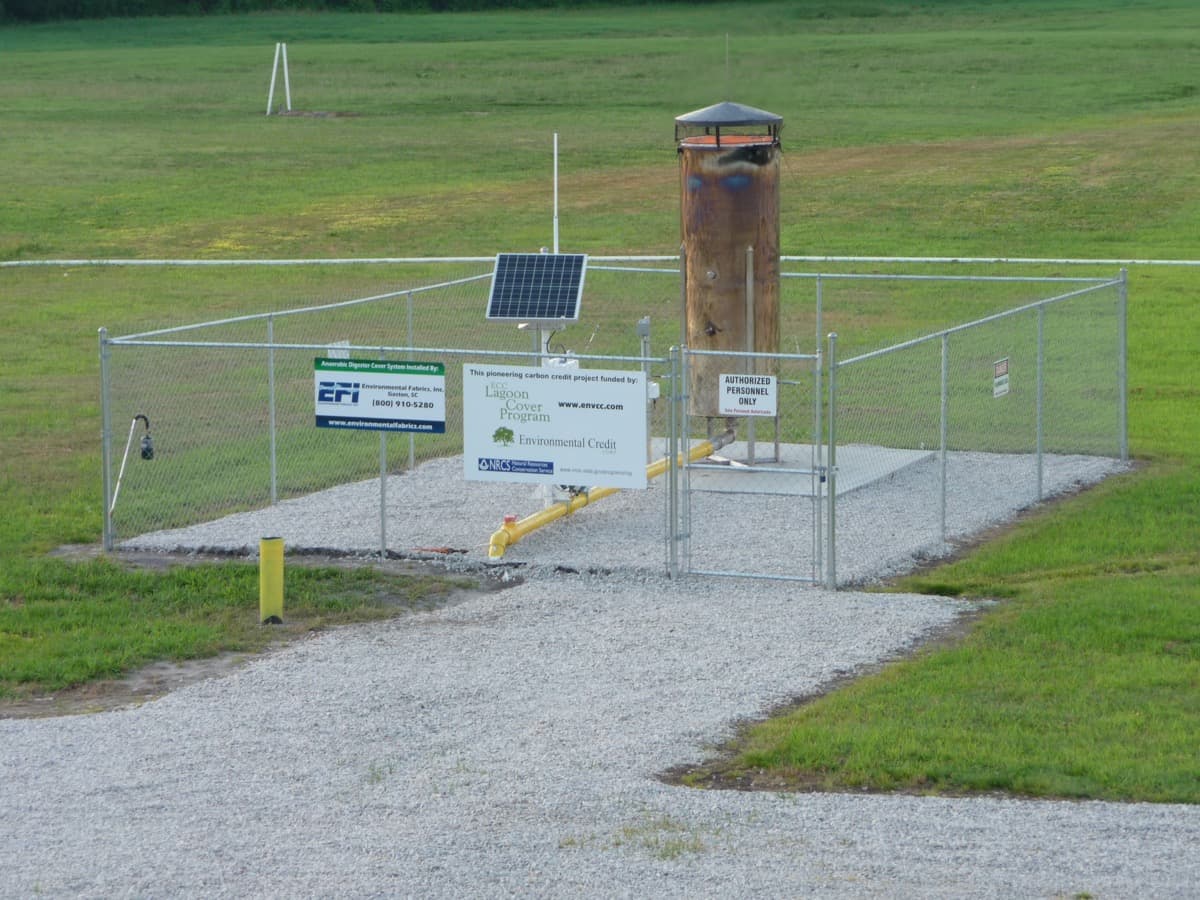
Hydrogen sulfide (H2S) is the most problematic trace gas in biogas from anaerobic digesters and covered lagoons. At concentrations of 1,000 to 10,000+ ppm -- typical in swine and food processing applications -- H2S corrodes metal piping, damages engine generators, poisons fuel cells, degrades flare components, and creates safety hazards for workers. Removing H2S from biogas is not optional; the question is how to do it cost-effectively.
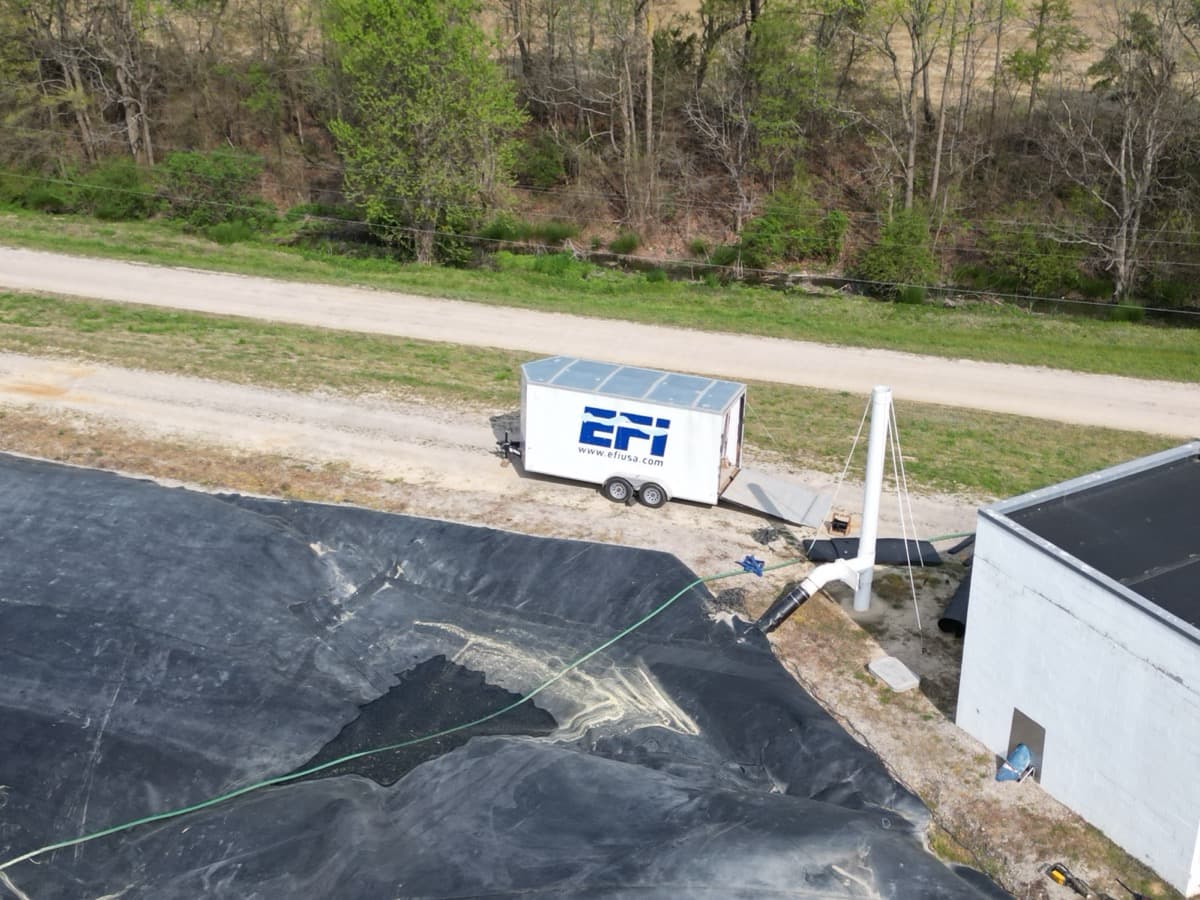
EFI USA has developed and refined an oxygen injection approach that eliminates the need for expensive chemical scrubbers on covered lagoon digester systems. Our O2 injection skids have been deployed across dozens of installations, saving operators hundreds of thousands of dollars in annual treatment costs.
The Problem with Traditional H2S Scrubbers
Conventional H2S removal systems -- iron sponge, activated carbon, caustic scrubbers, and proprietary chemical systems -- all share the same fundamental problem: ongoing consumable costs. A typical chemical scrubber system treating biogas with 3,000+ ppm H2S can consume $25,000 to $50,000 per month in chemicals, media, and maintenance. Over a 10-year project life, that is $3M to $6M in treatment costs alone.
- Iron sponge: Low capital cost but requires frequent media replacement. Spent media disposal creates additional cost and environmental liability.
- Activated carbon: Effective but expensive at high H2S concentrations. Media costs of $3-5 per pound with replacement cycles of weeks to months.
- Caustic scrubbers: Chemical scrubbing with NaOH is effective but generates a hazardous waste stream and requires chemical delivery, storage, and handling.
- Proprietary systems: Various branded scrubber technologies exist, but all rely on consumable chemicals or media that drive ongoing costs.
How Oxygen Injection Works
EFI's oxygen injection system takes a fundamentally different approach. Instead of treating H2S in the gas phase after collection, we prevent its formation or convert it in the liquid phase within the lagoon itself.
Small, controlled amounts of atmospheric air (typically 2-6% by volume) are injected into the headspace beneath the lagoon cover through EFI's proprietary O2 injection skid. This microaerobic environment supports the growth of sulfur-oxidizing bacteria (primarily Thiobacillus species) on the underside of the cover and on the biogas collection piping surfaces. These bacteria convert H2S to elemental sulfur and sulfate using the injected oxygen as an electron acceptor.
The biological conversion is highly efficient. Under proper operating conditions, EFI's O2 injection systems reduce H2S concentrations by 95-99%, bringing levels from 3,000-5,000 ppm down to 50-200 ppm. This residual H2S level is acceptable for most flare applications and can be easily polished with a small activated carbon unit if lower levels are required for engine or upgrading applications.
Cost Savings Analysis
The economics of O2 injection versus chemical scrubbing are compelling:
- Capital cost: O2 injection skid installed cost of $40,000 to $80,000, versus $150,000 to $400,000 for a chemical scrubber system.
- Monthly operating cost: O2 injection electricity cost of $200 to $500 per month (blower power), versus $25,000 to $50,000 per month for chemical consumables.
- Annual savings: $300,000 to $600,000+ per year in avoided scrubber costs for a typical large agricultural biogas system.
- 10-year savings: $3M to $6M in total cost avoidance, net of O2 skid capital and operating costs.
- Maintenance: O2 injection systems require minimal maintenance -- periodic blower service and air filter replacement. No media changes, no chemical handling, no hazardous waste disposal.
System Design and Operation
EFI's O2 injection skids are designed for reliable, unattended operation in remote agricultural settings. The system includes a low-pressure blower, air flow control valves, a monitoring system for O2 concentration in the biogas, and safety interlocks to prevent over-injection that could create an explosive mixture. The O2 concentration in the biogas headspace is maintained well below the lower explosive limit, typically at 0.5-1.5% O2 in the gas stream.
Proper O2 injection requires careful balancing. Too little oxygen allows H2S to persist. Too much oxygen can inhibit methanogenic bacteria and reduce biogas production, or in extreme cases create safety concerns. EFI's control systems use real-time gas analysis to maintain the optimal injection rate automatically.
When O2 Injection Is the Right Choice
O2 injection is ideal for covered lagoon digester systems where H2S levels are moderate to high (1,000-10,000 ppm), the biogas end-use is flaring or engine generation (where 50-200 ppm residual H2S is acceptable), the project requires low ongoing operating costs to maintain carbon credit economics, and the site is remote with limited access to chemical delivery and servicing.
“We installed O2 injection because a chemical scrubber would have consumed $35,000 per month in operating costs -- more than the entire carbon credit revenue from the project. O2 injection made the economics work.”
-- EFI USA Technical Team
Contact EFI to learn how our O2 injection systems can eliminate scrubber costs on your biogas project. We provide turnkey design, installation, and commissioning for both new and retrofit applications.