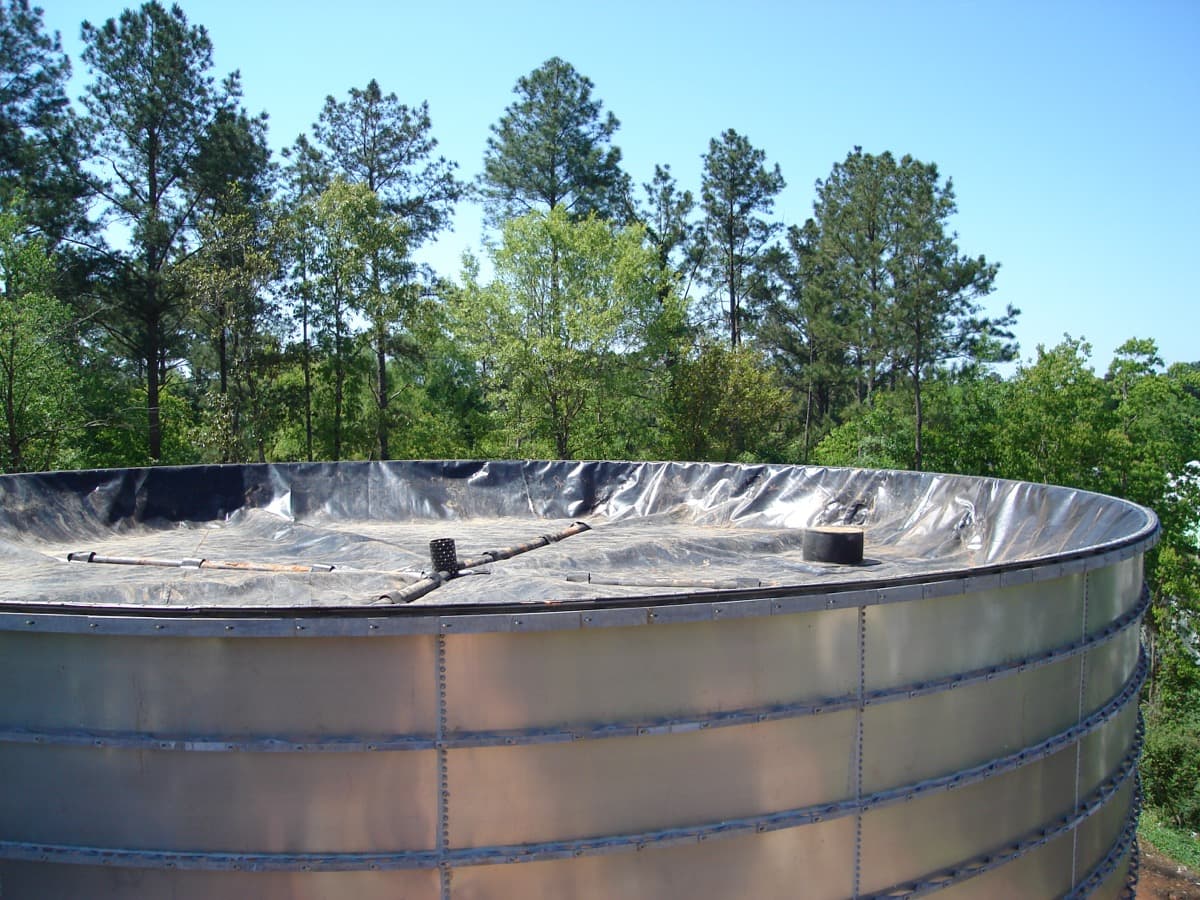
Industrial wastewater lagoons serve a critical function in the treatment chain for manufacturing, processing, mining, and energy operations. Unlike municipal lagoons that receive relatively consistent domestic wastewater, industrial lagoons must handle waste streams that vary widely in chemical composition, temperature, volume, and toxicity. A lagoon designed for a pulp and paper mill faces entirely different challenges than one designed for a chemical plant or a petroleum refinery.
Despite this diversity, the engineering principles underlying industrial lagoon design are consistent. The lagoon must have sufficient volume to provide the required treatment or storage capacity. The liner must be compatible with the wastewater chemistry. The freeboard and overflow systems must accommodate peak flows and upset conditions. And the monitoring systems must provide early warning of any containment compromise. This guide addresses each of these elements.
Lagoon Sizing
Industrial lagoon sizing depends on the lagoon's function within the overall wastewater treatment system. Equalization lagoons buffer flow and concentration variations -- sized for 12-48 hours of flow depending on the variability of the waste stream. Treatment lagoons provide biological or chemical treatment -- sized based on the required hydraulic retention time and organic loading rate. Storage lagoons hold treated or untreated wastewater for subsequent land application, discharge, or hauling -- sized for the storage period needed between disposal events.
- Volume calculation: Active volume (gallons) = design flow rate (GPD) x required retention time (days). Total volume adds sludge storage, freeboard, and storm event storage.
- Depth: 8-15 feet operating depth is typical for anaerobic treatment lagoons. Shallower depths (3-6 feet) for facultative or aerobic lagoons to allow oxygen transfer.
- Multiple cells: Most industrial lagoon systems use multiple cells in series to improve treatment efficiency, provide operational flexibility, and allow individual cells to be taken offline for maintenance.
- Peak flow capacity: Industrial operations experience upset conditions, equipment failures, and process changes that can dramatically increase wastewater volume. Lagoon sizing must account for peak flow events, not just average conditions.
Liner Selection for Industrial Applications
Liner material selection for industrial lagoons requires careful analysis of the wastewater chemistry. The liner must resist chemical attack for the design service life -- typically 20-30 years -- under the actual temperature, pH, and chemical concentration conditions it will experience. Laboratory immersion testing (EPA Method 9090) is the standard approach for verifying chemical compatibility.
- HDPE (60-80 mil): The default choice for most industrial applications. Excellent resistance to acids, bases, and most inorganic chemicals. Check compatibility with aromatic hydrocarbons, chlorinated solvents, and strong oxidizers.
- LLDPE (40-60 mil): For applications requiring greater flexibility or conformability. Chemical resistance similar to HDPE but slightly lower for some hydrocarbons.
- CSPE (Hypalon, 36-45 mil): Superior resistance to UV, ozone, and oxidizing chemicals. Often specified for petroleum-contaminated water and chemical storage. Higher cost than HDPE.
- PVC (20-40 mil): Suitable for some industrial applications with compatible chemistry. Not recommended for high-temperature or hydrocarbon-containing waste streams.
- Double liner systems: Required by regulation for hazardous waste lagoons (RCRA Subtitle C) and recommended for any industrial lagoon containing constituents that pose significant groundwater risk.
Freeboard and Overflow Design
Freeboard is the vertical distance between the maximum operating level and the top of the embankment. Adequate freeboard prevents overtopping from storm events, wind-driven waves, and upset conditions. Insufficient freeboard is one of the most common design deficiencies in industrial lagoons and has been the cause of numerous environmental releases.
- Minimum freeboard: 2 feet for small lagoons (less than 1 acre), 3 feet for medium lagoons (1-5 acres), and 4 feet for large lagoons (greater than 5 acres). These minimums may be increased based on site-specific factors.
- Storm event storage: The lagoon must accommodate the volume of the design storm event (typically 25-year, 24-hour rainfall) above the maximum operating level without overtopping. In high-rainfall regions, this may require 6-12 inches of additional freeboard.
- Wave run-up: For large lagoons with significant fetch, wind-generated waves can add 1-3 feet to the effective water level on the downwind embankment. Wave run-up should be calculated using the Sverdrup-Munk-Bretschneider method.
- Overflow spillway: Every industrial lagoon should have a designed overflow spillway that activates before the embankment is overtopped. The spillway directs overflow to a controlled discharge point rather than allowing uncontrolled embankment erosion.
Inlet and Outlet Design
Inlet and outlet structures must be designed to prevent erosion damage to the liner and to optimize hydraulic performance of the lagoon. A common design error is discharging influent directly onto the liner surface, which creates localized erosion and turbulence that can damage the liner and short-circuit the flow pattern.
Best practice is to discharge influent through a submerged diffuser or energy-dissipating structure that distributes flow evenly and minimizes turbulence. Outlet structures should include baffles or skimmers that prevent floating material from being discharged. For multi-cell systems, inter-cell transfer structures should be sized to prevent hydraulic bottlenecks during peak flow conditions.
Monitoring Systems
- Groundwater monitoring: Minimum of one upgradient and two downgradient monitoring wells. Quarterly sampling for indicator parameters (pH, conductivity, chloride) and annual sampling for full constituent analysis.
- Leak detection: For double-lined systems, continuous monitoring of the leak detection sump provides real-time indication of primary liner integrity.
- Water level monitoring: Continuous level measurement in each lagoon cell for operational control and freeboard verification. Automated alarms for high-water conditions.
- Effluent quality monitoring: Regular sampling of lagoon effluent to verify treatment performance and discharge compliance.
- Embankment monitoring: Visual inspection of embankment slopes for signs of seepage, erosion, settlement, or animal damage. Piezometers in embankments for large facilities to monitor internal water levels.
Regulatory Framework
Industrial wastewater lagoons are regulated under multiple federal and state programs. NPDES permits regulate any discharge from the lagoon to surface waters. RCRA regulations apply if the wastewater is classified as hazardous waste. State groundwater protection programs impose containment and monitoring requirements. Air quality permits may be required for lagoons that generate volatile emissions. The regulatory framework for a specific facility depends on the waste characteristics, the lagoon design, and the state and local jurisdiction.
EFI USA designs and installs liner systems for industrial wastewater lagoons across a wide range of industries. From single-cell equalization basins to multi-cell treatment systems, our engineering team provides site-specific design and our installation crews deliver quality construction. Contact us for a project consultation.