Heap leach mining is the dominant extraction method for low-grade gold, silver, and copper ores. The process involves stacking crushed ore on a lined pad and irrigating it with a chemical solution -- cyanide for precious metals, sulfuric acid for copper -- that dissolves the target mineral. The pregnant leach solution (PLS) is collected by the liner system and routed to processing. The liner is the single most critical containment element in the entire operation.
EFI USA has installed liner systems for heap leach operations across the western United States and internationally. Mining liner work demands the highest standards of material quality, installation precision, and quality assurance. A liner failure on a heap leach pad can contaminate groundwater with cyanide or acid, shut down production, and trigger millions of dollars in remediation costs.
Design Requirements for Heap Leach Pad Liners
Heap leach pads present some of the most demanding conditions in geosynthetic engineering. The liner system must be designed for:
- Extreme mechanical loading: Ore stacks can reach 200-400 feet in height, imposing sustained loads of 10,000-50,000+ pounds per square foot on the liner. The liner must resist puncture, tear, and creep under these loads for the entire mine life.
- Chemical resistance: Continuous exposure to sulfuric acid (pH 1-2 for copper leach) or cyanide solution (pH 10-11 for gold/silver). The liner material must be chemically inert to these solutions over a 20-30 year design life.
- UV exposure during construction: Mining sites are often at high altitude in desert environments with intense UV radiation. The liner is exposed during the extended construction and ore loading period.
- Temperature extremes: Mining sites experience temperature swings from below 0°F to above 120°F. The liner must maintain flexibility and integrity across this range.
- Slope stability: Heap leach pads are constructed on slopes of 2H:1V to 3H:1V. The liner system must provide sufficient interface friction to prevent sliding under the weight of ore and solution loading.
Material Selection
HDPE is the standard geomembrane material for heap leach applications due to its exceptional chemical resistance and long-term durability. Typical specifications for mining heap leach liners include:
- Thickness: 60-80 mil is standard; 100 mil for high-load or critical applications. Thicker liners provide greater puncture resistance and longer service life.
- Surface texture: Single-sided textured (textured on top, smooth on bottom) for most applications. Double-textured where interface friction is critical on steep slopes.
- Resin quality: Premium virgin HDPE with high stress crack resistance (SP-NCTL > 500 hours). Mining liners cannot use recycled or off-spec resin.
- Carbon black: 2-3% carbon black content for UV stabilization. Mining liners are exposed to UV during construction periods that can last months to years.
- Overliner protection: A protective geotextile or soil cushion layer above the liner protects against puncture from angular ore fragments during initial loading.
Leachate Collection System Design
The leachate collection system (LCS) above the liner collects pregnant leach solution and routes it to processing. The LCS must handle very high flow rates during active irrigation while maintaining positive drainage across the entire pad area. Typical LCS components include a high-transmissivity drainage geocomposite or gravel drainage blanket, perforated HDPE collection pipes in herringbone or parallel patterns, solution collection channels and sumps at the low point of the pad, and redundant collection capacity to handle peak irrigation events and storm water.
Installation Challenges in Mining
Mining liner installation presents unique challenges compared to other geosynthetic applications:
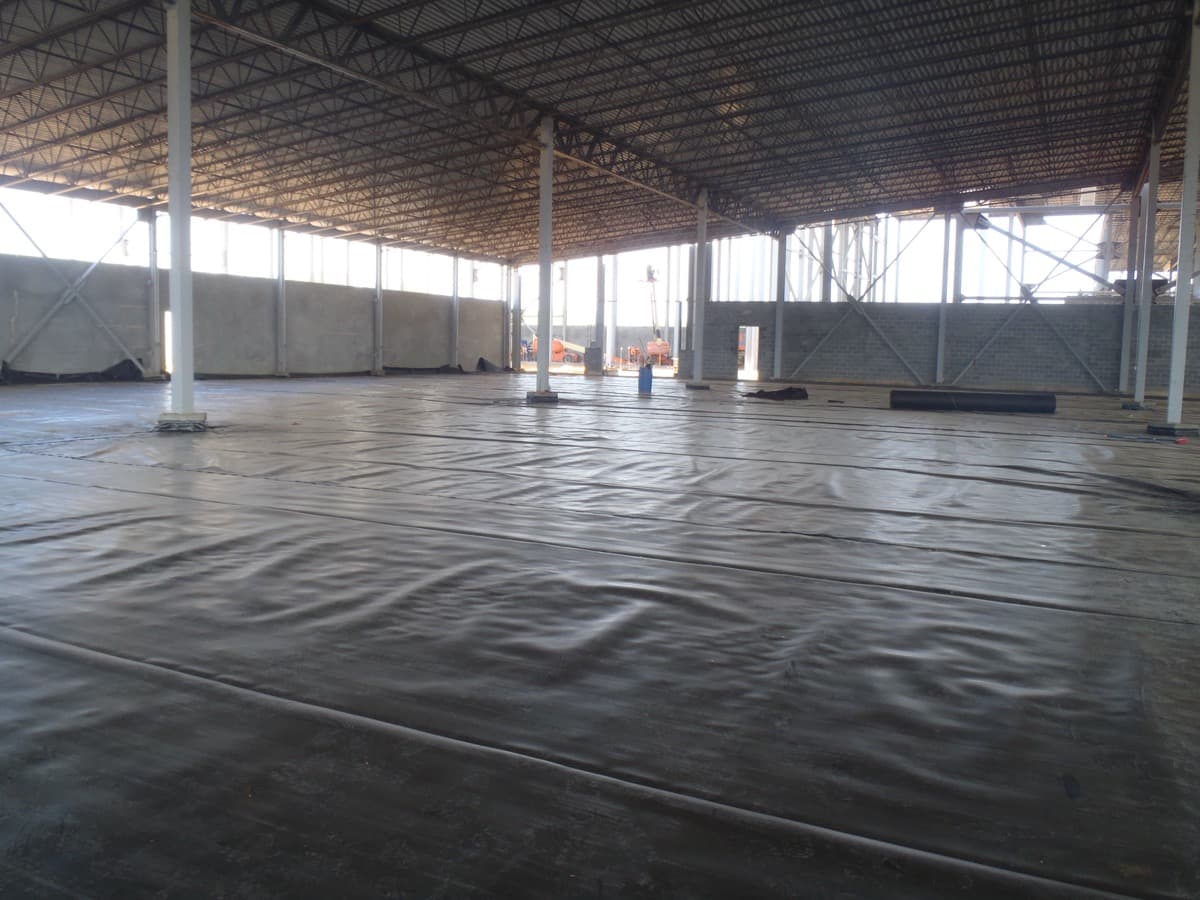
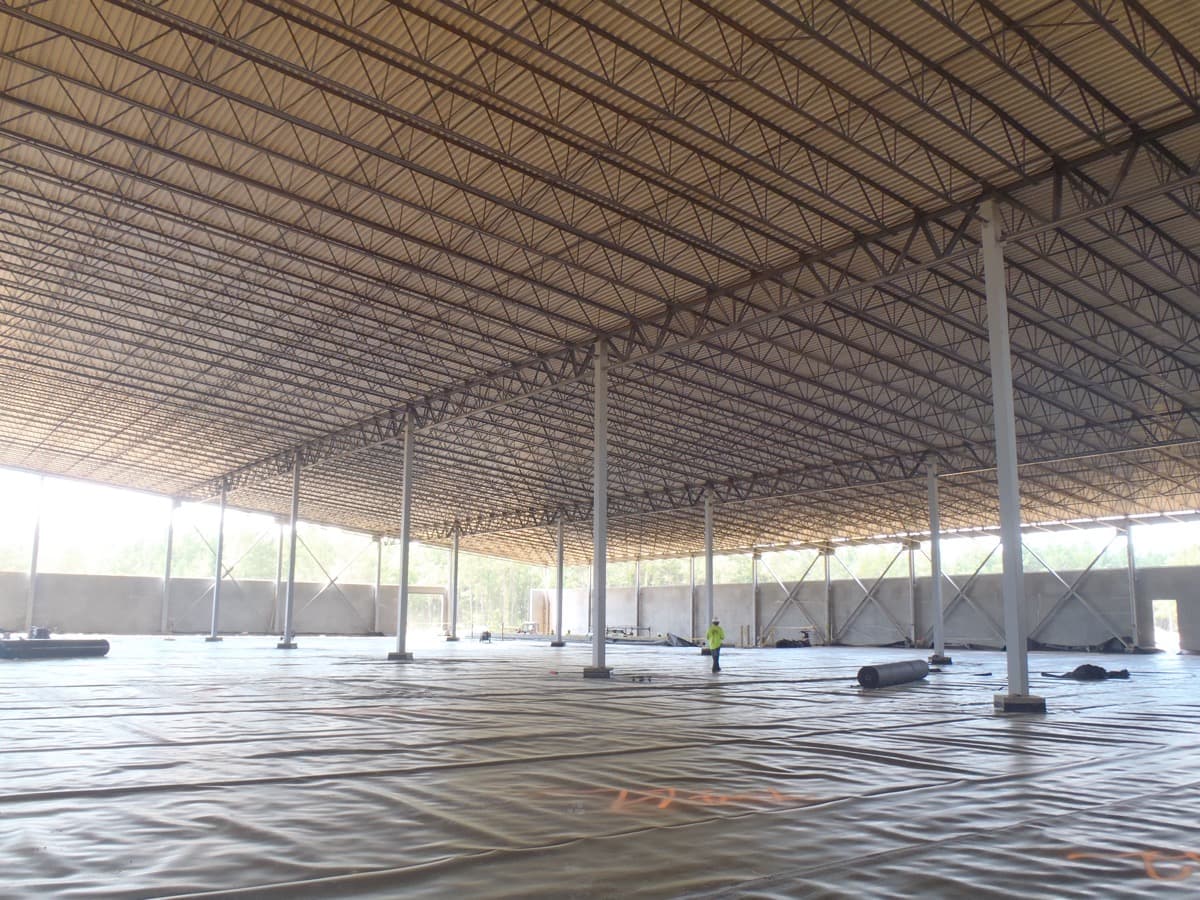
- Scale: Heap leach pads can cover hundreds of acres. Liner deployment and welding on this scale requires extensive crew coordination and logistics planning.
- Remote locations: Mining sites are often in remote desert or mountain locations with limited infrastructure. All equipment, materials, and personnel must be mobilized to the site.
- Wind: Desert and high-altitude mining sites frequently experience sustained high winds. Panel deployment and welding are not possible above 15-20 mph, and wind delays are a major scheduling factor.
- Altitude and temperature: High-altitude sites may experience temperatures below freezing at night and above 100°F during the day. Welding parameters must be continuously adjusted for ambient conditions.
- Coordinated construction: Liner installation must be closely coordinated with earthwork, pipe installation, and ore loading schedules. Delays in liner work cascade through the entire mine development schedule.
Quality Assurance for Mining Liners
Mining liner CQA programs are the most rigorous in the geosynthetic industry. In addition to standard seam testing (destructive, air pressure, and vacuum box), mining projects typically require electrical leak location (ELL) surveys using dipole or water lance methods across the entire lined area, conformance testing of all geosynthetic materials upon delivery, detailed panel layout and seam mapping documentation, and third-party CQA inspection by IAGI-certified inspectors throughout the installation.
“There is no room for error on a heap leach pad liner. Once ore is stacked, the liner is inaccessible for the life of the mine. Every square foot must be right before a single ton of ore is placed.”
-- EFI USA Technical Team
Contact EFI for mining liner installation services. Our crews have the experience and equipment to handle the most demanding heap leach pad projects.