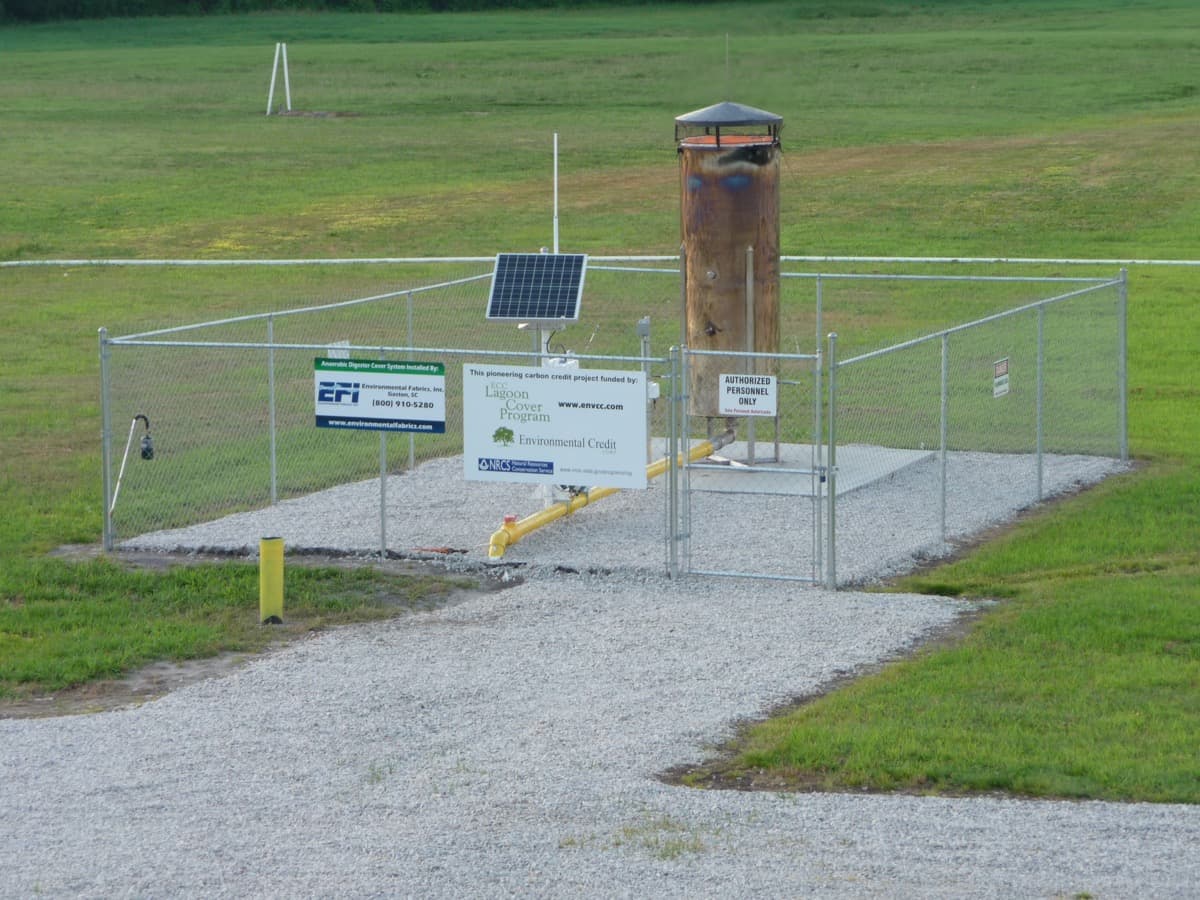
The amount of hydrogen sulfide that biogas can carry before it becomes a problem is not a single number. A flare will burn gas at several thousand parts per million of H2S without complaint. An internal combustion engine starts to suffer below 500 ppm. A pipeline interconnect for renewable natural gas often will not accept anything above 4 ppm. The same raw gas, drawn from the same covered lagoon, has to meet a target that changes by a factor of a thousand depending on where it is going.
That range is the single most important input to a biogas treatment design, and it is the one most often skipped. Operators tend to ask how to remove H2S before they have settled where the gas will be used. The order matters. The end use sets the treatment target, and the treatment target sets the equipment, the footprint, and the operating cost for the life of the project.
Why the End Use Comes First
Hydrogen sulfide is corrosive and toxic. In biogas from anaerobic digesters and covered lagoons it commonly runs between 1,000 and 10,000 ppm, with swine, poultry, and food processing waste streams at the higher end. Left untreated, it attacks metal piping, scores engine cylinders, fouls heat exchangers, and poisons catalytic and electrochemical equipment. None of that is in dispute.
What changes from project to project is how much H2S the downstream equipment will tolerate. A treatment system sized for a flare and a treatment system sized for pipeline injection are not the same system scaled up or down. They are different trains. Designing without a confirmed end use means either building for the worst case and overspending, or building for the easy case and replacing the system later.
H2S Tolerance by Application
The practical limits below reflect what equipment manufacturers and gas buyers generally specify. Exact thresholds vary by make, model, and the air permit governing the site, so they should always be confirmed against the actual equipment and the local permit.
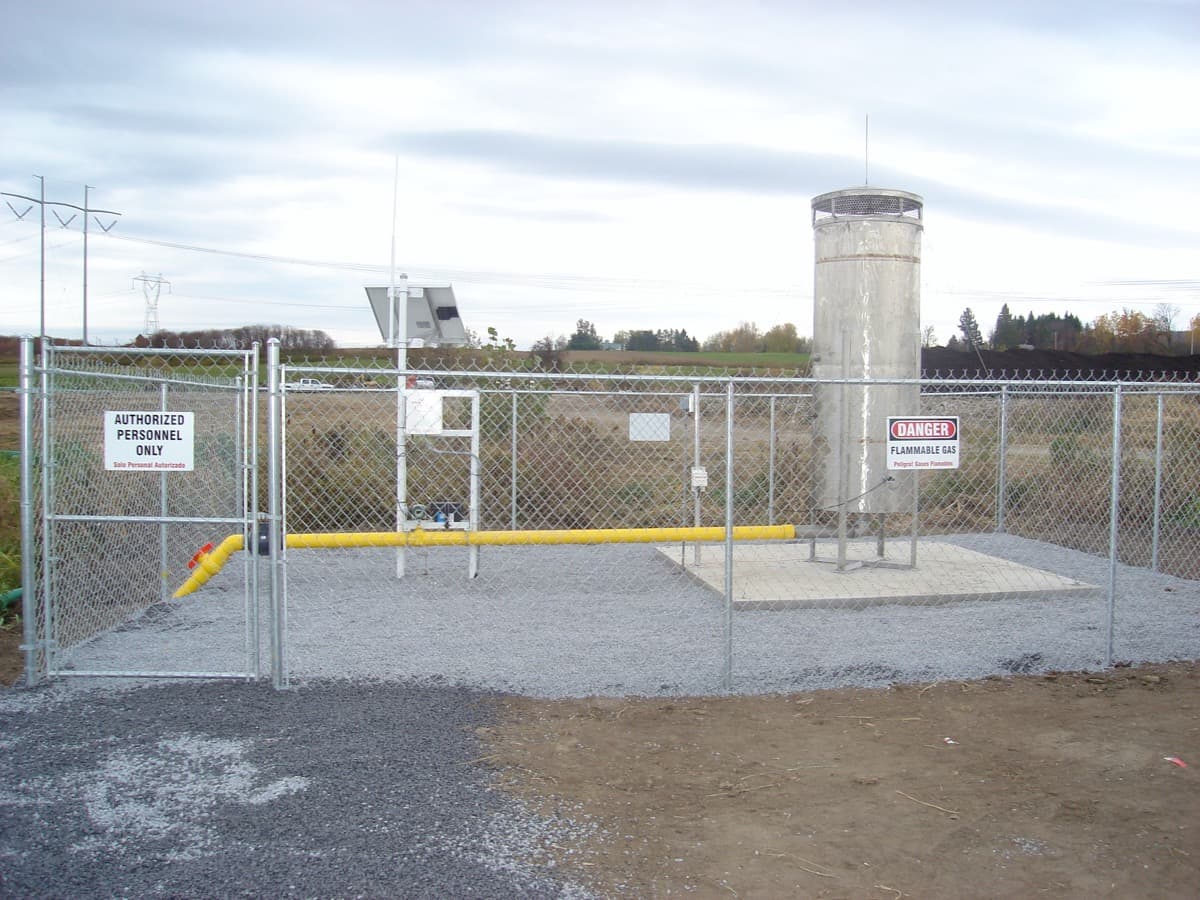
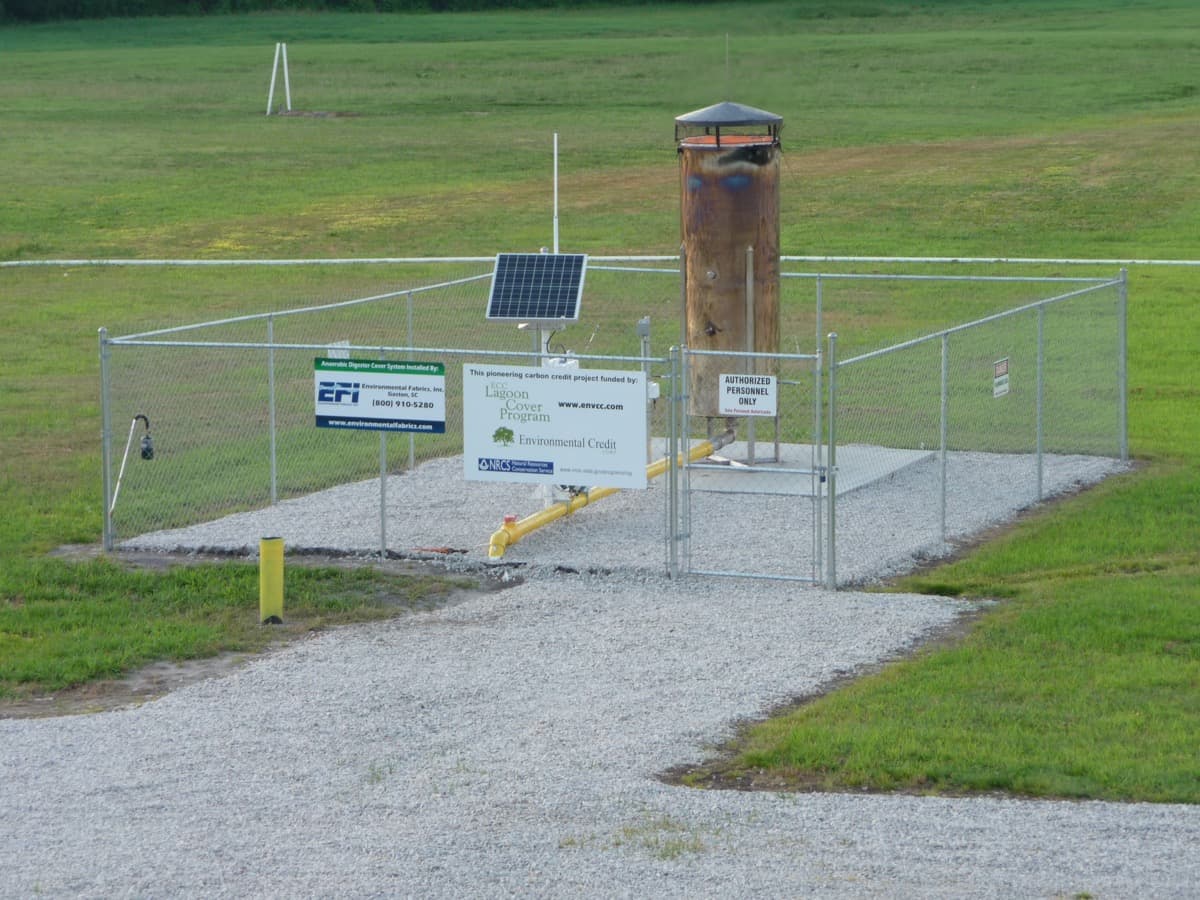
- Enclosed and open flares: the most forgiving end use. Most flares combust gas at a few hundred to several thousand ppm H2S. The constraint is usually the air permit rather than the flare itself, because combustion converts H2S to sulfur dioxide, and SO2 emissions are capped at many sites.
- Boilers and process heaters: tolerant but not unlimited. Many units run on gas in the hundreds of ppm, with the practical ceiling often near 1,000 ppm depending on burner materials and how far the flue gas is allowed to cool and condense.
- Internal combustion engines and CHP gensets: sensitive. Engine manufacturers commonly require H2S below 200 to 500 ppm to protect bearings, oil, and exhaust components and to hold warranty terms. Higher levels shorten oil change intervals and accelerate wear.
- Pipeline injection for renewable natural gas: strict. Pipeline tariffs commonly cap H2S at or below 4 ppm, alongside limits on water, oxygen, and carbon dioxide. Meeting this target requires polishing well beyond what a flare or engine needs.
- Fuel cells: the most demanding. Many fuel cell systems require H2S below 1 ppm because sulfur poisons the catalyst. This end use sits at the far end of the treatment range.
Designing the Treatment Train to the Target
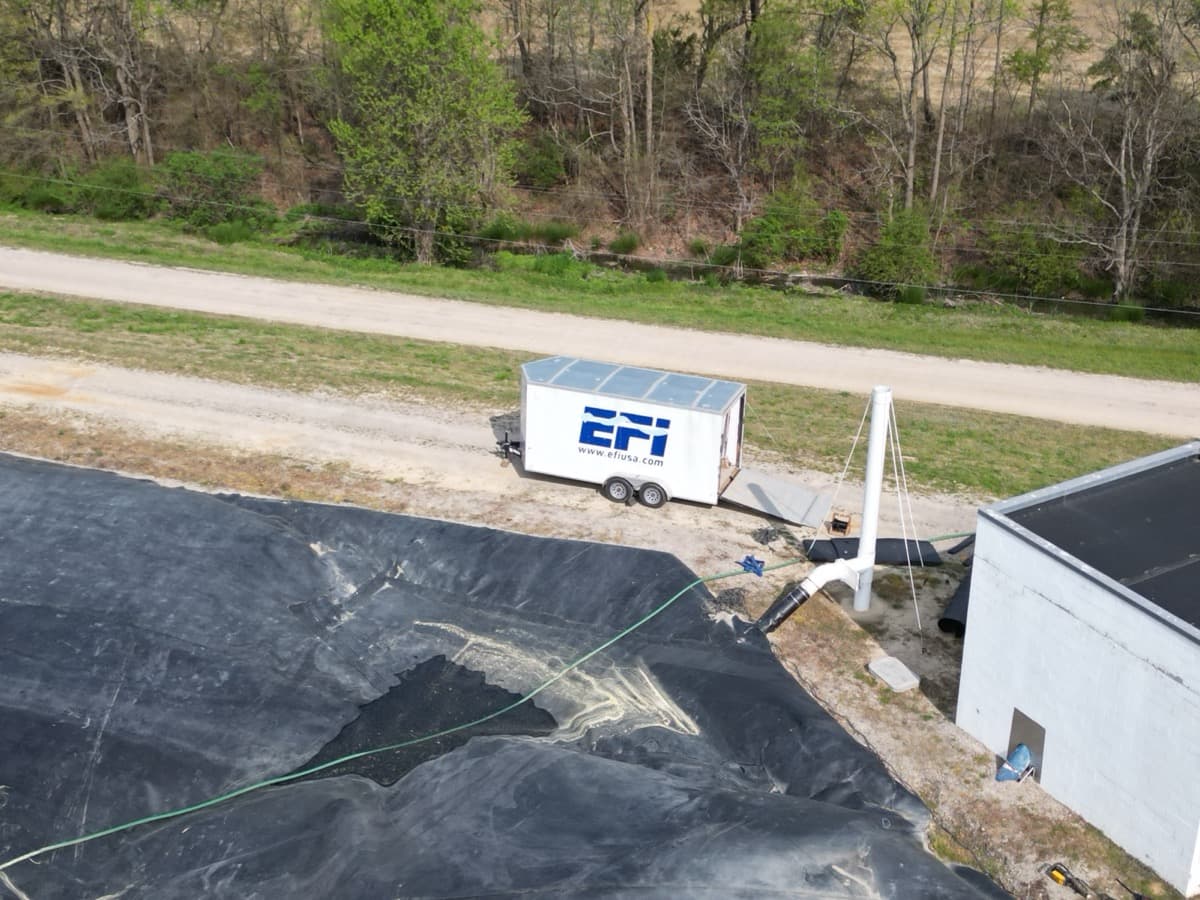
On covered lagoon digesters, EFI's first stage of H2S control is in-situ oxygen injection. A small, metered amount of air introduced beneath the cover supports sulfur-oxidizing bacteria that convert H2S to elemental sulfur in the liquid and on the gas collection surfaces. Under steady operation this reduces H2S by 95 to 99 percent, taking a 3,000 to 5,000 ppm stream down to roughly 50 to 200 ppm at very low operating cost.
For a flare, that is usually the finish line. For an engine, a modest polishing step, often a small activated carbon or iron-based media vessel, brings the gas inside the manufacturer's window. For pipeline injection or a fuel cell, the gas moves on to a dedicated upgrading and polishing train, where the in-situ stage has already removed the bulk of the sulfur and made the downstream media last far longer. The target decides how many of these stages a project actually needs.
Right-Sizing Avoids Two Expensive Mistakes
Over-treating is the quieter mistake. A site that only ever flares its gas does not need pipeline-grade polishing, yet systems are sometimes specified that way out of caution. The penalty is paid every month in media and chemical replacement that the end use never required.
Under-treating is the louder one. Gas that is clean enough for a flare today will damage an engine that gets added next year. When a project plans to move from flaring to power generation or to renewable natural gas, that path belongs in the original design, so the treatment train can be staged rather than torn out and rebuilt.
Where EFI Starts
Before sizing any equipment, EFI confirms three things: the raw H2S concentration measured at the site, the end use the gas is heading to, and the specification that end use enforces. Those three numbers define the treatment target. Everything downstream, from blower sizing to media selection to the monitoring package, follows from them. Thirty-two years of building these systems has made the sequence a fixed starting point.
“The first question on any biogas project is where the gas is going. The end use sets the treatment target, and the treatment target sets the design. Get that order right and the rest of the system falls into place.”
-- EFI USA
For operators weighing flaring, power generation, or pipeline injection, the H2S target is not a detail to settle later. It is the decision that shapes the entire gas conditioning system. EFI designs and builds H2S treatment for covered lagoon and digester biogas across all of these end uses, and can help match the treatment depth to the gas you intend to produce. Contact EFI to discuss the right target for your project.