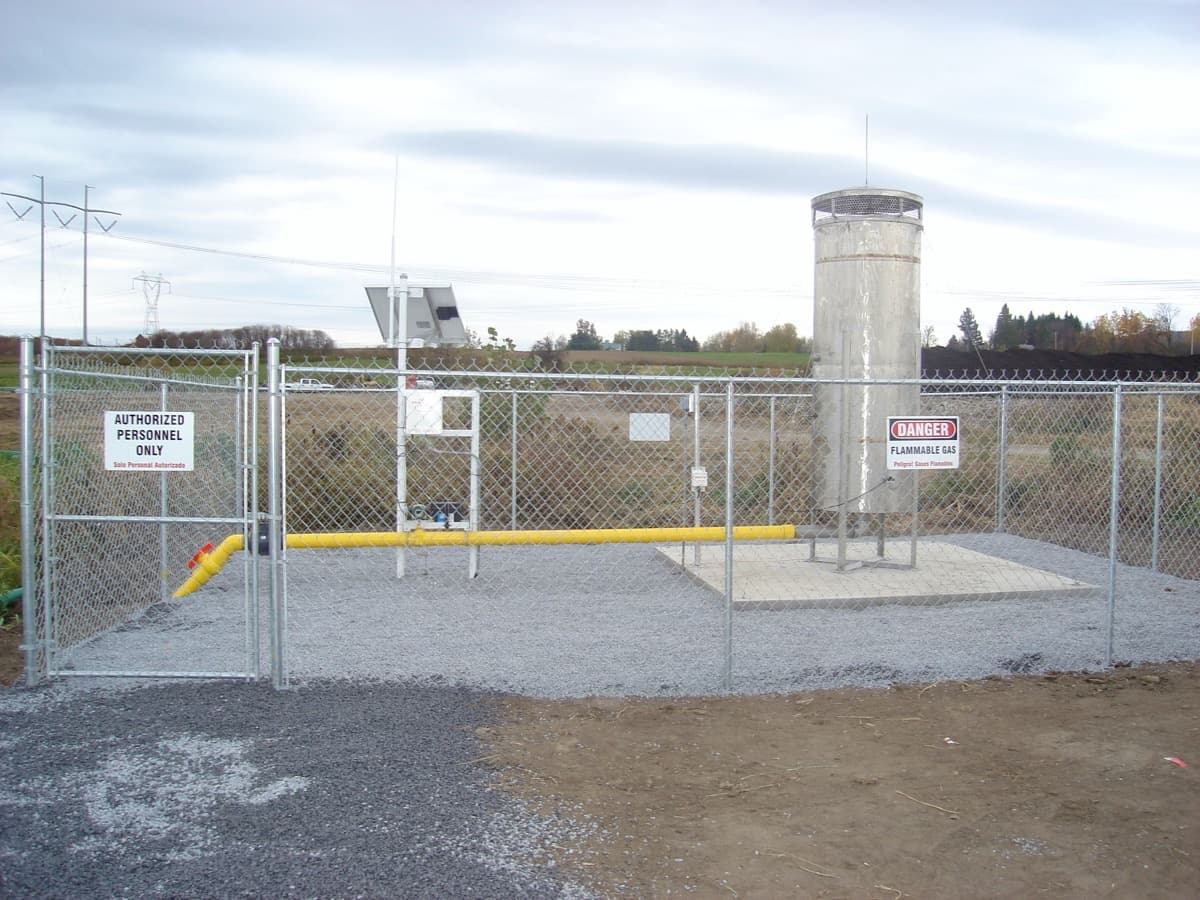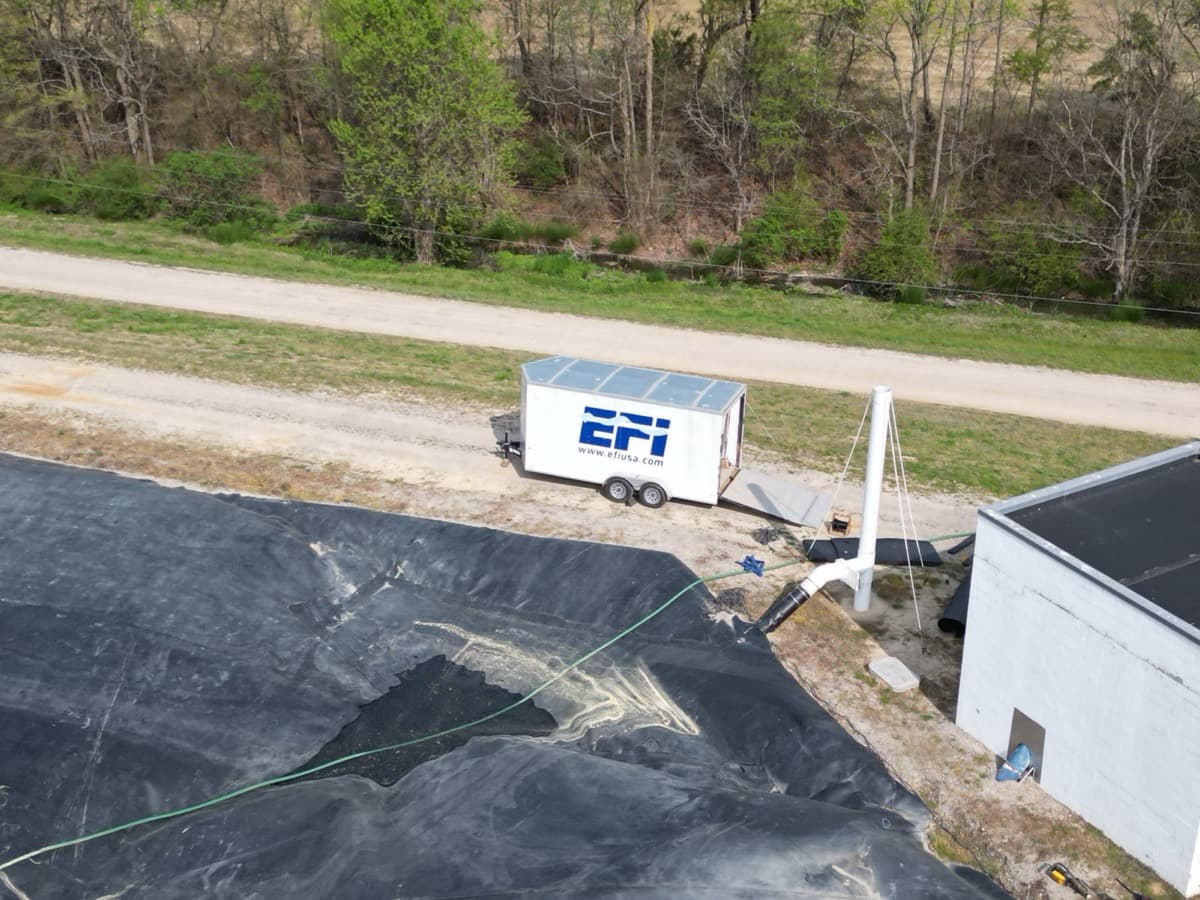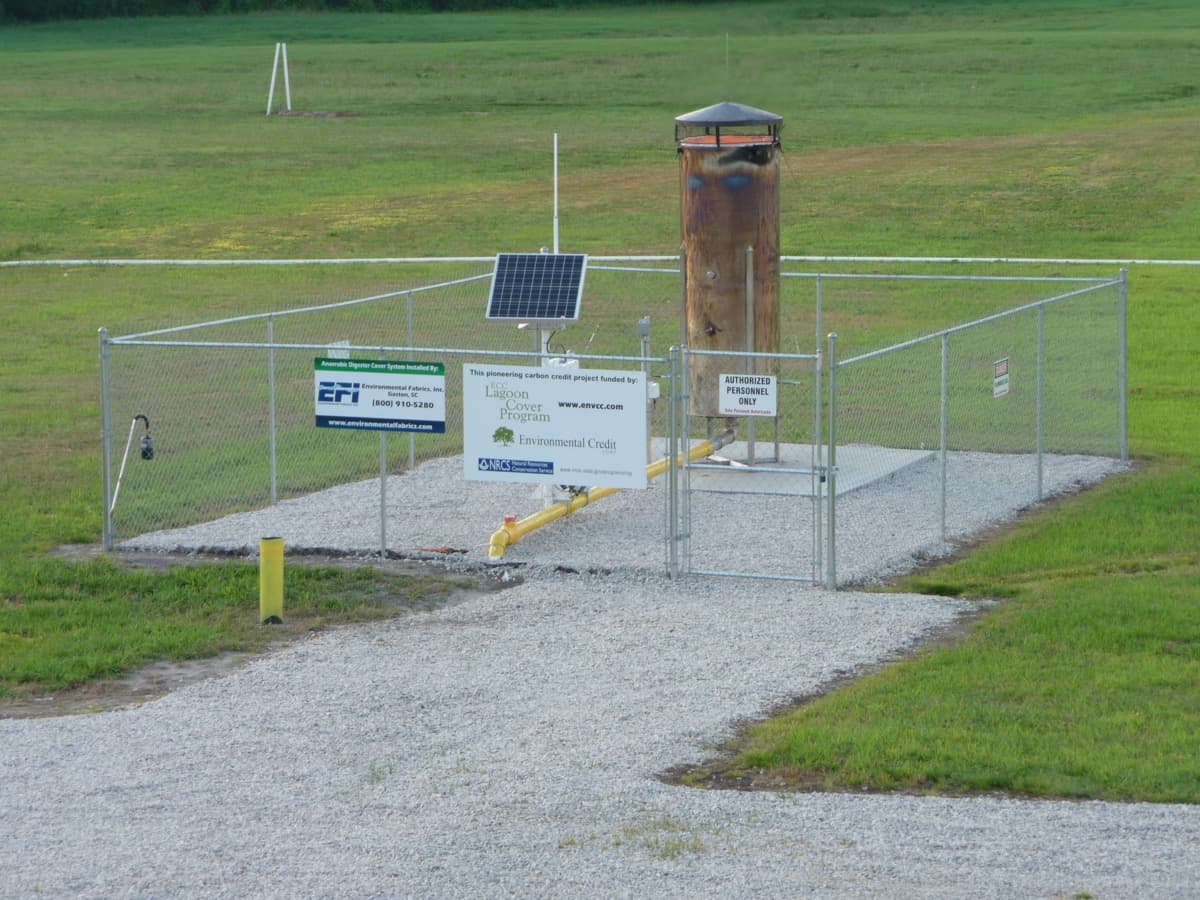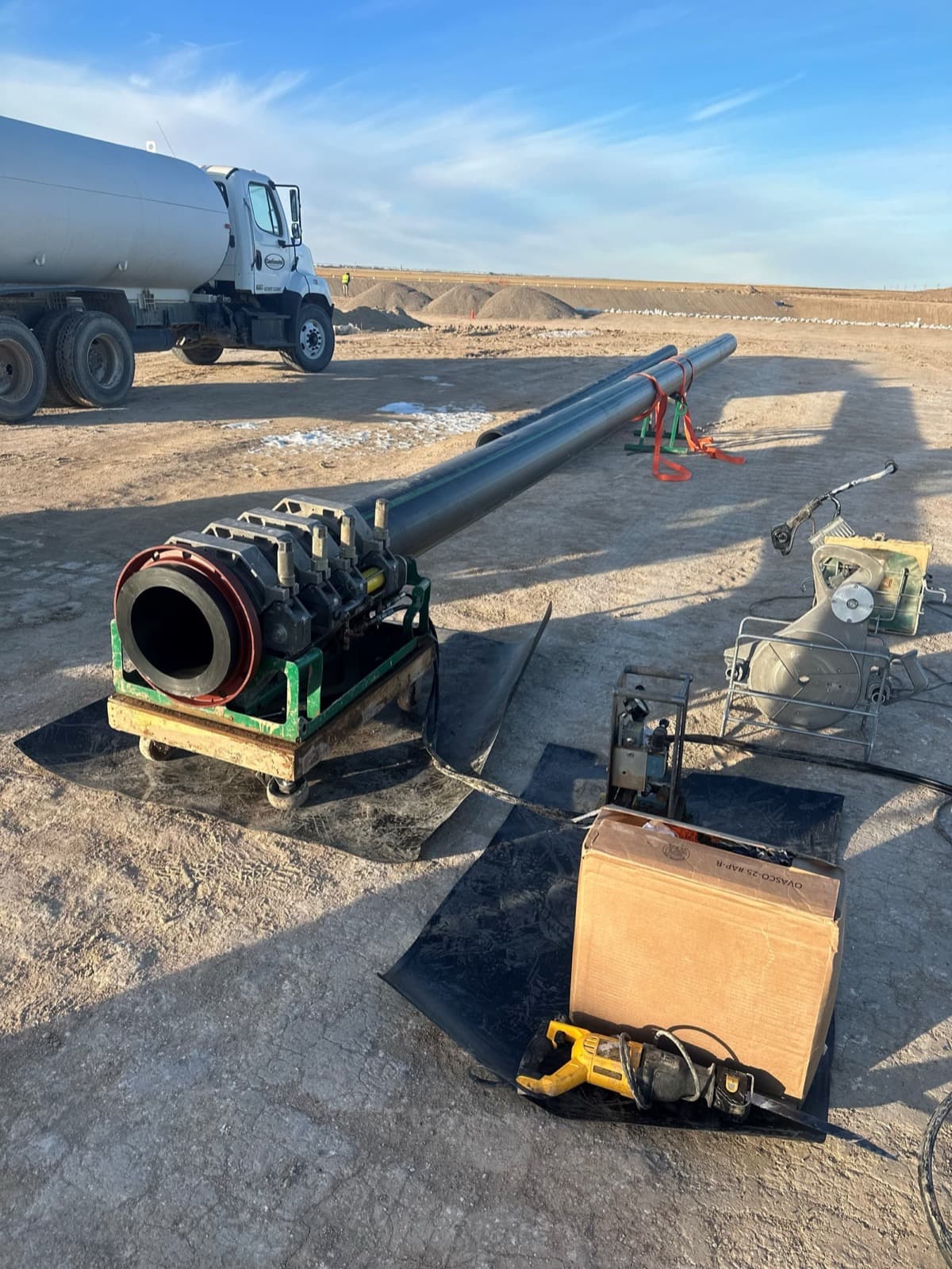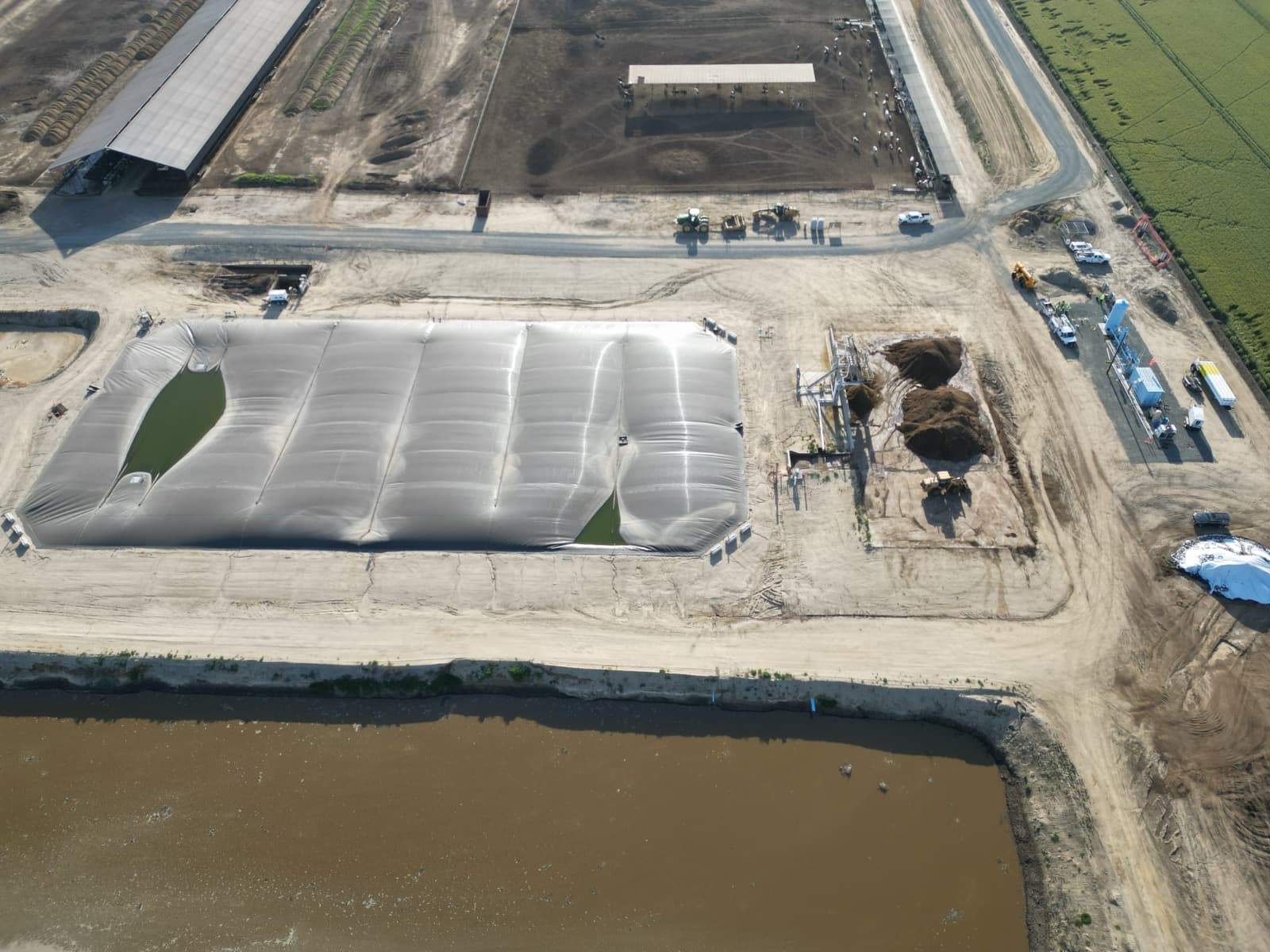
An open anaerobic lagoon is already producing biogas long before anyone installs a cover over it. The bacteria breaking down the organic load do not wait for equipment. In a warm, loaded lagoon, that gas is roughly 55 to 65 percent methane, and on an uncovered surface all of it escapes to the atmosphere. A gas-tight cover does not create the biogas. It captures gas that the lagoon was already making and losing.
That distinction matters because it changes how an owner should think about a project. Many of the covered digesters operating today are not new-built tanks. They are retrofits placed over lagoons that were already treating dairy, swine, food-processing, or municipal waste for years. The waste treatment was working. The gas was simply going nowhere useful.
Start by assessing the lagoon you already have
Before any cover is designed, the lagoon itself has to be understood as a gas source. Two questions drive the assessment. How much gas can this lagoon realistically produce, and can the basin hold a sealed cover over its full working surface.
Gas potential comes from the loading. Volatile solids entering the lagoon, retention time, and temperature set the biological ceiling. A lagoon that receives a steady, concentrated organic load and holds it long enough for the bacteria to work will yield far more capturable gas than a lightly loaded or short-retention basin. This is where honest numbers matter. Overstating gas potential leads to oversized flares and engines that never see design flow.
The physical assessment looks at the berms, side slopes, liner condition, and the perimeter anchor path. Many existing lagoons were lined for containment but were never built with a cover anchor trench in mind. Part of a retrofit is confirming the basin geometry can carry a sealed cover and that the bottom liner will not undermine the anaerobic environment the gas depends on.
The cover is a seal, not a lid
An anaerobic digester cover has one job that everything else depends on. It has to keep air out and gas in. Biogas capture is only as good as the seal at the edges and at every penetration, because the gas will always find the path of least resistance.
A floating gas-tight cover rests on the liquid surface and rises and falls with it. The membrane is anchored in a perimeter trench and, on larger basins, held by a pattern of weighted ballast tubes and float channels that shape the surface so gas migrates toward collection points rather than pooling in random pockets. Every pipe boot, every hatch, and every ballast attachment is a potential leak, so the detailing at those points determines real-world capture more than the membrane in the open field does.
This is the part owners underestimate. A cover that is 98 percent sealed is not 98 percent effective. Methane lost at the edge is methane that never reaches the pipe, and it does not show up on a gas meter because it was gone before the meter. Capture performance is decided at the seams.
Collecting and moving the gas
Under the cover, gas accumulates in the headspace between the membrane and the liquid. Collection is arranged so that this headspace drains toward one or more extraction points, usually at the high side of the cover profile. From there the gas enters a header and moves toward the end use under low pressure, typically a few inches of water column, held by a blower or by the pressure the cover itself develops as it inflates.
Pressure control is central. Too little pressure under the cover and the membrane sags and stresses the anchor. Too much and it balloons and risks lifting or over-pressurizing downstream equipment. A capture system holds the headspace in a narrow pressure band with pressure and vacuum relief so the cover breathes safely through swings in gas production and liquid level.
Condensate is where good systems are won or lost
Biogas leaves the liquid surface saturated with water vapor. As it cools in the header, that vapor condenses. If the piping does not account for it, condensate collects at low points, blocks the line, and quietly strangles gas flow. A blocked drip leg can throttle a whole system while every component looks healthy on paper.
Good capture design slopes the collection piping to deliberate low points, drops condensate into sealed traps, and returns or removes that water without letting air back into the line. The water also carries trace hydrogen sulfide, and that combination is corrosive, so the wetted components in the collection train are specified to survive it for years. Moisture management is not a finishing detail. It is a core part of whether the gas keeps moving month after month.
Tying into a flare, engine, or upgrading skid
Captured gas has to go somewhere, and the end use sets the requirements upstream. The simplest destination is an enclosed flare, which destroys the methane and is often the first step while other infrastructure is built. An engine or boiler burns the gas for on-site power or heat. An upgrading skid strips out impurities to produce pipeline-quality renewable natural gas.
Each of these tolerates a different gas quality. A flare is forgiving. An engine cares about hydrogen sulfide and moisture because both shorten its life. A pipeline injection point is the strictest of all. The end use is why hydrogen sulfide and moisture conditioning sit between the cover and the destination, and why the capture system has to deliver a steady, clean, predictable flow rather than an intermittent one.
What this means for an owner
If a lagoon is already treating waste, most of the hard biological work is done. The gas is being produced now. The project is about capturing it instead of losing it, and the value of the project tracks directly to how much of that gas reaches the pipe. That number is governed by the seal, the collection layout, the condensate handling, and the pressure control working together over years, not by any single component.
An operator can often locate a loss by reading two signals together. When gas flow falls but headspace pressure rises, the loss is downstream, usually a condensate plug or a partly closed valve. When flow and pressure fall together, the cause is upstream, either the biology slowing or a breach in the seal.
A retrofit lets an owner add gas capture to an asset that is already permitted and running, without rebuilding the treatment process. The engineering discipline is in matching the capture system to the real gas potential of that specific lagoon and to the real requirements of the chosen end use.
“A cover does not make the gas. The lagoon already does. Our job is to capture what would otherwise leave, and to keep capturing it for the life of the system.”
-- EFI USA
EFI USA has been design-building covered lagoon and digester systems for 32 years, and we work on both new installations and retrofits of existing lagoons. If you are evaluating whether your lagoon can become a biogas capture system, or you have a covered digester that is not delivering the gas you expected, contact our team to talk through the site and the options.