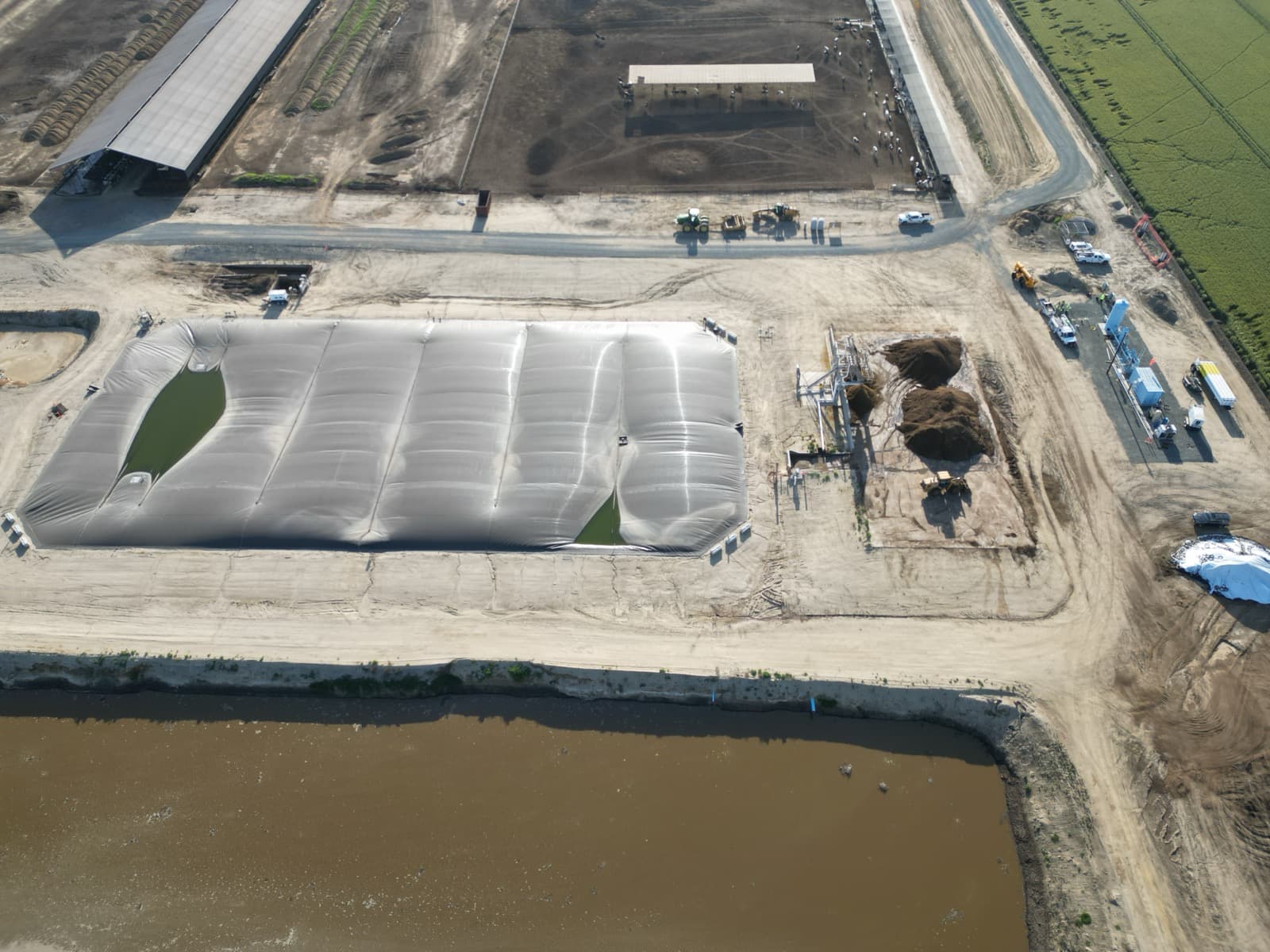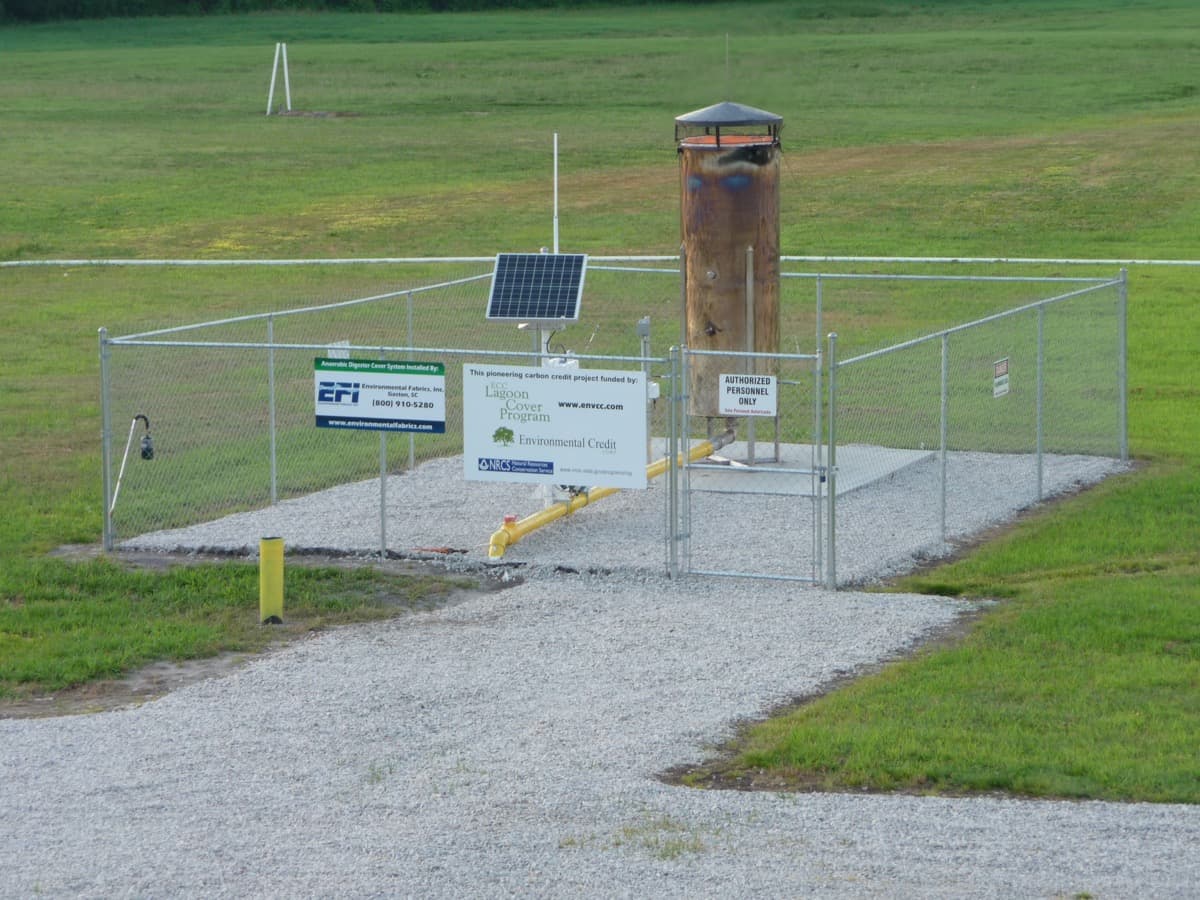
A covered lagoon producing 100,000 standard cubic feet of biogas a day at 3,000 ppm hydrogen sulfide is moving about 25 pounds of sulfur a day out of the basin with the gas. Over a year that is more than four tons. The arithmetic is straightforward at 60 degrees F and one atmosphere, and it is worth doing once on any project, because micro-aeration takes that sulfur out of the gas stream and does not take it off the site.
Most conversations EFI has with an owner about O2 injection are about two numbers, the inlet ppm and the outlet ppm. Those numbers decide whether the flare burner survives the year and whether an engine warranty holds. What gets less attention is the mass balance sitting behind them. Sulfur is conserved. The biology changes its chemical form and its address, and the new address is a set of surfaces and drains that somebody has to maintain.
Two exits, and the oxygen dose picks the split
Sulfur-oxidizing bacteria take hydrogen sulfide down one of two paths. With a limited oxygen supply they convert it to elemental sulfur, a yellow solid, at half a mole of oxygen per mole of H2S. Given more oxygen they carry the reaction further, to sulfate, which dissolves and stays with the liquid. That second path takes four times the oxygen of the first.
Real systems land somewhere between the two, and the split moves with dose, mixing, temperature, and where the injection points sit relative to the gas collection. The distinction is worth tracking because the two products leave by different routes and create different obligations. Elemental sulfur is a solid, so it accumulates on whatever it lands on. Sulfate is dissolved, so it leaves with the effluent and consumes alkalinity on the way out.
The solid fraction lands on surfaces nobody can see
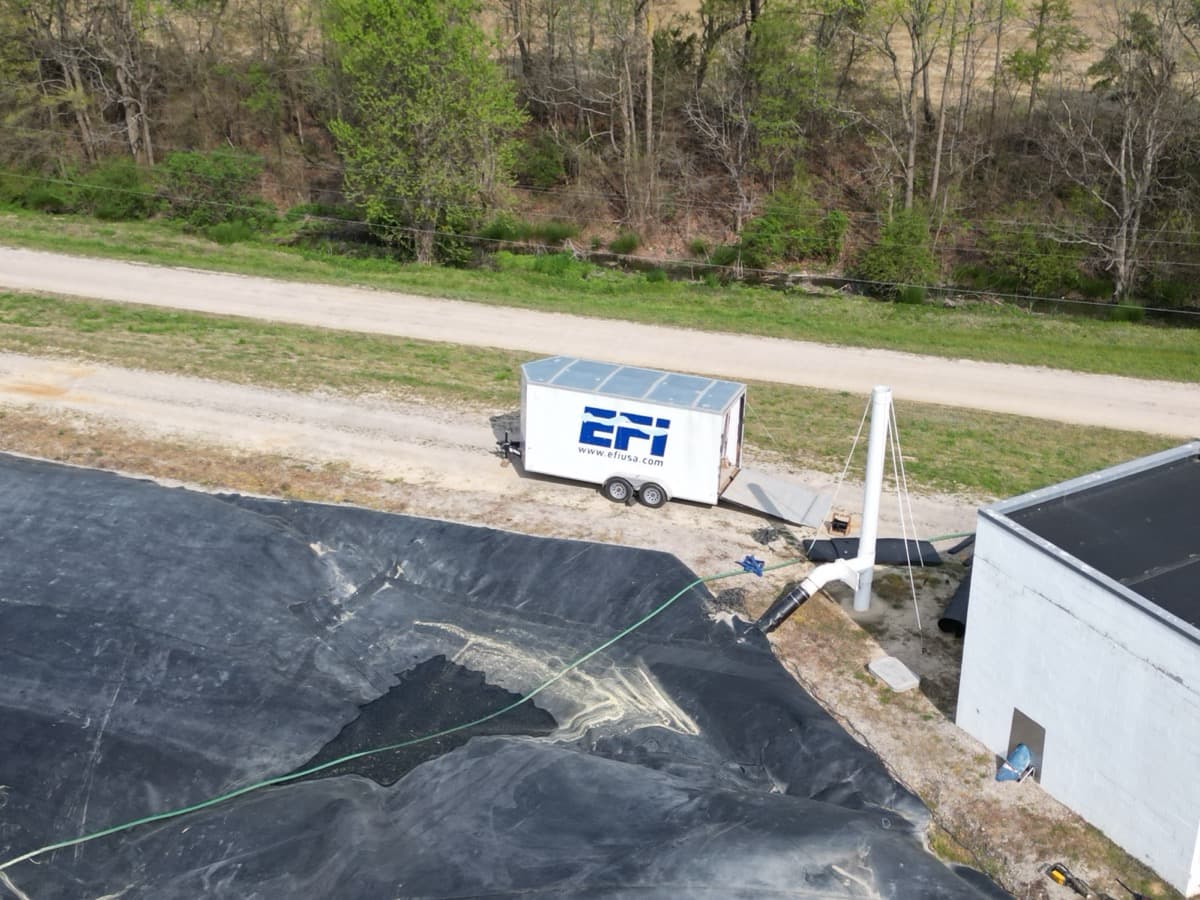
The bacteria colonize the underside of the cover and any other wetted surface in the headspace, and the sulfur forms there as a pale film. Some of it sloughs back into the liquid on its own schedule and joins the sludge inventory at the bottom of the basin. Some of it travels with the gas as fine particulate and settles wherever the gas slows down or cools.
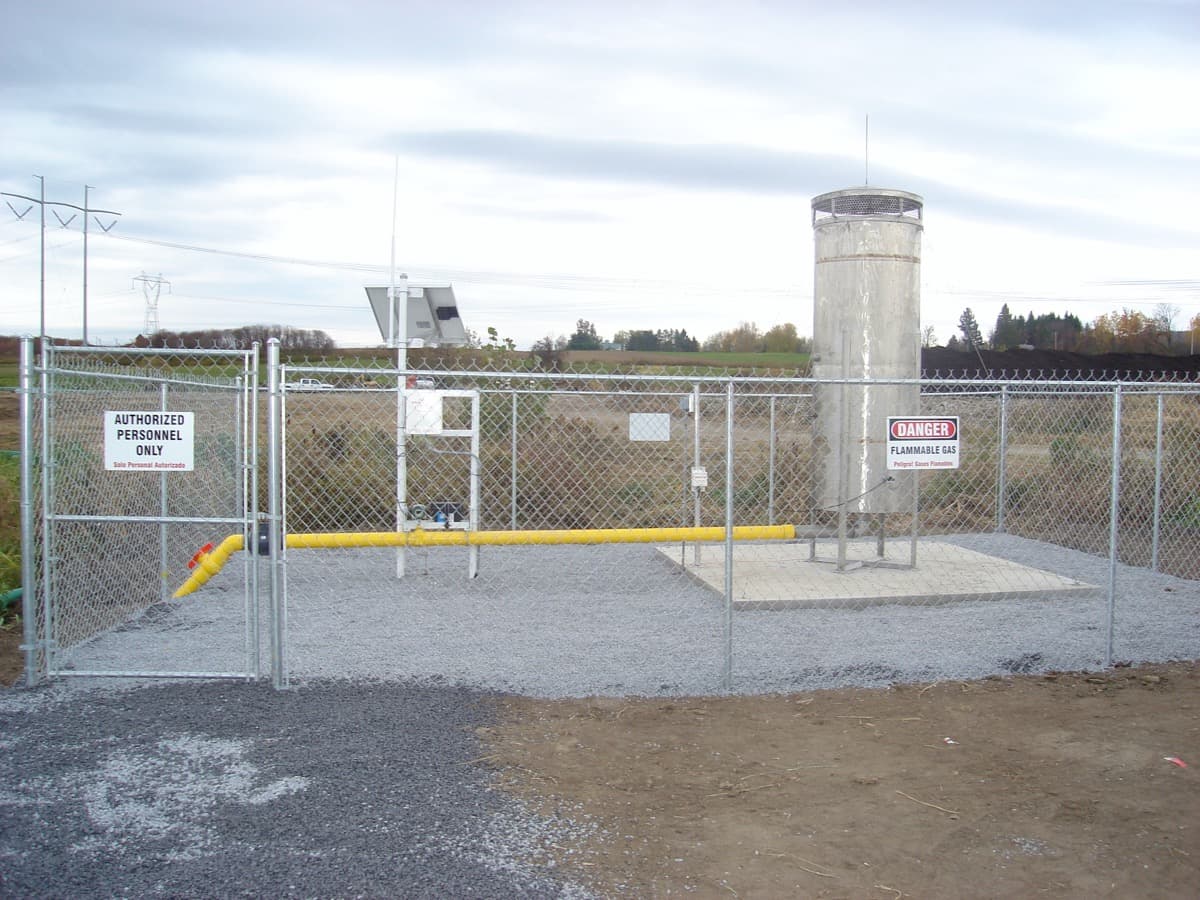
That means the gas train inherits the load. Condensate, drip legs, moisture traps, blower inlet screens, and flame arrester elements all collect it. On a system detailed for the job this is filter and drain work on a known interval. On a system where the header was laid to the grade of the ground instead of a designed slope, sulfur-laden condensate pools in a sag nobody planned for, and the first symptom is gas flow that falls off in cold weather with nothing wrong at the source.
The fix for that is cheap at design and expensive later. A header sloped to a defined low point, a drip leg at that low point, and a trap positioned where a person can actually service it in February. Traps buried under a bank or set inside the fenced flare compound with no walking access get skipped, and the ones that get skipped are the ones that plug.
The dissolved fraction shows up in the water chemistry
Carried all the way to sulfate, the sulfur in that same example is the stoichiometric equivalent of roughly 80 pounds a day of alkalinity as calcium carbonate. No system takes its entire load that far, so treat the figure as a ceiling rather than a prediction. It still sets the scale of the question.
On a dairy lagoon carrying substantial alkalinity, the effect is usually unremarkable and never comes up. On a thinner, lower-buffered waste stream, an aggressive oxygen dose can pull pH down far enough to cost gas production, and the operator reads it as a digestion problem rather than an aeration setting. Checking alkalinity before turning the dose up is a cheap step that occasionally saves a month of chasing the wrong variable.
The sulfate itself leaves the basin with the effluent. Where that effluent is land applied, the sulfur goes onto the field. For most operations that is a non-issue and sometimes an agronomic benefit, but it belongs in the nutrient management conversation rather than showing up as a surprise in a soil test.
“The inlet and outlet H2S numbers tell you whether the treatment works. The sulfur balance tells you what it costs to keep it working. Both belong in the design conversation.”
-- EFI USA
What the materials actually care about
The cover membrane is the least of the concerns here. HDPE and reinforced polypropylene do not react with a sulfur film on the underside, and the film does not change how the material performs. The exposure that matters is metallic. Carbon steel appurtenances, fasteners, condensate piping, and instrumentation sitting in a wet headspace see sulfur, moisture, and a small oxygen residual together, which is the combination that supports acid formation on the surface.
That argues for stainless or non-metallic components at the penetrations and in the condensate path, and for setting inspection intervals in the first year by observation instead of by a generic annual schedule. Open the traps monthly at startup, find out how fast they actually load on that particular waste stream, then stretch the interval to match what the site shows.
Where this leaves an owner
Ask for the sulfur balance during design. Pounds per day at the expected inlet concentration, an assumption about the split between solid and dissolved, and a plain statement of where each stream ends up. If the only answer available is ppm in and ppm out, the maintenance load has not been worked out yet, and it will be worked out later by whoever is standing at the flare with a wrench.
EFI has built more than 500 covered lagoon digester systems since 1993 and works across roughly 82 percent of the US covered lagoon market. Inlet H2S on that work has run from around 500 ppm on low-sulfur dairy waste to over 8,000 ppm on swine and rendering streams. That is a sixteenfold difference in the sulfur an operator has to plan around. The treatment is the same idea at both ends of that range. The maintenance is not.