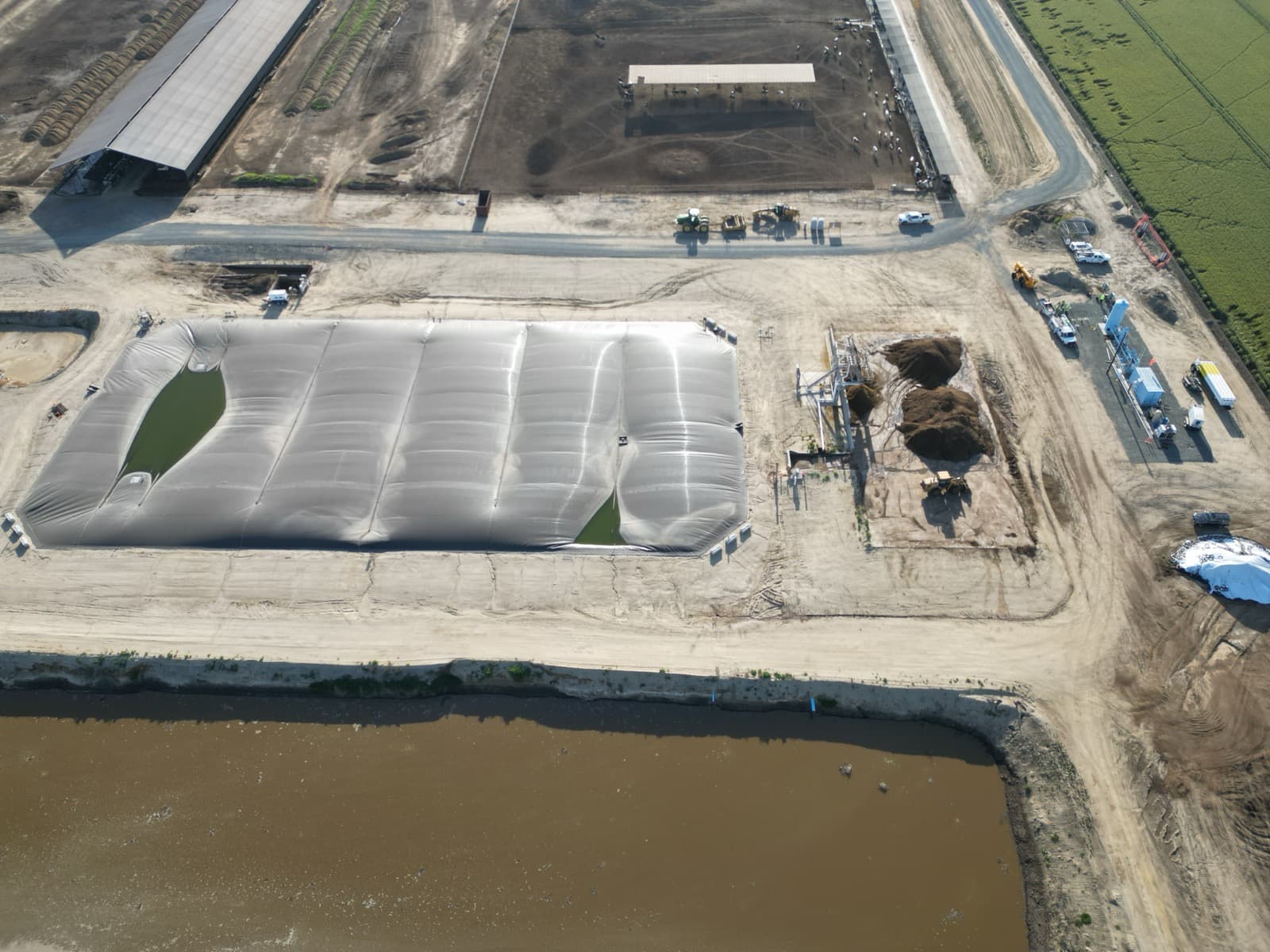
Sulfur-oxidizing bacteria can reduce hydrogen sulfide concentrations in biogas by 95% or more, but only if you give them exactly the right amount of oxygen. That narrow window between too little and too much is where most micro-aeration systems succeed or fail. EFI has installed and tuned O2 injection systems on covered lagoon digesters across the United States for over a decade, and the pattern is consistent: the equipment is straightforward, the biology is reliable, and the dosing is where operators either get it right or spend months chasing problems.
The Biology Behind the Process
Micro-aeration works by introducing small, controlled volumes of air or pure oxygen into the headspace or liquid phase of an anaerobic digester or covered lagoon. The oxygen supports sulfur-oxidizing bacteria, primarily Thiobacillus species, that convert dissolved hydrogen sulfide into elemental sulfur or sulfate. These bacteria are naturally present in virtually all anaerobic systems. They colonize surfaces in the headspace, on the underside of floating covers, and on any exposed media within days of oxygen introduction. No inoculation is required.
The reaction is efficient. One mole of O2 can oxidize two moles of H2S to elemental sulfur, or the bacteria can further oxidize sulfur to sulfate if excess oxygen is available. In practical terms, a covered lagoon producing biogas at 2,000 ppm H2S typically needs 2 to 4% O2 by volume in the headspace to achieve 90%+ removal. That translates to relatively small air volumes, but the precision of delivery matters enormously.
What Happens When Dosing Is Too Low
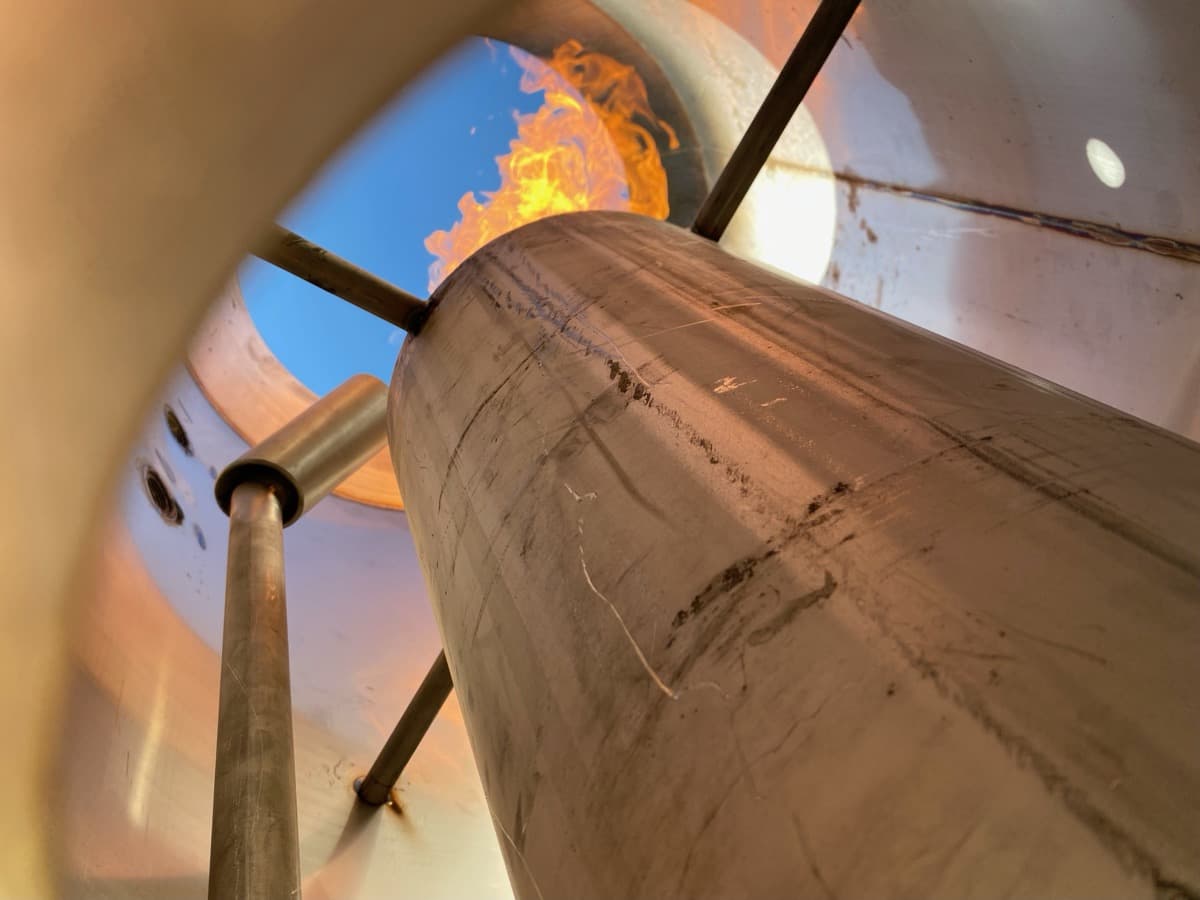
Under-dosing is the more common problem in new installations. Operators, understandably cautious about introducing oxygen into a methane-rich environment, start conservatively and sometimes never increase the dose enough to reach effective treatment levels. The result is H2S concentrations that drop from, say, 3,000 ppm to 1,500 ppm. That is a meaningful reduction, but it is not enough to protect downstream equipment. Flare burner assemblies, gas collection piping, and monitoring instrumentation all continue to degrade at 1,500 ppm. The operator sees some improvement and assumes the system is working, but the corrosion clock is still running.
The fix is simple in principle. Increase the air injection rate incrementally, typically in 10-15% steps, while monitoring H2S in the treated gas stream. Most systems reach their optimal dosing point within two to three weeks of active tuning. The challenge is that many operators lack continuous H2S monitoring and rely on periodic grab samples, which makes iterative tuning slow and imprecise.
What Happens When Dosing Is Too High
Over-dosing creates a different set of problems. Excess oxygen in the headspace dilutes the methane concentration, reducing the energy content of the biogas. For systems feeding engines or upgrading to RNG, even a 2 to 3% reduction in methane concentration can affect performance and revenue. More critically, oxygen concentrations above 6% in a methane atmosphere approach the lower explosive limit. No well-designed system should reach that threshold, but over-dosing narrows the safety margin.
There is also a subtler issue. Excessive oxygen promotes aerobic conditions on the liquid surface, which can shift the microbial community away from the anaerobic methanogens responsible for biogas production. In covered lagoons, where the biological activity occurs across a large surface area, this effect is more pronounced than in plug-flow or mixed-tank digesters. The result is reduced biogas yield, which compounds the methane dilution problem.
How EFI Approaches Dosing Control
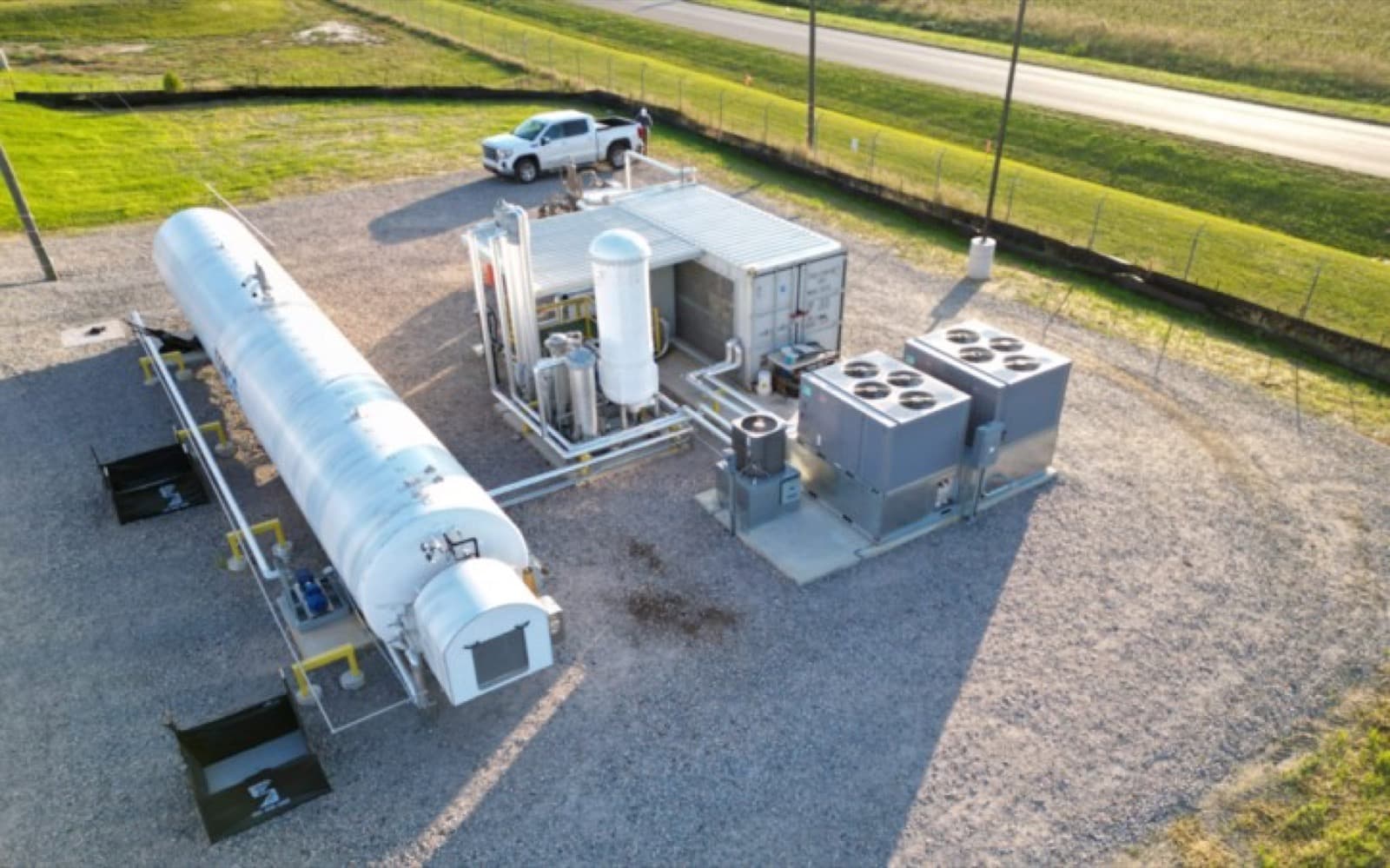
EFI's O2 injection skids are designed around proportional control rather than fixed-rate injection. The system continuously adjusts air delivery based on biogas flow rate and H2S concentration feedback. When biogas production increases, as it does seasonally with temperature changes and feed loading variations, the oxygen dose scales accordingly. When production drops, the dose decreases to prevent over-aeration.
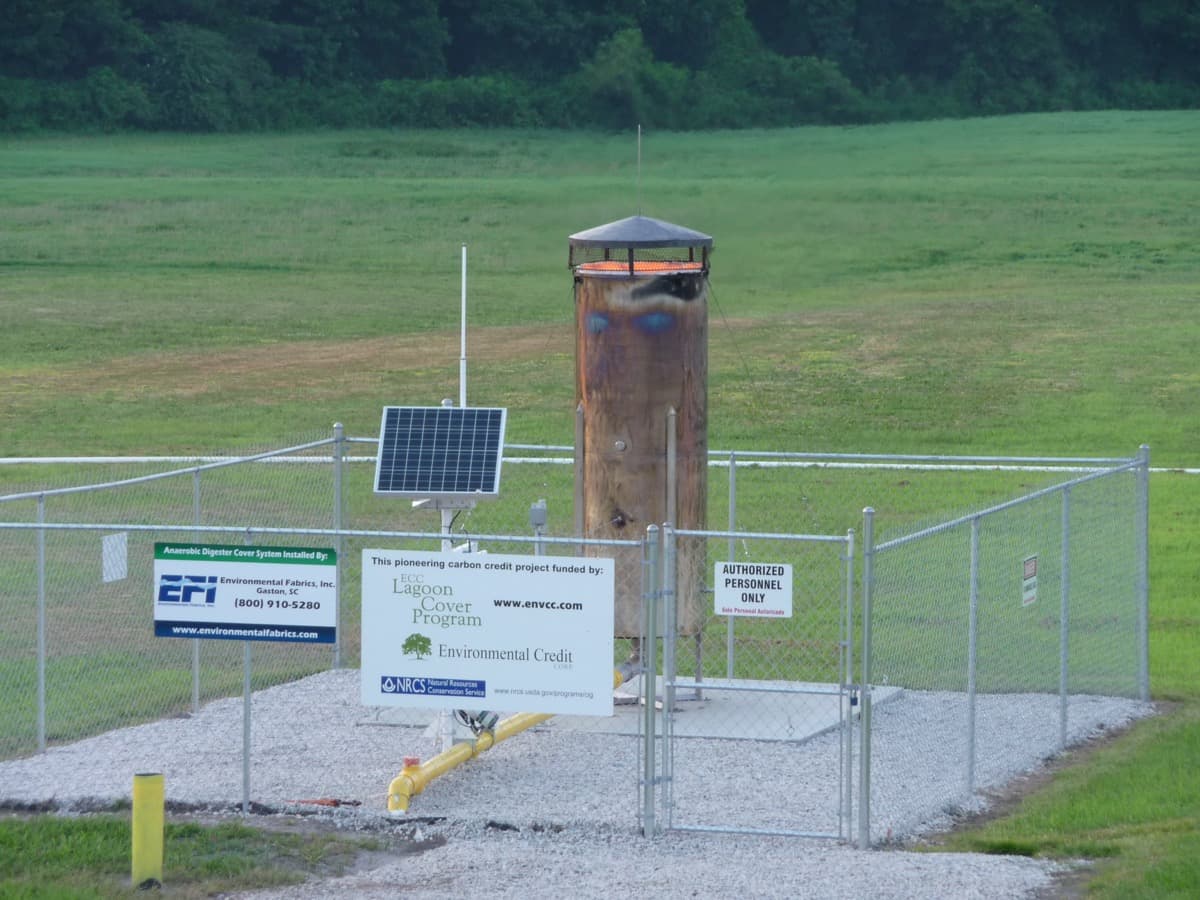
The injection point matters as much as the injection rate. EFI typically injects into the headspace of covered lagoons through multiple distribution points rather than a single entry. This creates more uniform oxygen distribution across the cover area, which gives the sulfur-oxidizing bacteria consistent access to O2 without creating localized hot spots where oxygen concentration spikes. In systems where headspace injection is not practical, liquid-phase injection through fine-bubble diffusers achieves comparable results, though it requires more careful monitoring to avoid disrupting the anaerobic digestion process.
Monitoring: The Non-Negotiable Component
Every micro-aeration system should include continuous H2S monitoring at minimum. Electrochemical sensors are the most common choice, with measurement ranges up to 10,000 ppm and accuracy sufficient for dosing control. These sensors require calibration every 60 to 90 days and replacement annually, which adds to operating cost but is far less expensive than the equipment damage that uncontrolled H2S causes.
EFI recommends adding O2 monitoring in the treated gas stream as well. A reading above 1% O2 downstream of the injection point signals that dosing is higher than the bacteria can consume, and the system should reduce the air injection rate. Combined H2S and O2 monitoring creates a closed feedback loop that keeps the system in the optimal range regardless of seasonal and operational variability.
Field Results Across System Types
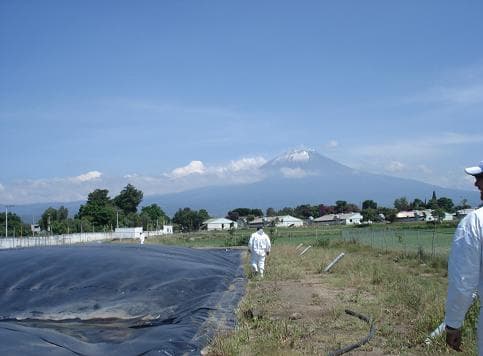
EFI has deployed O2 injection across covered lagoon systems ranging from 1-acre dairy lagoons to 10-acre food processing installations. Inlet H2S concentrations have ranged from 500 ppm on low-sulfur dairy waste to over 8,000 ppm on swine and rendering plant waste streams. In all cases where dosing was properly tuned and maintained, outlet H2S concentrations dropped below 200 ppm, and in most systems below 50 ppm. That level of treatment is sufficient to protect flare components, extend engine service intervals, and meet the inlet specifications for most biogas upgrading equipment.
The operating cost advantage over chemical scrubbing is substantial. Chemical iron-based scrubbers treating 2,000+ ppm H2S in a 500 CFM biogas stream typically cost $3,000 to $8,000 per month in media replacement and disposal. A properly sized O2 injection system treating the same gas stream costs $300 to $800 per month in electricity and sensor maintenance. Over a 10-year system life, that difference compounds to hundreds of thousands of dollars per installation.
Getting It Right from the Start
The most important decision in micro-aeration system design is not the equipment selection. It is the commitment to active monitoring and iterative tuning during the first 90 days of operation. Every covered lagoon has a unique combination of waste characteristics, temperature profile, biogas composition, and seasonal variability. A system designed on paper will get close to optimal dosing, but field tuning is what closes the gap. Operators who invest in continuous monitoring and respond to the data consistently achieve 95%+ H2S removal within the first quarter. Those who install the equipment and walk away rarely get above 70%.
EFI provides commissioning support and remote monitoring on all O2 injection installations. The goal is to hand off a tuned, stable system that the operator can maintain with periodic sensor calibration and occasional air filter replacement. For operators evaluating H2S treatment options, the question is not whether micro-aeration works. The biology is settled science. The question is whether you are prepared to monitor and adjust during startup. If the answer is yes, micro-aeration is the most cost-effective H2S treatment technology available for covered lagoon biogas systems.