Hydrogen sulfide is the most expensive problem in biogas systems. Not the most dangerous -- although at concentrations above 100 ppm it is genuinely toxic -- but the most expensive in terms of ongoing operational cost. H2S corrodes metal components, poisons catalysts in combined heat and power engines, contaminates gas upgrading equipment, and creates odor complaints that can shut down entire operations. The conventional solutions -- iron sponge media, chemical scrubbing towers, activated carbon beds -- work well but cost $50,000 to $200,000 per year for large systems. EFI's oxygen injection technology achieves comparable or better H2S reduction at 20-40% of that cost.
The H2S Problem in Biogas Systems
Biogas from anaerobic digestion typically contains 200-5,000+ ppm of hydrogen sulfide, depending on the waste stream. Swine manure and food processing wastewater tend to produce the highest H2S concentrations due to their sulfur-rich protein content. Dairy manure is generally lower but still significant. At any concentration above 50 ppm, H2S begins degrading equipment. At concentrations above 500 ppm, flare performance suffers, and at levels above 1,000 ppm, the corrosion rate on mild steel components accelerates dramatically.
The cost of H2S damage extends beyond the treatment system itself. Corroded gas collection piping requires premature replacement. Flare burner assemblies exposed to high-H2S biogas have reduced service life. Monitoring instrumentation -- particularly electrochemical H2S sensors -- requires more frequent calibration and replacement. For operations considering RNG upgrading, H2S must be reduced to below 4 ppm for pipeline injection, making treatment an absolute requirement rather than an optional improvement.
Traditional Treatment Methods and Their Costs
- Iron sponge (iron oxide media): $30,000-$80,000/year in media replacement for a typical dairy digester. Effective at reducing H2S to below 50 ppm but generates spent media that requires disposal as a solid waste.
- Chemical scrubbing (caustic or amine): $80,000-$200,000/year for large systems. Highly effective but requires chemical supply logistics, operator training, and wastewater management for spent scrubbing solutions.
- Activated carbon: $40,000-$120,000/year depending on gas flow and H2S loading. Excellent polishing technology but expensive for primary treatment at high H2S concentrations.
- Biological scrubbers (standalone): $60,000-$150,000 installed cost plus $15,000-$30,000/year operating. Effective but requires separate reactor vessel, nutrient dosing, and process monitoring.
All of these methods work. The question is whether there is a simpler, cheaper approach that achieves adequate H2S reduction for the specific end use. For covered lagoon digester systems where the biogas is destroyed in an enclosed flare rather than upgraded to pipeline quality, the treatment target is typically 500-1,000 ppm -- enough to protect the flare and gas collection infrastructure without the ultra-low levels required for RNG.
How Micro-Aeration Works: Biological Desulfurization
Micro-aeration -- the controlled injection of small amounts of air or pure oxygen into the biogas headspace or directly into the digester liquid -- leverages naturally occurring sulfur-oxidizing bacteria (primarily Thiobacillus species) to convert hydrogen sulfide into elemental sulfur. These bacteria are already present in every anaerobic digester. They simply need a small, controlled oxygen supply to catalyze the conversion.
The biochemistry is straightforward: H2S + 0.5 O2 yields S (elemental sulfur) + H2O. The elemental sulfur precipitates as a yellow deposit on cover surfaces and in condensate lines, where it can be managed through routine maintenance. The key engineering challenge is controlling the oxygen injection rate precisely. Too little oxygen and the bacteria cannot sustain the conversion. Too much oxygen and you introduce explosion risk (biogas becomes flammable when mixed with 6-12% air) and reduce methane concentration through dilution.
Peer-Reviewed Evidence: What the Research Shows
EFI maintains a library of seven peer-reviewed research papers on oxygen injection and micro-aeration for H2S control in biogas systems. The collective findings across these studies are consistent: properly designed micro-aeration systems reduce H2S concentrations by 80-99% at oxygen-to-H2S ratios of 2:1 to 5:1. The treatment occurs within the existing digester or headspace -- no separate reactor vessel is required. Methane concentration reduction is typically 1-3%, which is negligible for most applications.
The research also confirms that micro-aeration does not significantly disrupt anaerobic digestion performance. Biogas production rates remain stable or improve slightly in some studies, likely because H2S itself inhibits methanogenic bacteria at high concentrations. By reducing H2S levels, micro-aeration can actually improve the environment for the methane-producing organisms. This dual benefit -- lower H2S and stable or improved methane production -- makes the technology particularly attractive for covered lagoon digesters.
JBS Greeley: Industrial-Scale Air Injection
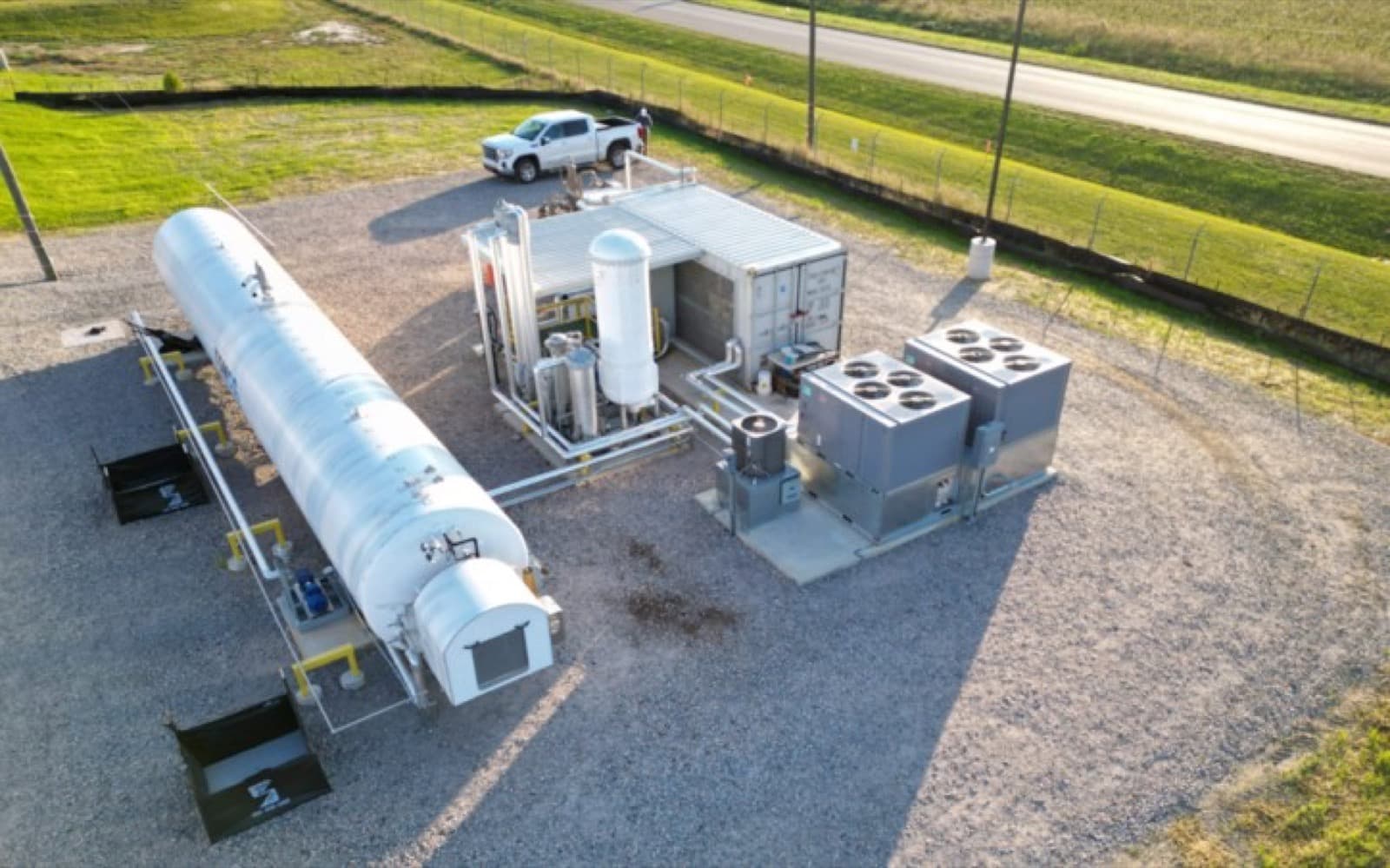
EFI's 2026 JBS Greeley air injection project demonstrates the technology at industrial food processing scale. The JBS Greeley facility operates wastewater lagoons that produce biogas with H2S concentrations that were degrading gas collection infrastructure and creating maintenance challenges. EFI designed and installed an air injection system sized for the facility's specific biogas production rate and H2S loading.
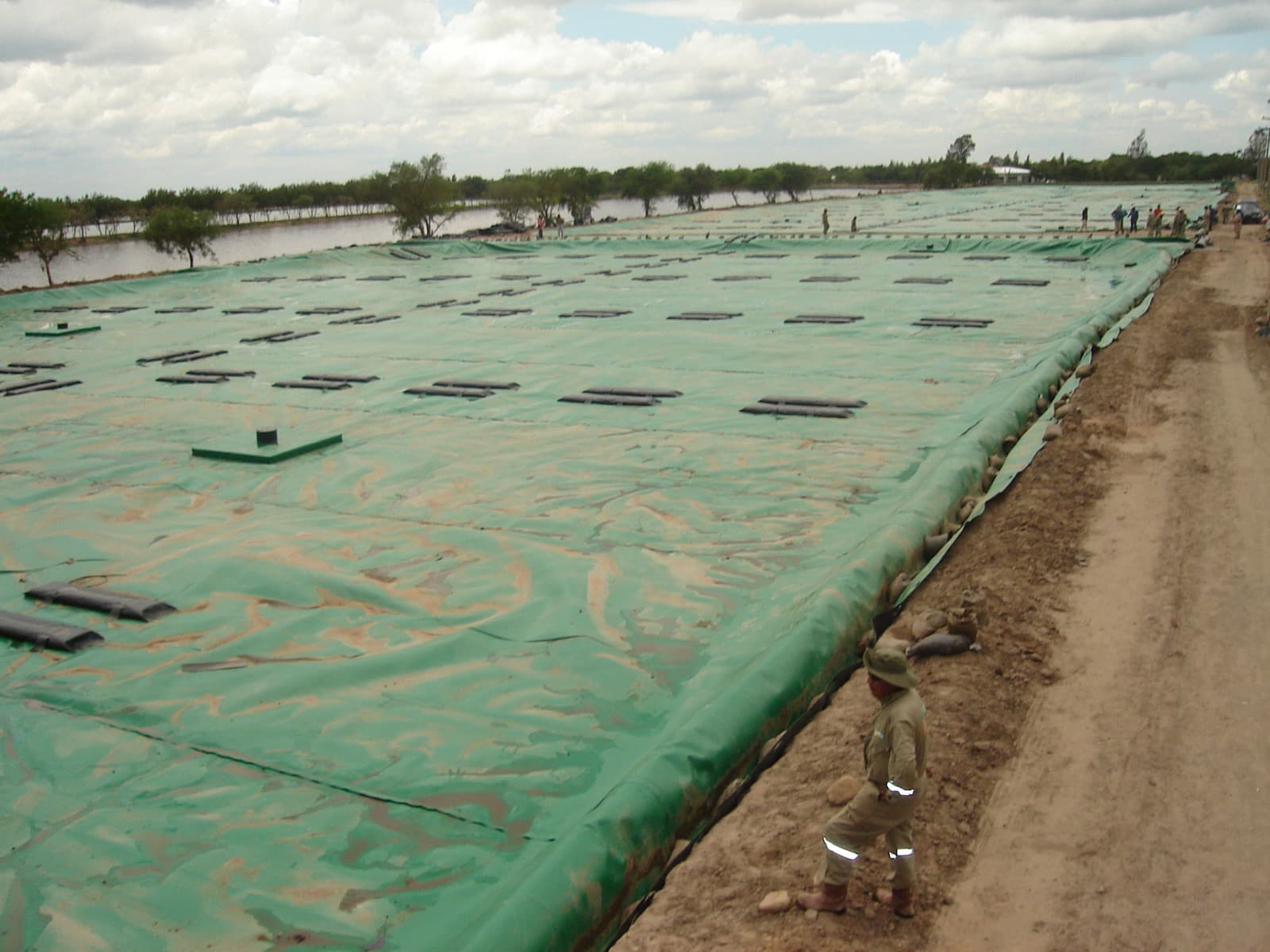
The Greeley system uses precision air injection diffusers positioned in the lagoon headspace beneath the geosynthetic cover. Air flow is controlled by a variable-frequency drive blower with flow monitoring instrumentation. The system includes H2S sensors at the injection point and downstream at the gas collection manifold to provide closed-loop feedback on treatment performance. The installed cost of the air injection system was a fraction of what a chemical scrubbing system would have cost for the same gas flow, and the operating cost is essentially the electricity to run the blower -- typically $3,000-$8,000 per year.
Aemetis O2 Line: Pure Oxygen for Premium Performance
The Aemetis O2 line installation represents EFI's work with pure oxygen injection rather than air injection. Pure oxygen systems cost more to operate (oxygen supply vs. free air) but offer tighter control and higher H2S reduction efficiency. For operations where the biogas is being upgraded to RNG or used in sensitive CHP equipment, the additional cost of pure oxygen may be justified by the improved treatment performance.
The Aemetis project required installation of oxygen supply piping, flow control equipment, and safety instrumentation including oxygen analyzers and LEL (lower explosive limit) monitors. EFI's design included redundant safety systems to prevent over-oxygenation, which is the primary risk factor in any oxygen injection system. The installation demonstrates that micro-aeration scales from simple air injection on covered lagoon flare systems to precision oxygen injection on industrial biogas upgrading operations.
10-Year Cost Comparison
Over a 10-year operating horizon, the cost differential between traditional H2S treatment and oxygen injection compounds dramatically. A chemical scrubbing system operating at $120,000 per year costs $1.2 million over the decade, plus the initial capital cost of $150,000-$300,000 for the scrubbing tower and ancillary equipment. An air injection system with an installed cost of $25,000-$60,000 and annual operating costs of $3,000-$8,000 totals $55,000-$140,000 over the same period. The savings range from $1.0 to $1.4 million per system over 10 years.
Even compared to iron sponge media, which is the lowest-cost traditional option, air injection delivers meaningful savings. Iron sponge at $50,000 per year media cost totals $500,000 over 10 years. Air injection at $5,000 per year operating cost totals $50,000-$110,000 including installation. The savings are not hypothetical -- they are based on real operating cost data from EFI installations and industry-standard media consumption rates.
When Traditional Methods Are Still Needed
Micro-aeration is not a universal replacement for all H2S treatment. Operations requiring pipeline-quality gas (below 4 ppm H2S) typically need a polishing stage after micro-aeration -- activated carbon or a small chemical scrubber to achieve the final reduction. Systems with extremely high H2S concentrations (above 10,000 ppm) may require a primary treatment stage before micro-aeration can operate effectively. And operations where any oxygen in the biogas stream is unacceptable (some fuel cell applications, for example) cannot use air or oxygen injection in any form.
For the majority of covered lagoon digester systems where biogas is destroyed in an enclosed flare, micro-aeration is the most cost-effective H2S management technology available. EFI's project data and the peer-reviewed research literature both support this conclusion.
“We spent years watching operators write six-figure checks for chemical scrubbing on systems where a $30,000 air injection setup would have done the job. The science is clear, the field data is clear, and the ROI is clear. Micro-aeration works.”
-- EFI USA