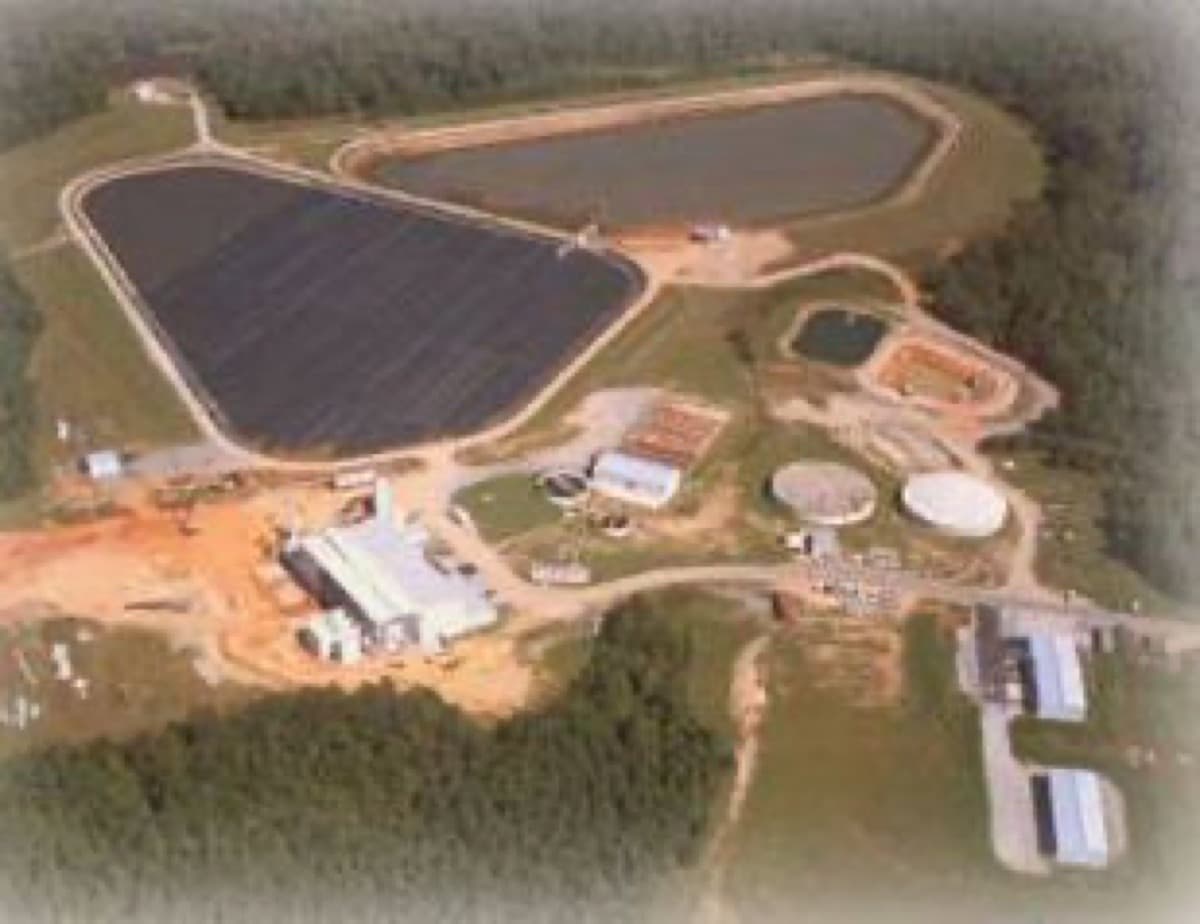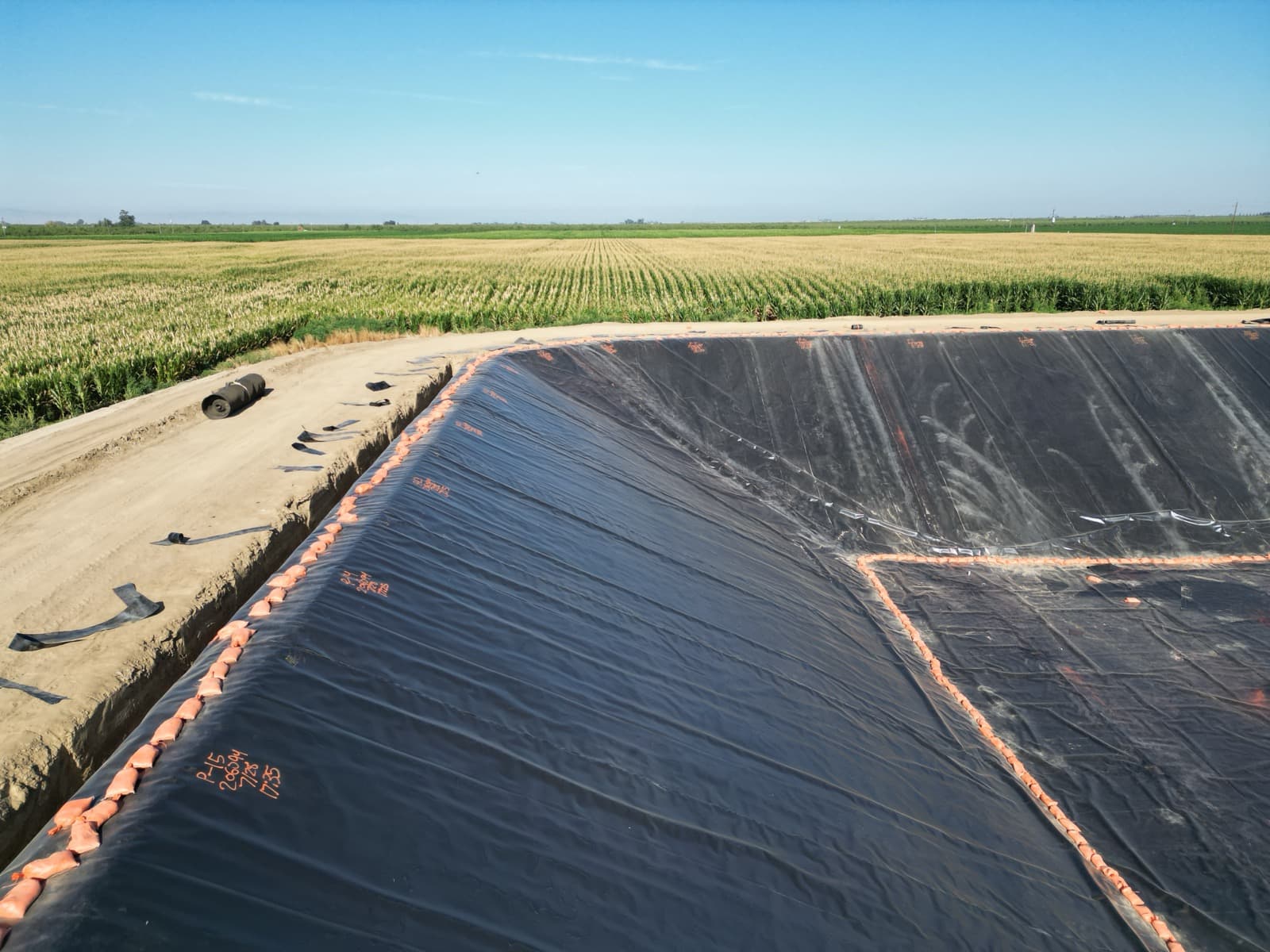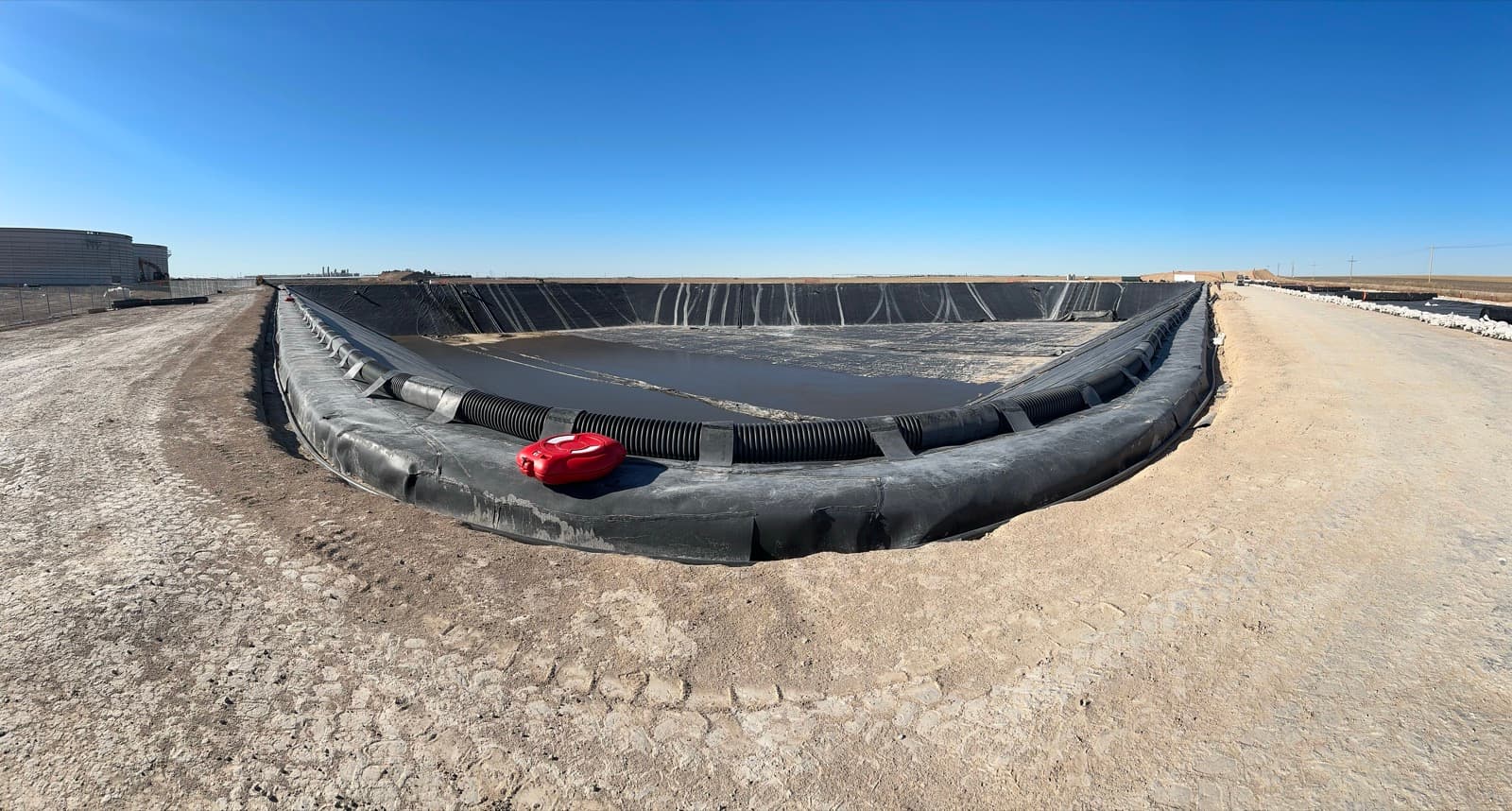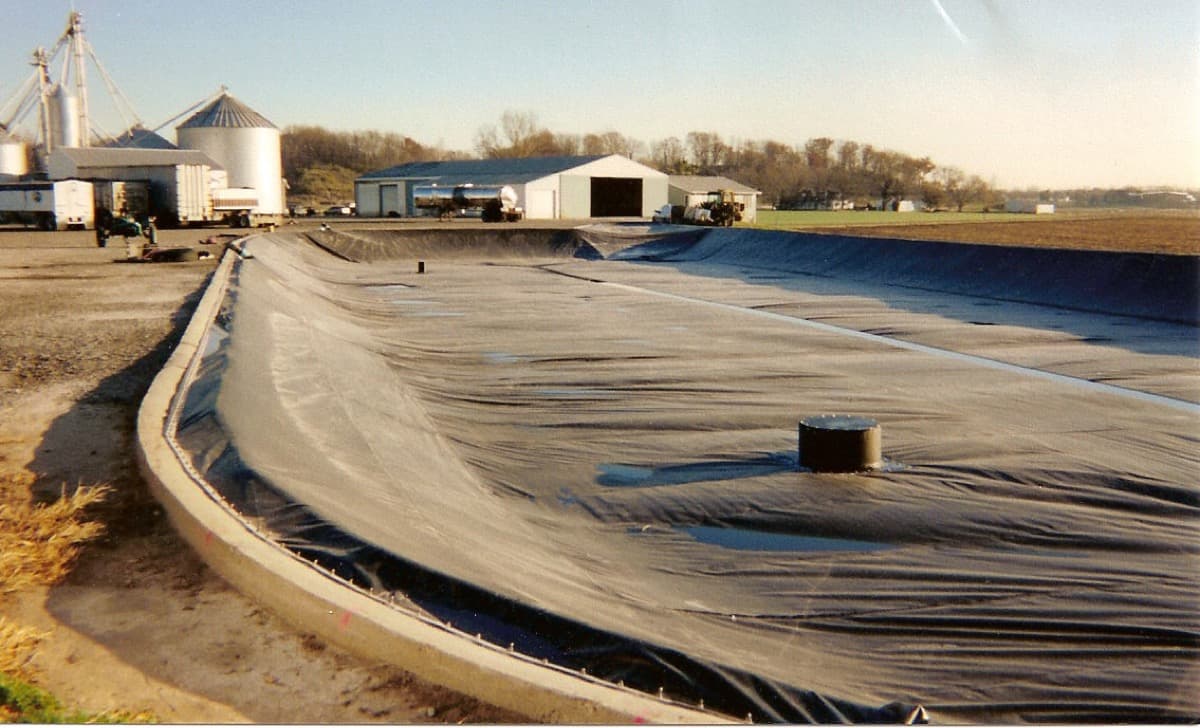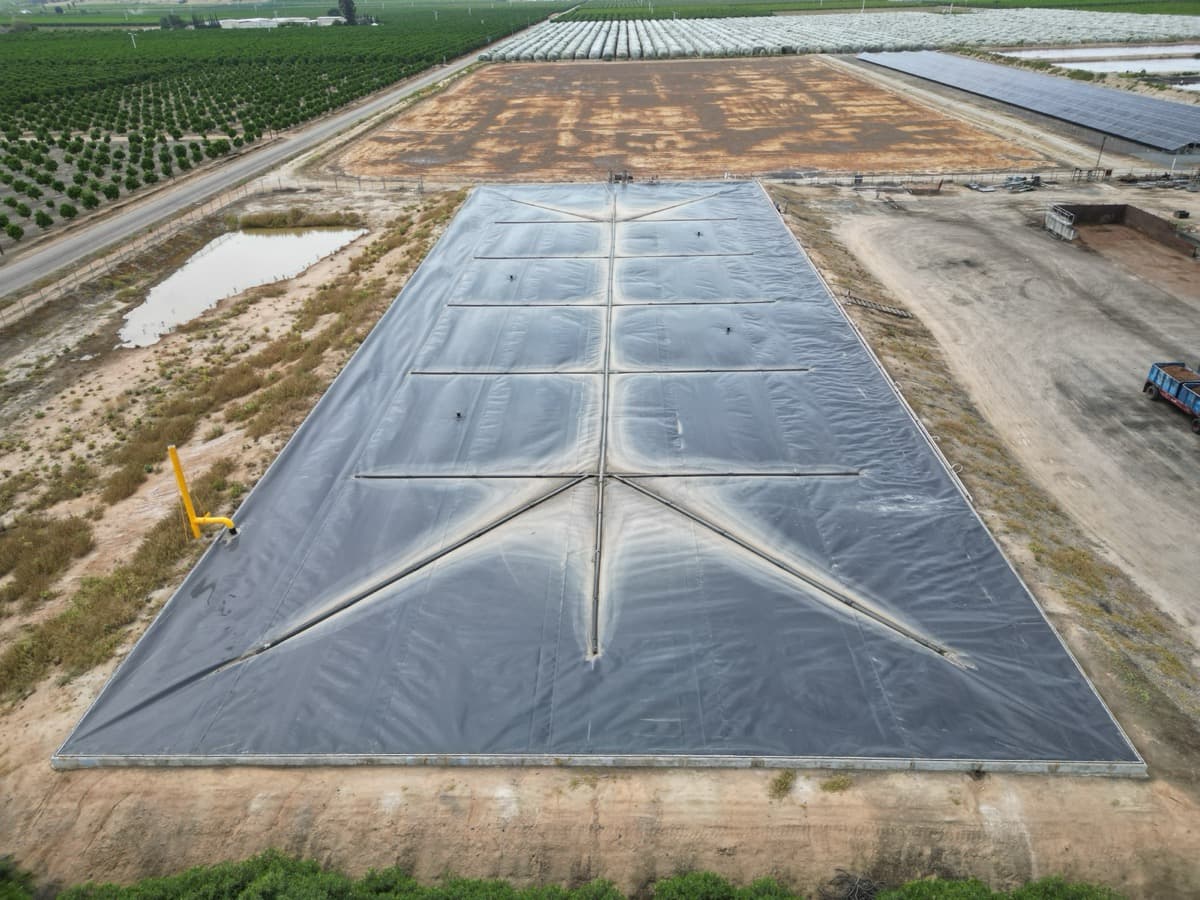
Work began in May 2002 with a single floating cover, 140 by 107 feet, over part of one anaerobic basin at Packaging Corporation of America's mill in Tomahawk, Wisconsin. The mill had four anaerobic basins. By January 2007 the third phase of covers was finished, and recovered methane was going to the mill's production boilers.
Nobody committed to covering all four basins on day one. An analysis of the basins showed enough biogas to justify recovery, and the owner tested that conclusion with one partial cover first. Each later phase was decided on what the earlier one produced.
Why start with part of one basin
A gas estimate built from wastewater data is a forecast. Influent strength moves with production, basin temperature moves with the season, and sludge that has built up for years reduces the active volume. A partial cover turns the forecast into a measured flow.
At Tomahawk, the first cover recovered more methane than anticipated, according to EFI's original case history. That result moved the project to Phase 2. Had the number come in low, the owner would have learned it on one cover instead of four.
What each phase decided
- Phase 1, starting May 2002: one 140 by 107 foot cover on a section of a single basin, to confirm that the basins made recoverable gas.
- Phase 2: three more covers of the same size, one on each remaining basin. With four covers collecting gas, a pipeline was built to the plant.
- Phase 3, finished January 2007: further calculations showed that covering more of each basin was economic, and four covers of 248 by 107 feet were added, one per basin.
The order is worth noticing. The pipeline to the plant was built after Phase 2. The owner put money into a line to use the gas only after four covers were producing it.
Designing Phase 1 so Phase 2 can attach
A phased cover only works if the first phase is built with the later ones in mind. Three details carry most of that weight.
The first is the gas header. Collection piping and the line leaving the basin should be sized for the gas the full build-out could make, or laid out so a larger line can be added without cutting into a working cover.
The second is the edge. A cover that stops partway across a basin has a boundary in open liquid that must hold gas today and accept the next cover later. That joint gets designed once, with the final layout drawn, even if only the first piece is built.
The third is material. Tomahawk used Seaman 8130 XR-5, an ethylene interpolymer alloy, for its anaerobic basin covers. Holding one material across phases keeps field seams between old and new panels compatible, which is easier to plan in year one than to solve in year five.
Measuring the first cover
Phase 1 is only useful if its numbers hold up. That means metered flow corrected to standard conditions, methane content sampled over time, and enough months of data to see how output tracks production and temperature. A short reading in a warm month can overstate what a basin makes in midwinter.
The same data sets up the end-use decision. A flare, a boiler, and an engine each have their own flow range and gas quality limits, including how much hydrogen sulfide they can accept. Picking one after measuring is easier than sizing it from a forecast.
What to have ready before the first cover
- Dimensions, depths, and inlet and outlet locations for every basin, including the ones that will not be covered in Phase 1.
- Influent flow and strength records, with production schedules, so measured gas can be compared to what went in.
- A sludge depth survey. Accumulated solids reduce active volume and can make one basin produce differently from its neighbor.
- A provisional end use, so the header and the route to it can be laid out once.
- A decision rule for the next phase: what measured flow, over what period, would justify covering more.
What the record shows
The original case history reports that once in operation, the Tomahawk covers worked as designed with very little maintenance, and that the plant used the recovered methane as an alternative fuel for its boilers. That describes the project as documented through 2007. It makes no claim about how the basins or the gas system run today.
Strickland Engineering was the project engineer. EFI fabricated and installed the covers in all three phases, and the phases ran over several years as scheduled.
EFI has fabricated and installed floating covers since its founding in 1993, works out of its Gaston, South Carolina headquarters with more than 30 years in geosynthetics, and holds 82% of the US covered lagoon market. Tomahawk is an early example of a sequence that still applies: measure the gas, then decide how much surface to cover. If you have anaerobic basins and a gas estimate you are not ready to stake the whole surface on, send EFI the basin layout and your influent data, and the first phase can be sized from there.