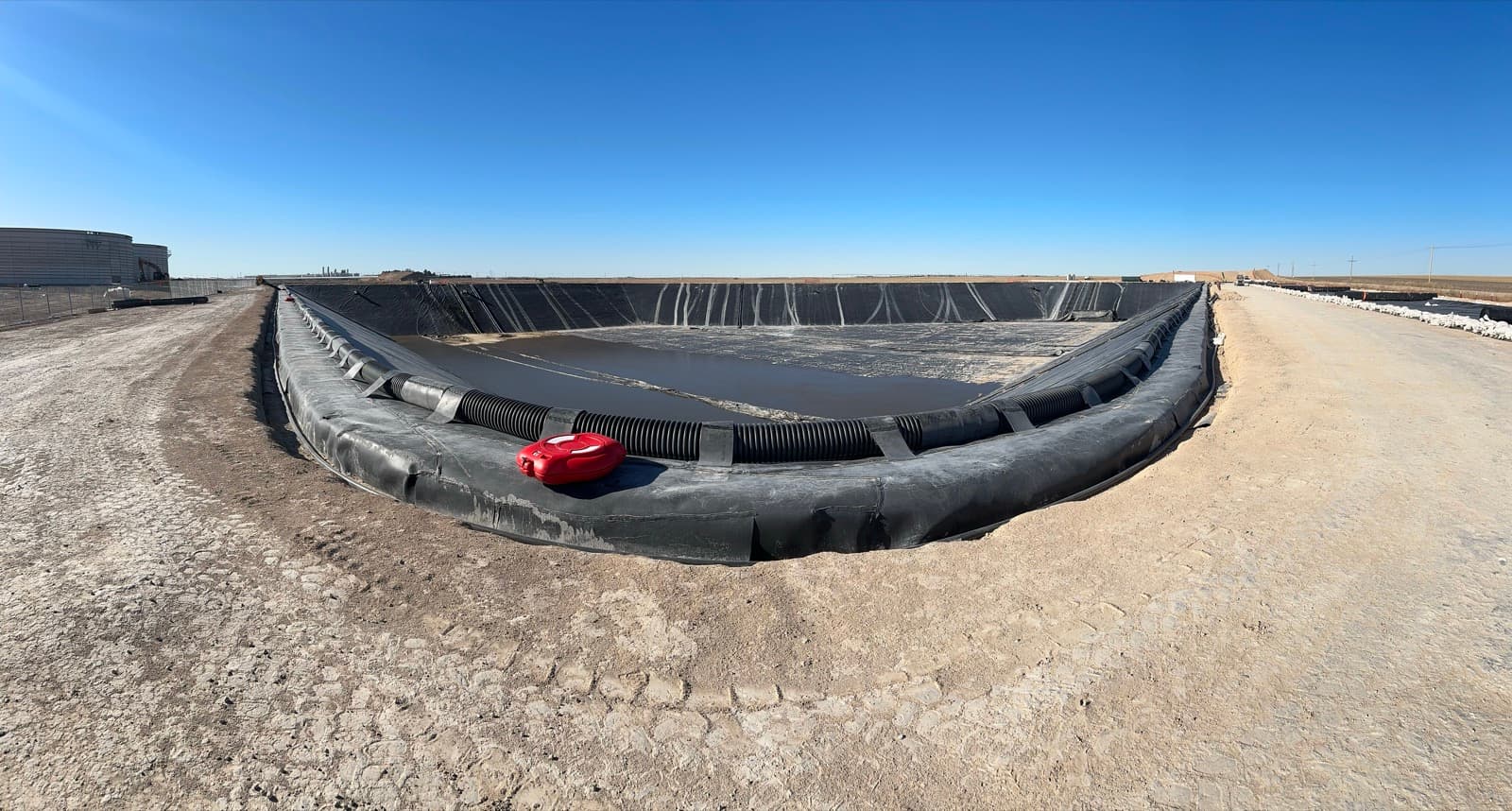
Electrical leak location will find a hole the size of a pencil tip in an installed liner. ASTM D7007 and D7240 surveys are routine on liner work, and the results are precise enough to flag a defect in the morning and patch it the same afternoon. Run the same survey on a gas-tight floating cover and it returns nothing useful.
The reason is physical rather than procedural. Electrical leak location works because the geomembrane is an insulator separating two conductive media, and a hole is the only place current can cross it. A liner has wet subgrade on one side and a survey puddle or impounded liquid on the other. A floating cover has liquid and biogas underneath and open air above. Air carries no survey current, so there is no circuit to interrupt and nothing for the instrument to locate. Every practical method for finding a leak in a cover that is already floating works on the gas instead.
The gas analysis usually finds it before anyone walks the cover
On a cover in service, the most reliable early indicator is gas composition, and specifically oxygen. An anaerobic basin does not make oxygen. Any oxygen above a small fraction of a percent came from outside the system, through a hole, a failed penetration boot, an open hatch, or a leaking sample line.
Nitrogen is what confirms it. Air is roughly 78 percent nitrogen and 21 percent oxygen, so leaked air carries nitrogen at about 3.7 times the oxygen. When an analyzer shows oxygen climbing and nitrogen tracking it near that ratio, the cover is pulling air. When oxygen climbs without the matching nitrogen, the likelier explanation is the sampling train: a loose fitting upstream of the analyzer, a tired cell, or a calibration that has drifted. That single check separates a containment problem from an instrument problem, and it saves a week of searching the wrong acres.
One caution applies to any basin running oxygen injection for sulfide control. That system is deliberately adding air or oxygen to the headspace, so the baseline already carries a reading. What matters there is the change from the established baseline for that site at that dose rate, not the absolute number.
Air intrusion is also a safety condition, not only a yield problem. Methane is flammable in air between roughly 5 and 15 percent by volume. A stream at 60 percent methane is far too rich to burn inside the pipe, and it only becomes dangerous as enough air arrives to dilute it toward that band. Rising oxygen in a biogas header is treated accordingly.
Gas balance proves a leak exists, not where it is
The second signal is volume. Compare what is measured at the flare or engine skid against what the basin should be producing for its current loading and temperature. Steady feed, steady temperature, and a falling delivered volume points at containment.
Before calling that a leak, rule out the ordinary explanations, because several of them move the same number. Meter drift, a plugged condensate trap holding liquid in a low spot, a valve someone left part way closed, a seasonal temperature drop, and a change in feed all look identical on a daily flow chart. Winter is the classic false positive: gas production falls because the basin cooled, and the cover takes the blame for it.
Where covers actually leak
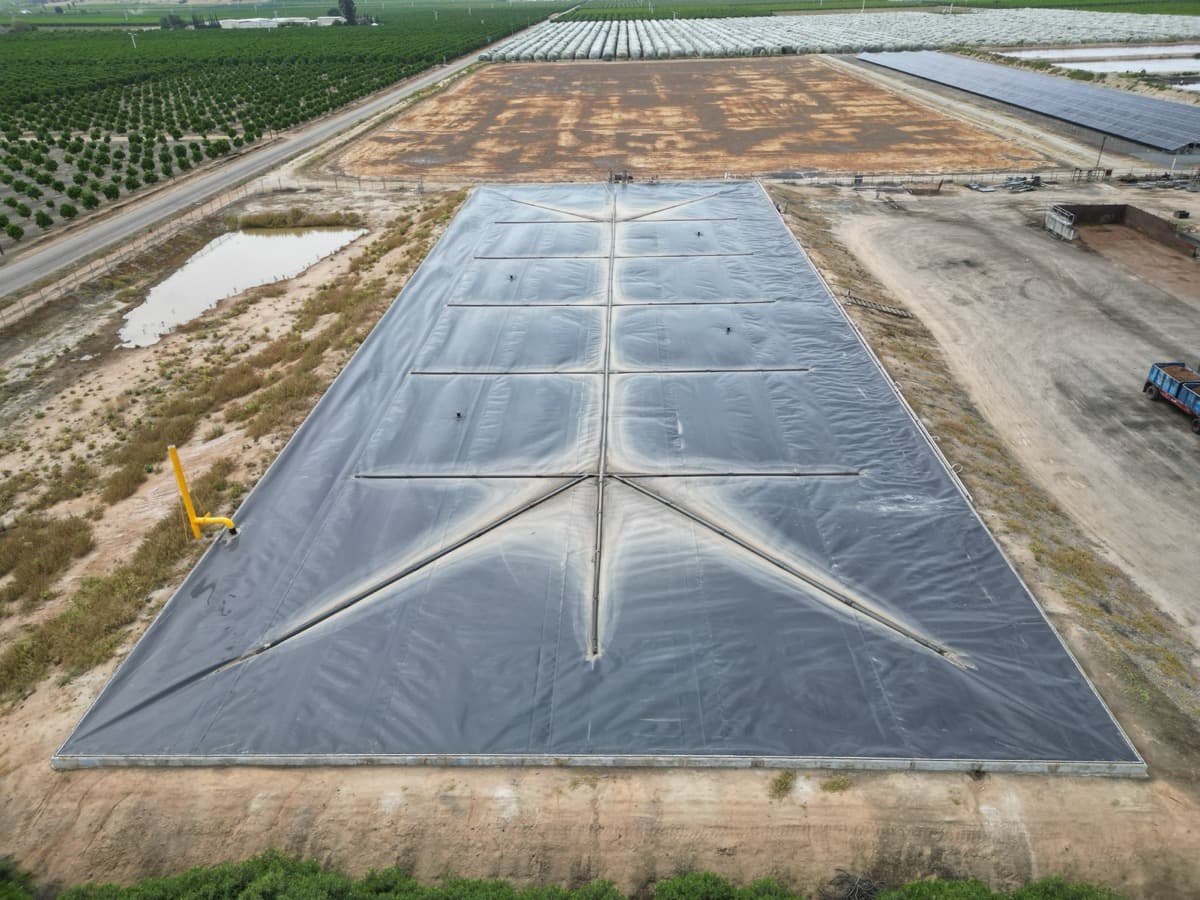
The panel field is almost never the problem. Factory and field seams are tested before a cover goes into service, and an intact sheet in the middle of a basin has very little acting on it. Leaks concentrate wherever the cover meets something else. The perimeter anchor or batten, penetration boots for gas takeoff, condensate, recirculation, mixing and sludge piping, access hatches, seam intersections, and field patches account for most of what gets found.
Mechanical damage is the other category, and it usually has a traceable history. Ballast tube abrasion working the same crease, a hatch left unlatched after sampling, equipment tracked too close to the perimeter during a sludge campaign, and a cold weather repair made without proper surface preparation all surface later as in-leakage.
Walking the cover, in the right order
Once the gas data says there is a leak, the field search is a walkover with a portable methane detector. Work the perimeter and every penetration first and the open field last, because that is where the probability sits. A laser or infrared methane detector reads at a distance, which matters here: the highest value places to check are frequently the places nobody wants to stand.
Optical gas imaging makes a plume visible on a screen and is the fastest way to clear a large cover, though it wants low wind and reasonable thermal contrast to work well. Where the headspace holds positive pressure, soap solution on a suspect boot or flange still settles the question in seconds. Positive pressure also makes some leaks announce themselves without any instrument at all, as a persistent bubble trail on a wet cover or as ponded rainwater that drains away and never comes back.
None of this is a casual walk. A floating cover carries fall, confined space, and asphyxiation exposure at the same time, and the inspection needs a written plan and an attendant before anyone steps on the membrane.
Most of the real work happens before the cover floats
The honest answer to cover leak detection is that a cover should be proven before it is deployed, because every method available afterward is slower, coarser, and more hazardous. Dual track fusion seams take an air channel pressure test. Extrusion welds take a vacuum box. Heat welded reinforced seams get an air lance. Coupons come out of production seams for peel and shear testing to ASTM D6392, with trial welds at the start of each shift and after any significant change in ambient conditions.
Those tests are quick and conclusive while the cover is still on the ground. The same verification is close to impossible once the membrane is floating on a full basin with biogas underneath it, which is the entire argument for doing it properly the first time.
What this means for an owner
An owner does not need to run any of these methods personally, but should know which question each one answers. Gas composition says whether air is entering. Gas balance says how much is being lost. A walkover says where. Install records say whether the seams and penetrations were ever proven, and that record is worth asking for before a cover is accepted.
EFI USA has designed, fabricated, and installed covered lagoon and digester gas systems since 1993 from its headquarters in Gaston, South Carolina, across more than 500 covered lagoon digester systems and roughly 82 percent of the US covered lagoon market. The pattern across that base is consistent. The covers that stay tight are not the ones that got the most inspection after startup. They are the ones where the penetrations were detailed correctly and every seam was proven before the basin was ever put under gas.