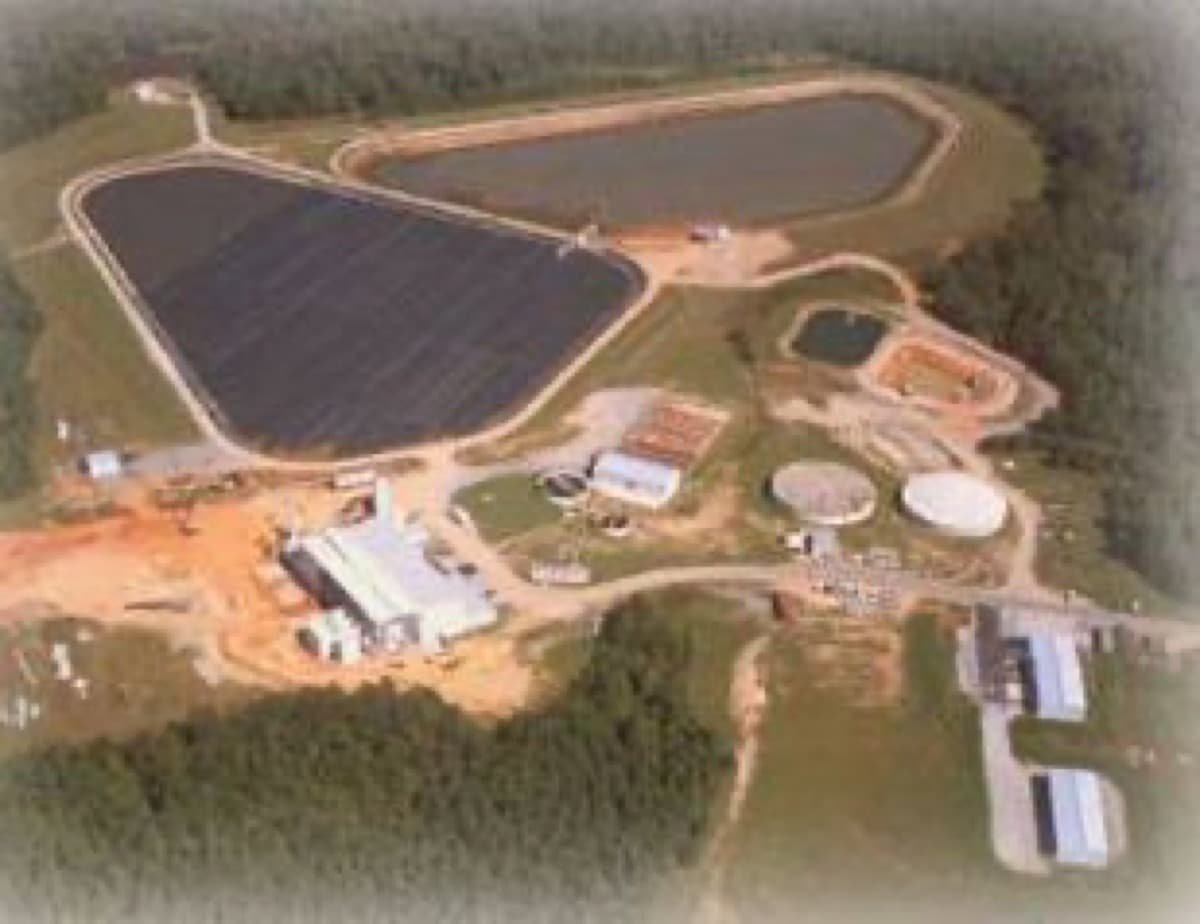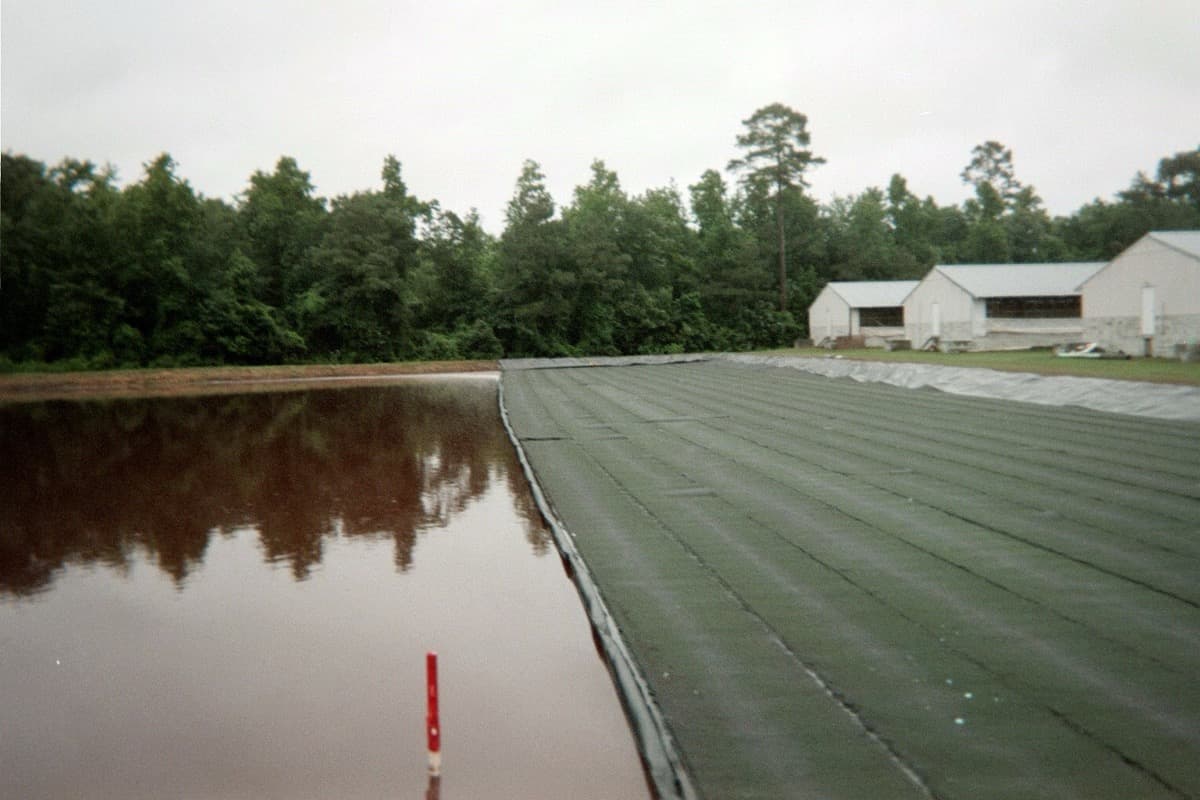
In May 2003, EFI started work on a single open manure lagoon at Cavenaugh Hog Farm in Wallace, North Carolina. By June that lagoon held four treatment cells, one anaerobic and three aerobic. The divisions came from three floating baffles, and a 74,000 square foot permeable cover went over roughly a quarter of the water.
Four years later, EFI built a smaller version for the Town of Hardwick, Vermont, setting a covered anaerobic cell inside an aerated municipal pond. Neither owner built a new basin. Both took the volume they already had and changed how it worked.
Why put an anaerobic cell inside a pond
Biological treatment often runs in stages. An anaerobic stage breaks down a large share of the organic load without oxygen, and aerobic stages downstream finish the job. Many farms and towns already hold enough volume for both. What they lack is a way to keep the stages apart in one body of water.
Without a barrier, wind, aeration and inflow mix the whole pond together. The anaerobic zone never stays anaerobic, and aerated water carries oxygen into the part of the basin that should not have it. A floating baffle draws a line through the water. A cover keeps the surface on that side still and dark.
What a permeable cover does on the anaerobic side
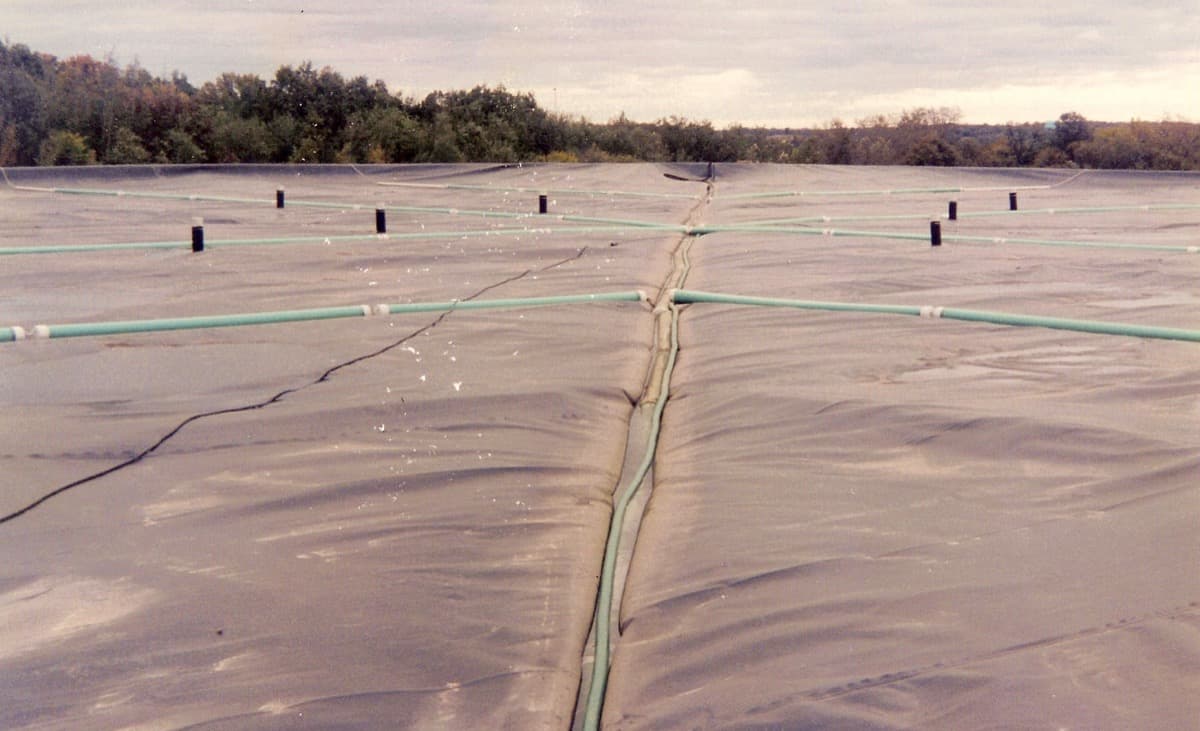
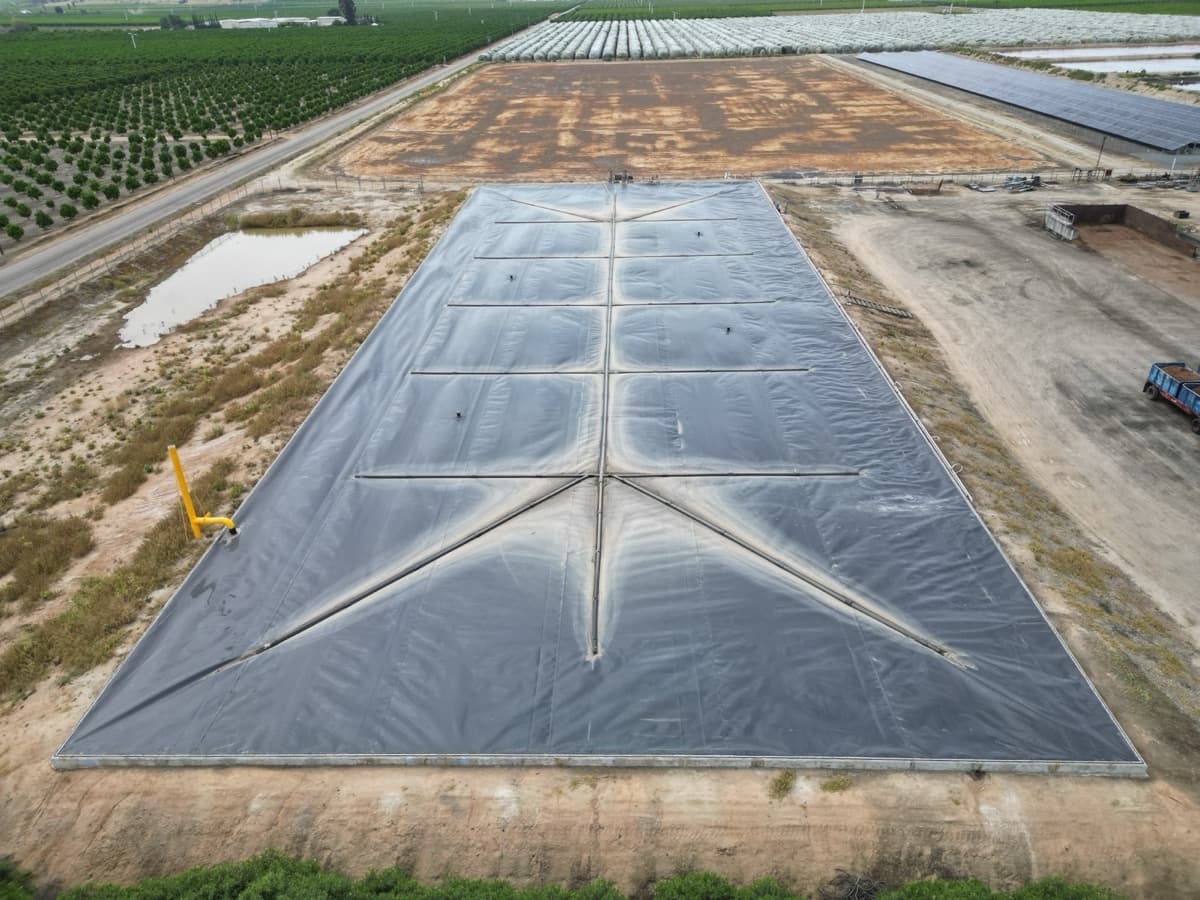
EFI's permeable cover is closed-cell polyethylene foam bonded to a polyester or polypropylene fabric, with panels sewn together using UV resistant thread. Each panel floats on its own. Gas passes up through the fabric, so there is no gas collection piping. Rain drains down through it, so there is no rain trench or pump system to run.
Over an anaerobic cell, the cover blocks the sunlight that would let algae grow at the surface and add oxygen during the day. It takes the wind off the water. The foam holds heat in the cell and cuts the odor coming off the surface.
What it does not do is capture biogas. If the owner wants the gas for a flare, a boiler or carbon credits, the cell needs a gas-tight geomembrane cover with sealed edges and gas piping instead.
Cavenaugh Hog Farm, Wallace, North Carolina, 2003
The farm's lagoon was holding more and more nutrients. The owner and the regulators were both concerned about whether the acreage under the farm's land-application permit could take the wastewater volume and the nutrient load coming out of it.
The layout used three floating baffles made from 30 mil XR-5, measuring 250 by 10 feet, 217 by 10 feet and 182 by 10 feet. They split the lagoon into one anaerobic cell and three aerobic cells. EFI installed 74,000 square feet of 15 mm 3R Foam permeable cover across about one-fourth of the lagoon surface.
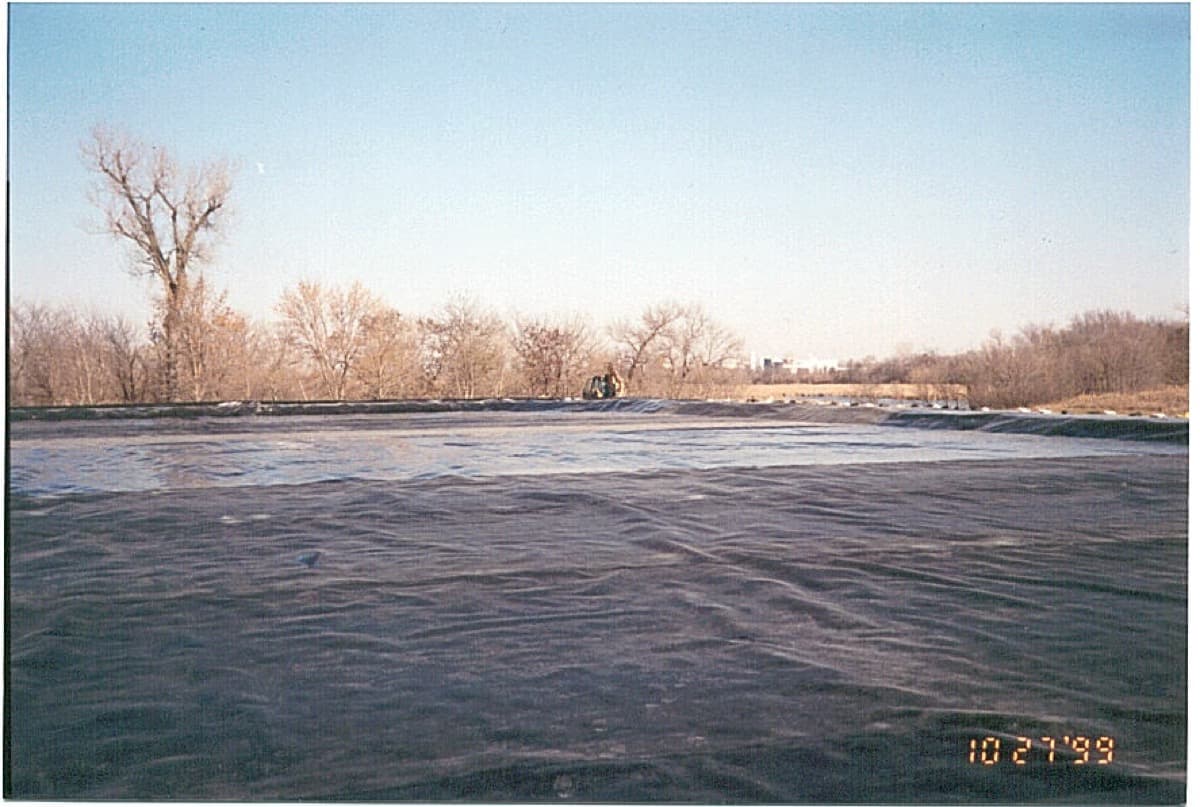
Other companies supplied the aeration and biological treatment equipment, and EFI's scope was the geosynthetics. The case history records that work running from May to June 2003 and finishing on schedule. The photo at the top of this page is from that record: the cover on the right, open water on the left and the barns behind.
Town of Hardwick, Vermont, 2007
Hardwick was upgrading its municipal treatment plant to meet lower discharge limits for BOD and phosphorus. With Forcier Aldrich & Associates as project engineer, the design called for a covered anaerobic treatment cell within one of the plant's existing aerated ponds.
EFI fabricated and installed both pieces in fall 2007. The cover was about 21,000 square feet of 50 mm 3R-Foam permeable panel, with a 30 mil HDPE slope skirt where the cover meets the berm. A 245 by 10 foot floating diversion baffle made from Seaman 8130 XR-5 separated the anaerobic cell from the rest of the pond.
Panel thickness made a practical difference between the two jobs. EFI rates its permeable panels walkable at 50 mm and up, for a worker clipped to a tether at the perimeter and wearing a flotation device, with an observer on the bank. Thinner panels are not rated for foot traffic. Cavenaugh's 15 mm panels sit below that line, and Hardwick's 50 mm panels meet it.
Building and keeping it on a working pond
A cover-and-baffle cell does not need an empty basin. EFI fabricates permeable panels in a climate-controlled building, so the site work is assembly and attachment. Panels are assembled on shore and pulled into position on a basin that still holds water.
Once the cover is on, each panel can be moved or lifted out on its own for maintenance. Small holes can be fixed on site with a hot-glue gun, and permanent patches are heat welded. The cover rides up and down with the water level and is rated for wind gusts up to 90 mph.
Heavy rain can pond on the surface for a while, because it can fall faster than it drains through the fabric. Portable pumps can help in extreme events, but nothing has to run day to day.
What to settle before the layout
A cover-and-baffle cell is a process decision first and a geosynthetics job second. Before anyone lays out panels, the owner and engineer should be able to answer these questions:
- How large does the anaerobic cell need to be, and how much volume does that leave for aerobic treatment?
- Where does the inflow enter, where is the outlet, and which way should water move from cell to cell?
- Where does the aeration equipment sit relative to the planned baffle line?
- What is the full range of operating water levels the cover and baffles have to follow?
- Will anyone need to walk the cover, which sets the panel thickness?
- Could the gas ever be worth capturing, which would put a gas-tight cover in the design from the start?
More treatment from the same basin
EFI USA has fabricated and installed floating covers, floating baffles and liners from Gaston, South Carolina since 1993, with more than 30 years in geosynthetics. Its covered lagoon digester work includes more than 500 systems, roughly 82 percent of the US covered lagoon digester market. Cavenaugh and Hardwick show the other half of the floating cover line: permeable covers that capture no gas but change what a pond can do.
On both jobs, the cover and the baffles were laid out together, because the line in the water and the cover beside it are one decision. Send EFI the pond dimensions, the inlet and outlet locations, the aeration layout and the treatment target, and the layout can start from the basin the owner already has.