One inch of rain on a one-acre floating cover is about 27,000 gallons of water. It weighs a little over 110 tons, and none of it soaks in or runs off the edge.
On most covers that water is a load to get rid of. On two Superfund lagoon covers EFI built in Sergeant Bluff, Iowa in 1999, keeping the water was part of the design. Comparing the two shows what a rainwater system on a floating cover actually has to do.
Where the rain goes on a standard cover
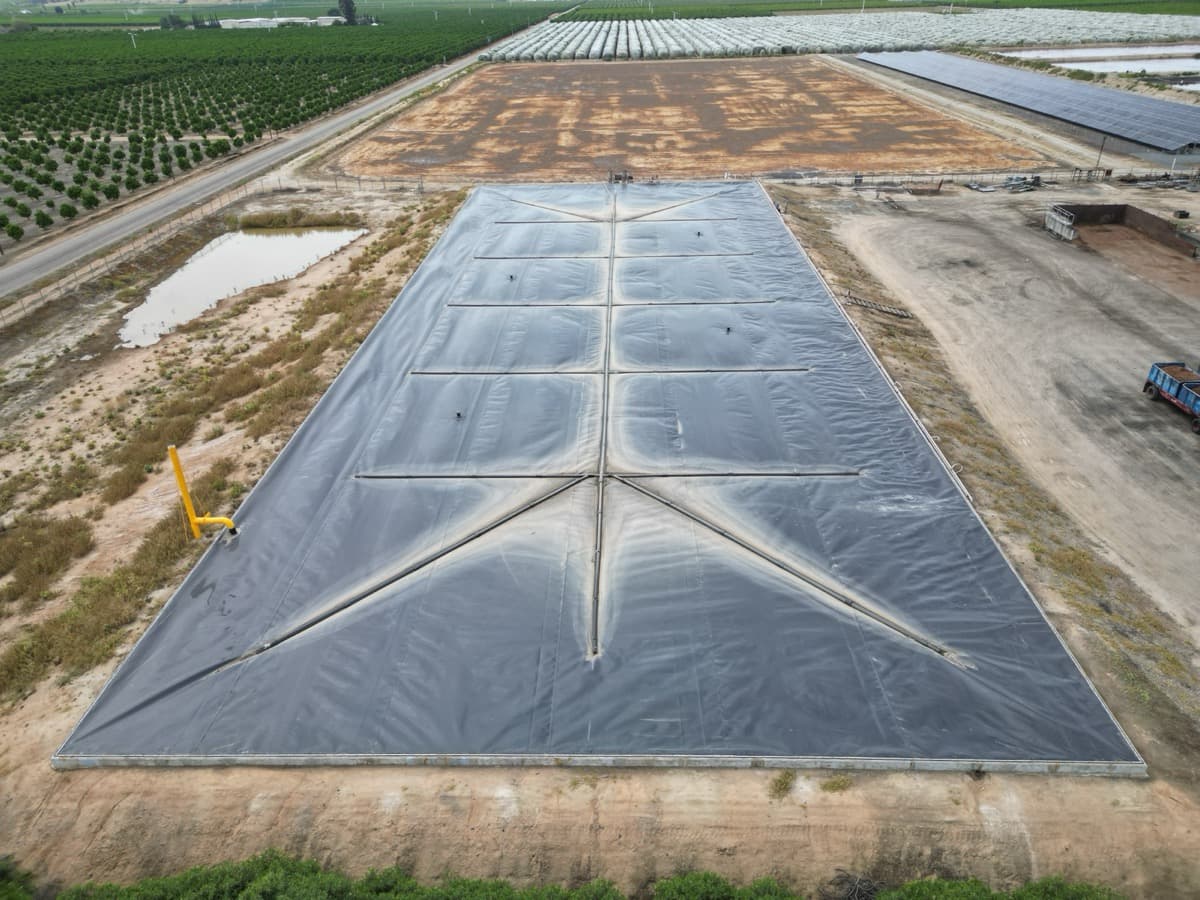
A floating cover rests on the liquid in the basin, so rain that lands on it collects in the low points. Ballast pipes and sand tubes laid across the cover create those low points on purpose. They form troughs that lead the water to sumps, where pumps lift it off the cover and over the berm.
The load is simple to estimate. One inch of standing water weighs 5.2 pounds per square foot. A 60-mil HDPE cover weighs about 0.3 psf, so a single inch of ponded rain puts more than 15 times the cover's own weight on the sheet where it collects.
Spread evenly, that weight pushes the cover a little deeper into the liquid and does no harm. When it gathers in one place, it stretches the sheet at seams and ballast connections. On a gas-tight cover, a deep pond can push the sheet far enough down to flood the gas collection piping beneath it.
Size the pumps for the storm
Rain removal is sized for intensity, not annual rainfall. Forty inches spread across a year is easy to keep up with. The hard case is a thunderstorm that drops two inches in an hour.
As an illustration, take a 60,000 square foot cover, the size of each Sergeant Bluff cover. An inch of rainfall there is about 37,400 gallons. Two inches in an hour works out to roughly 1,250 gallons per minute. The pumps do not have to match that rate if the troughs can hold the difference until the rain eases and the pumps catch up.
That storage is the design trade. Deeper troughs hold more water between pump cycles, but they put more weight in fewer places. More sumps spread the load, but they add pumps, float switches and discharge hose that all have to keep working.
Sergeant Bluff: water on top by design
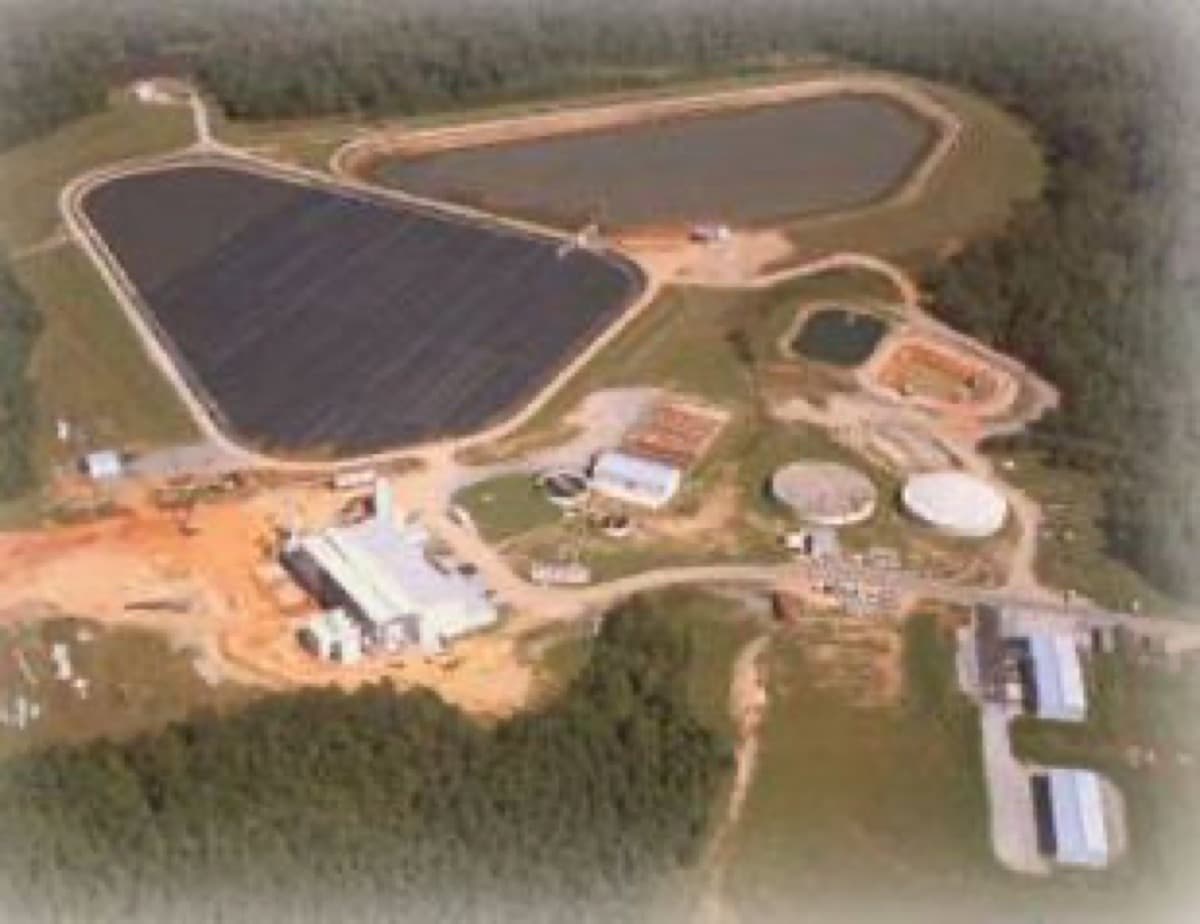
The Mid-America Tanning site in Sergeant Bluff was a former tannery on the Superfund list. It was contaminated with heavy metals and sat near a river, and rainwater was carrying contaminants off the site. The remediation plan, engineered by Black & Veatch, left the contaminated sludge in the East and West Aeration Lagoons in place and sealed it under floating covers.
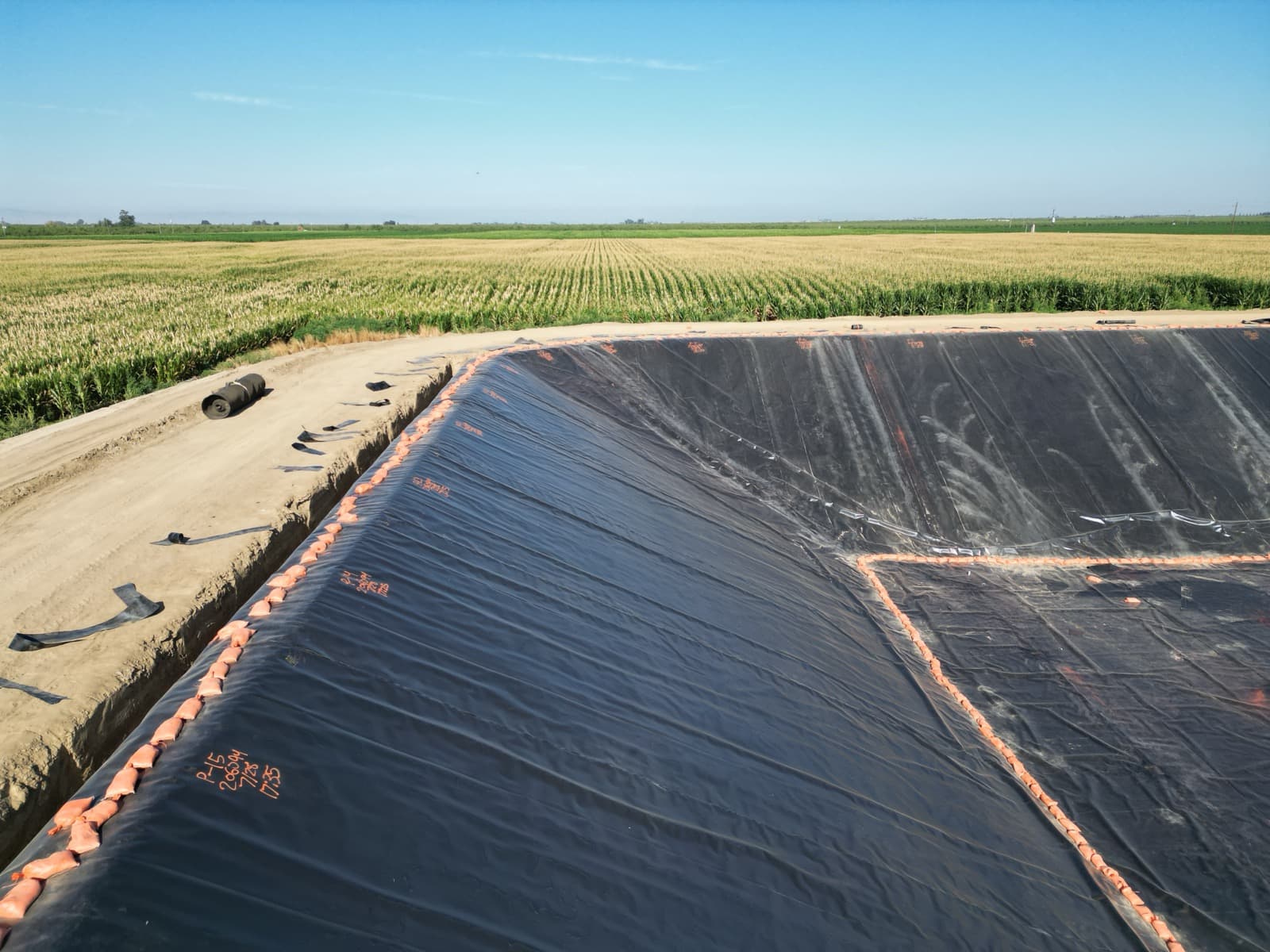
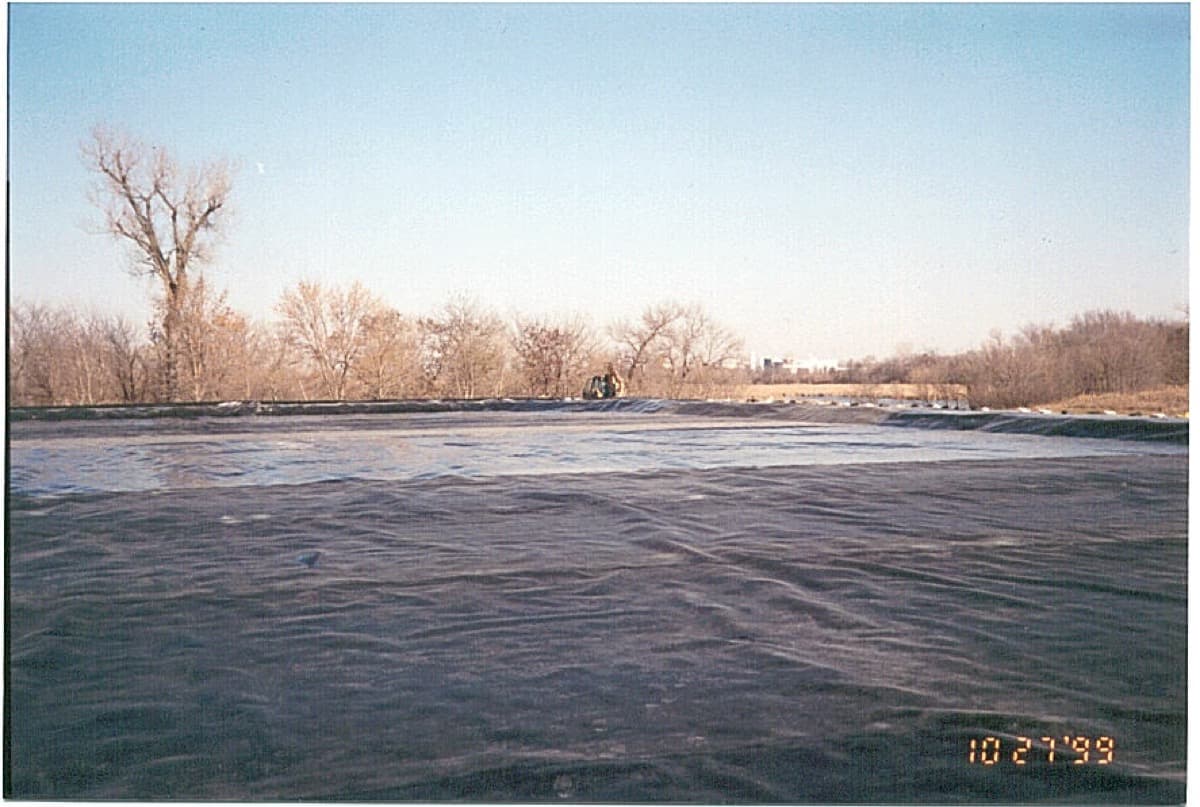
EFI installed two 60-mil HDPE floating covers, each 240 by 250 feet. The covers were not built to shed rain. They were designed to be flooded with rainwater up to the elevation of the lagoon spillways. They were weighted and allowed to sink as the water covering the sludge was removed and treated.
The finished covers hold an impermeable barrier between the contaminated sludge below and the rainwater above. EFI's original case history records that the remediated lagoons went on to provide waterfowl habitat.
Why a digester cover cannot do the same
The Sergeant Bluff covers had no gas to collect and no treatment process to keep running, so the water above them could stay. A covered lagoon digester or odor control cover has the opposite job. The liquid under it is still active, and the cover has to stay on top of it. Rainwater left in place there takes up room the gas needs and adds a load the sheet was never meant to carry for long.
A permeable cover handles rain a third way. The fabric lets rain drain straight through into the basin, so there are no troughs or pumps to run. The tradeoff is that the rain adds to the lagoon volume.
All three designs answer the same question, which is where the rain ends up and what its weight does to the sheet. Sergeant Bluff answered it with spillway elevations and ballast. A gas-tight cover answers it with troughs, sumps and pumps that have to run every time it rains.
Storm-season checks for operators
Fall storms often arrive while lagoons are being drawn down for land application, so covers and their rain pumps are sitting lower than usual. Before a forecast storm, an operator should:
- Run every rain pump by hand and confirm the float switch starts and stops it.
- Walk each discharge line to the berm and clear kinks, debris and anything parked on the hose.
- Confirm each pump has power, and know which pumps share a circuit.
- Clear leaves and debris out of the sumps and troughs.
After the storm, look for water standing where there is no sump, which can point to ballast that has shifted. Also watch for ponded water that drains away and never comes back, which usually means a hole. If water pumped off the cover looks or smells like lagoon liquid, treat it as lagoon liquid until the leak is found.
Rainwater design belongs with the cover design
EFI USA has designed and built lagoon liners and covers from Gaston, South Carolina since 1993 and has more than 30 years in geosynthetics. Its covered lagoon digester work includes more than 500 systems, roughly 82 percent of the US covered lagoon digester market. On those jobs EFI builds the liner, the cover and the gas collection together. The ballast layout, sump locations and pump sizing are set by the same team that sets the gas system pressures.
Sergeant Bluff is the other half of that experience. Sometimes the right rainwater design pumps every gallon away, and sometimes, when the job calls for it, the water stays.