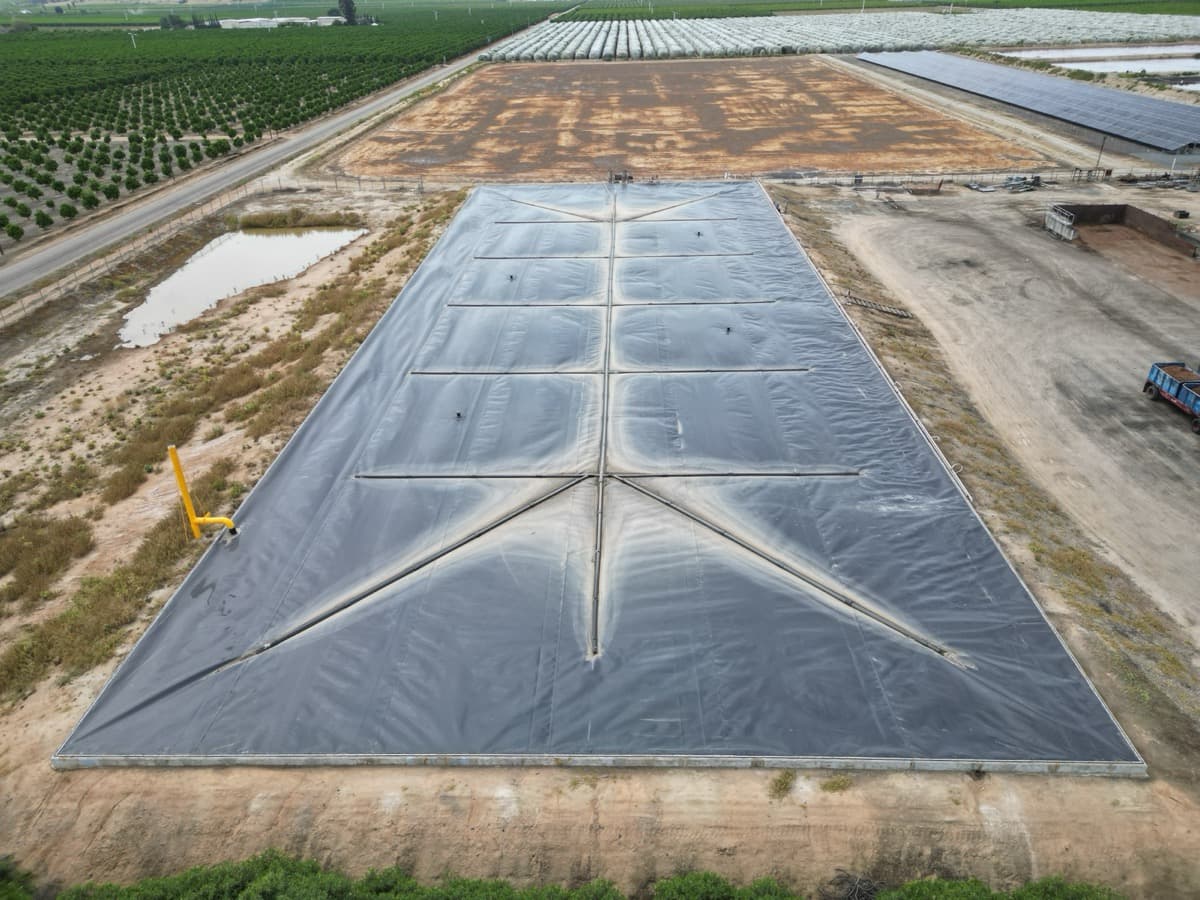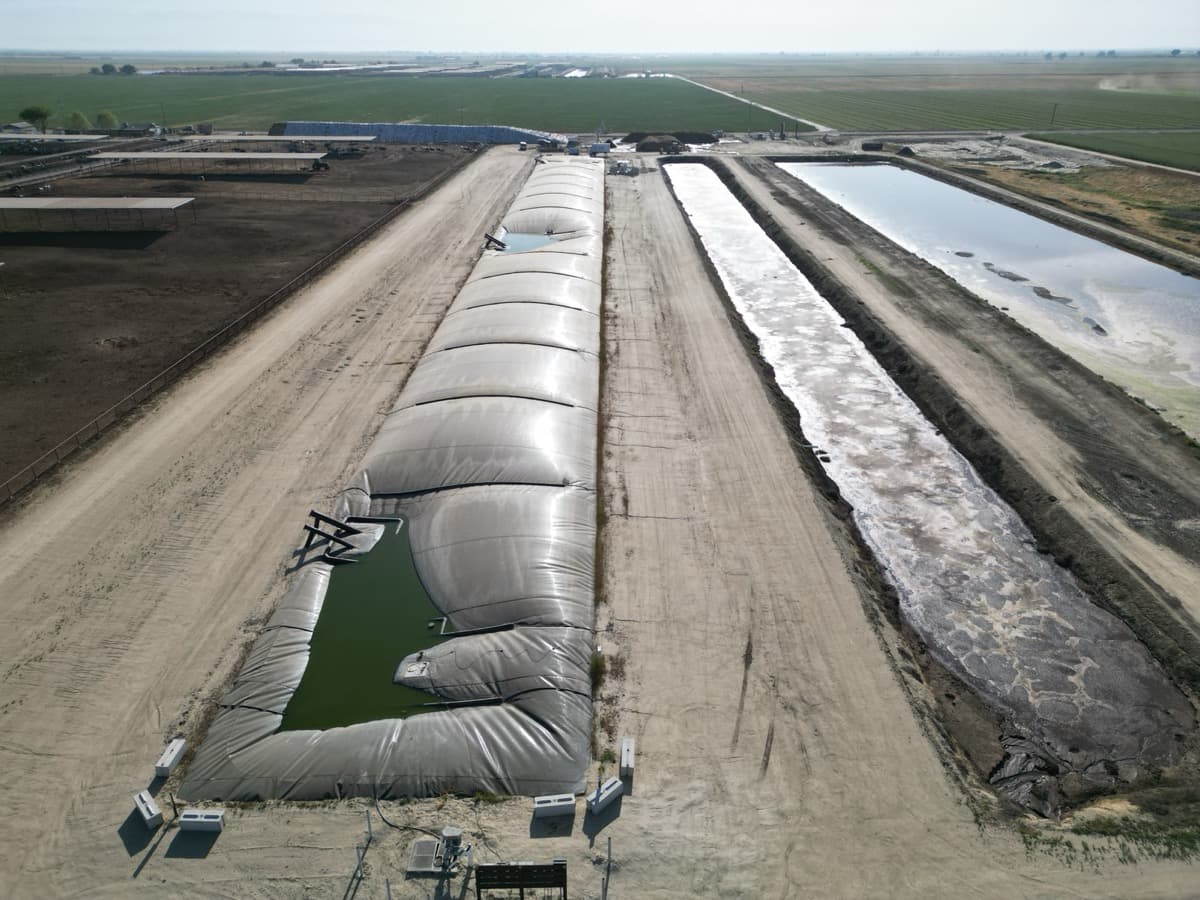
Twelve inches of settled snow on a two acre floating cover weighs roughly 680 tons. A roof would have to hold that up. A floating cover does not. It floats it, and the difference decides how the system behaves between December and March.
The arithmetic is simple enough to do on the tailgate. One inch of water over one square foot weighs 5.2 pounds. Settled snow runs somewhere near four inches of snow to one inch of water, so a foot of it lands at about 15.6 pounds per square foot. Across 87,120 square feet, that is the 680 tons. Because the cover rests on the liquid rather than spanning it, the membrane picks the load up by displacement. It settles until it displaces an equal weight of lagoon liquid, which works out to roughly three inches lower. The settlement equals the water equivalent of whatever is sitting on top, no matter how deep the snow looks.
Where the Load Actually Goes
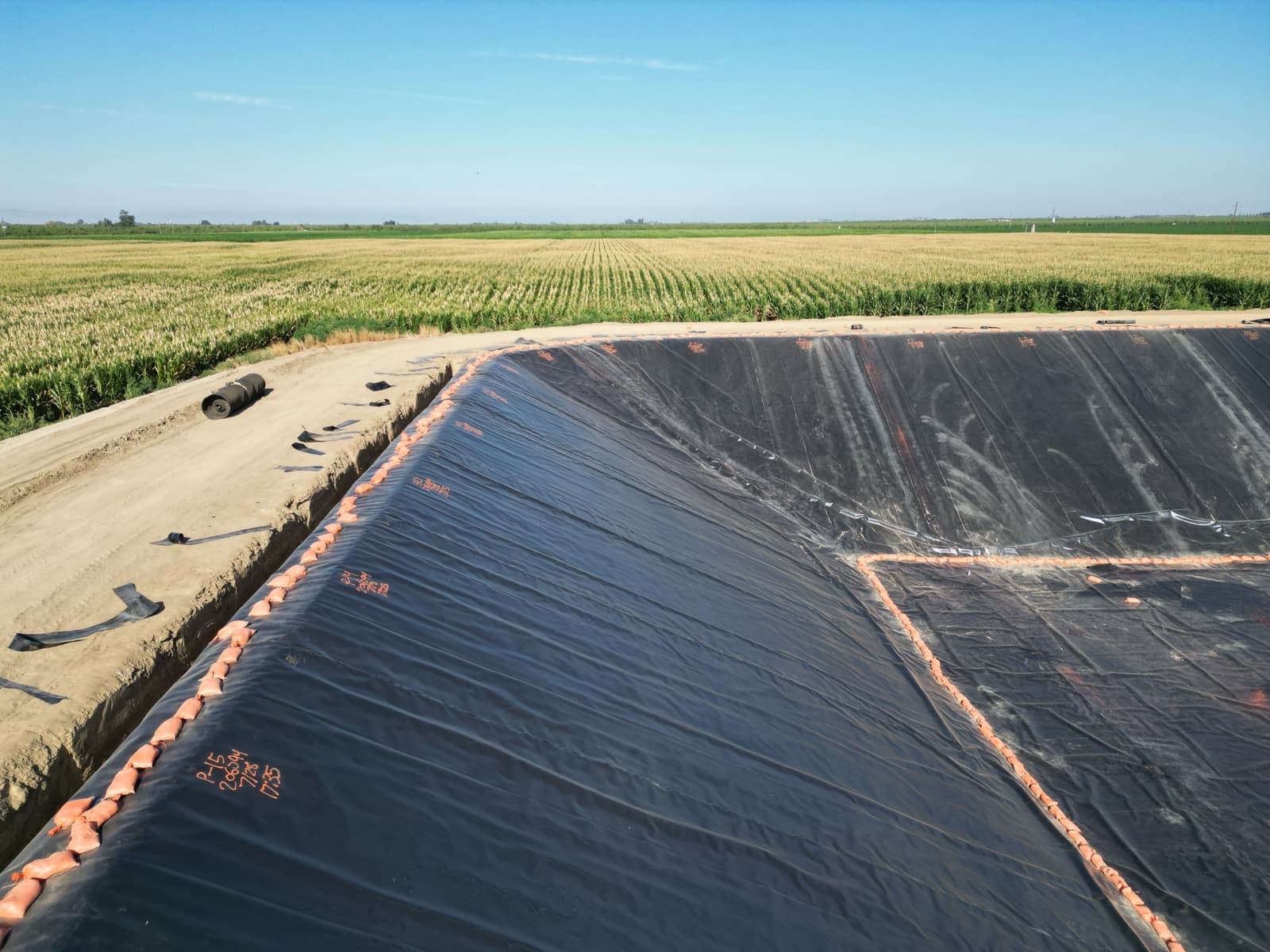
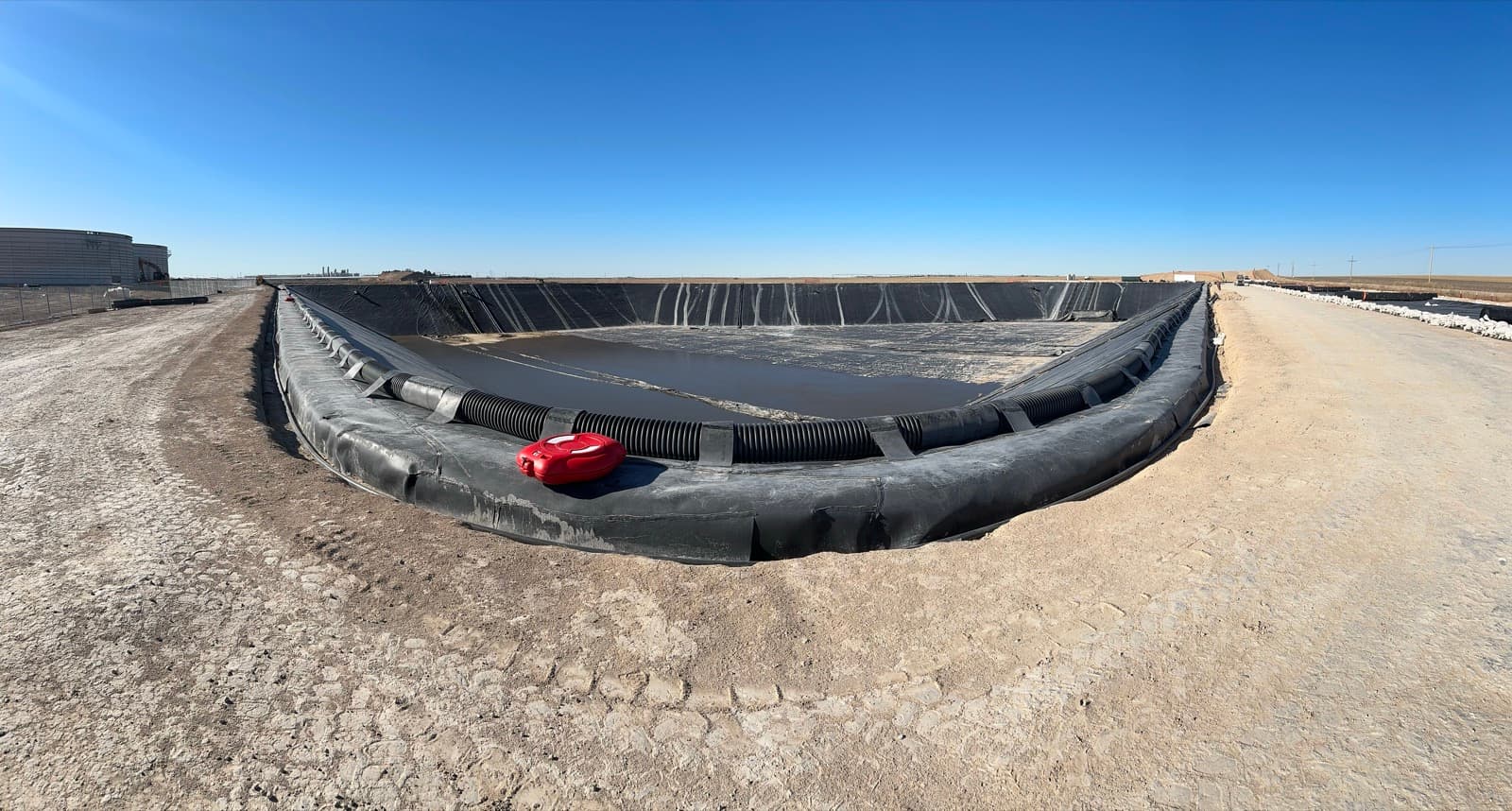
There is no span and no bending here, so there is no collapse mechanism of the kind you would check on a building. What there is instead is movement, and movement has to pull fabric from somewhere. Three inches of settlement across several acres draws slack out of the perimeter and out of the panels between ballast lines. A cover built with correct slack and a sensible ballast layout absorbs that without complaint. A cover installed tight, or one that has already given up its slack to a level change, puts the difference into tension at the anchor line and at the ballast tube seams.
Cold weather damage shows up at the perimeter far more often than in the middle of a cover. That is where the geometry changes, where the fabric transitions from floating to fixed, and where a season of small movements accumulates.
Snow also refuses to load evenly. Wind moves it off the crowns and packs it into the low spots, which are the same low spots where rainwater already collects. Rain falling on an existing snowpack makes this worse, because the pack holds the water in place instead of letting it run to the sump. The rain pump can be working perfectly and still never see the water it was installed to remove.
Ice Is a Different Load Than Snow
Snow sits on a cover. Ice bonds to it. Once a sheet of ice freezes onto the membrane, the cover and the lagoon surface stop being two things that move independently and start being one rigid plate. Ice at 57 pounds per cubic foot adds about 4.8 pounds per square foot for every inch of thickness, which is a manageable number on its own. The bonding is the part that causes trouble.
Drawing the liquid level down under a bonded ice sheet loads the cover in a way no design assumed. The ice either hangs from the perimeter while the liquid drops away beneath it, or the perimeter drags the sheet down with it, and the fabric in between takes whatever the two ends disagree about. Both are avoidable by scheduling level changes before freeze up and after thaw rather than during, and the waterline transition takes the same freeze and thaw cycling either way.
The Gas Side Freezes Before the Cover Does
Biogas leaves a lagoon saturated with water vapor at the liquid temperature. Every foot of header running above grade in January is a condenser. Water drops out at the low points, freezes, and plugs the line, and the pressure that used to move gas to the flare starts pushing up on the underside of the cover instead. The cover lifts, the anchoring takes load it was not sized for, and ballast can walk off its intended line. The symptom looks like a cover problem. The cause is a piping problem.
The fixes are unglamorous. Knockout pots belong below frost depth or on heat trace, with the trace circuits actually verified as energized rather than assumed. Headers should slope continuously to a drain point instead of relying on whatever low spots the field grading happened to produce. Condensate traps that hold a water seal will freeze that seal solid, and a frozen seal stops doing the job it was installed for. Drain checks that run monthly in July should run more often once nights stay below freezing.
Gas Production Drops, and That Is Not a Leak
An ambient temperature covered lagoon runs at whatever temperature the liquid is. Biological reaction rates in the mesophilic range roughly halve for every 10 degree Celsius drop, so a lagoon that was producing well in August produces a fraction of that under ice. Flare turndown becomes the operating constraint rather than gas supply.
Owners who read a winter production drop as a cover leak spend real money looking for a hole that was never there. The defense is a baseline. Record the seasonal profile through the first full year so the third winter has something honest to compare against.
The Lagoon Is Fullest When the Cover Is Most Loaded
Many northern states restrict land application on frozen or snow covered ground, and nutrient management plans in those states commonly size storage for 180 days or more. The practical consequence is that the liquid level peaks in late winter, at the same point in the calendar when snow load is heaviest and ice is thickest.
Freeboard is what gives the cover room to settle under load. Late winter is when there is least of it. That timing is why the walk you take in October matters more than the one in April, and it is worth building the drawdown schedule around it.
What to Check Before Freeze Up
- Run the rain pumps under actual load rather than lifting the float switch by hand. A pump that has been idle since September is the one that fails in the first storm.
- Pull and inspect every condensate drain, confirm it sits below frost depth or carries heat trace, and confirm the trace circuit energizes.
- Walk the perimeter anchor for pulled slack, exposed edges, and low spots that already hold standing water in mild weather.
- Verify ballast position across the whole cover. Ballast that has migrated over a season leaves an unballasted panel to catch the first drift.
- Record the current liquid level against the planned winter storage curve and decide the drawdown schedule now, while the surface is still open.
The Same Cover, a Different Operating Plan
EFI has been building geosynthetic containment from Gaston, South Carolina since 1993, and the covered lagoon systems it has installed across 28 states include sites in New York and Pennsylvania that go through a real winter every year alongside the ones in California and the desert Southwest. Material selection barely changes with latitude. The operating plan changes considerably.
Cold weather trouble on a floating cover is rarely a material failure. It is usually a rain pump nobody tested, a condensate drain sitting above the frost line, or a drawdown taken in February that should have been taken in November. Those are all decisions made months earlier, at a point in the year when winter is easy to postpone thinking about.