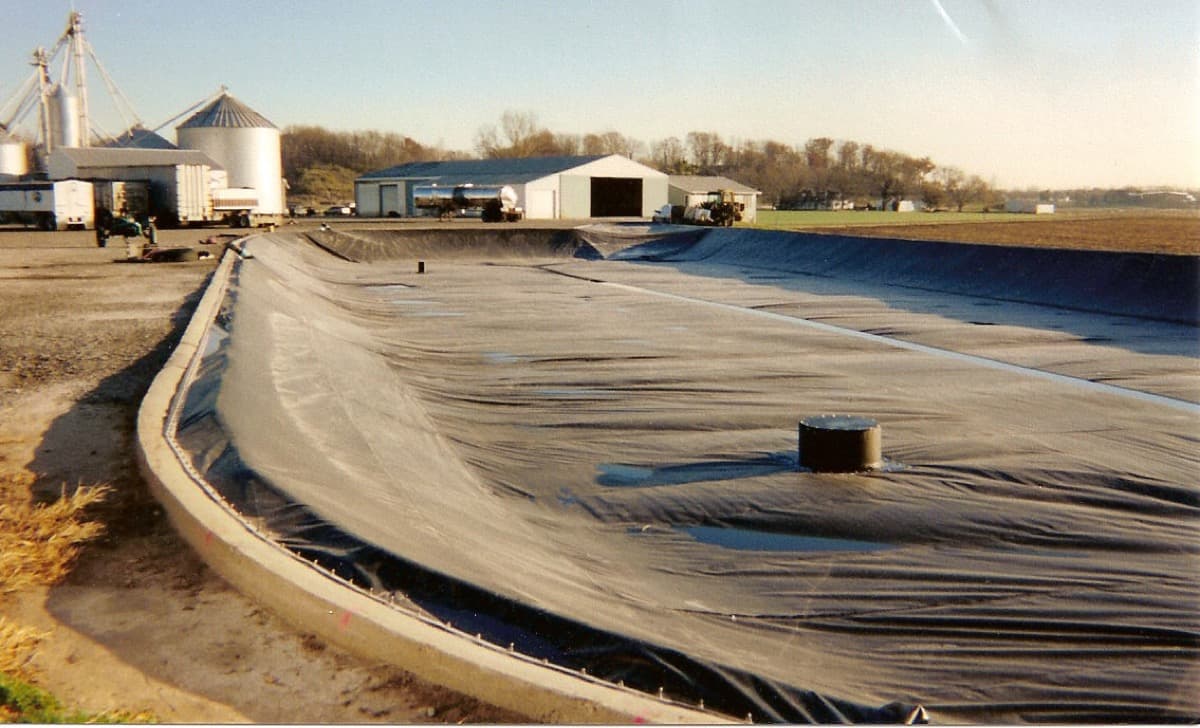
Ultraviolet radiation is the single most destructive environmental factor for polyethylene geomembranes. Exposed liners in high-UV environments -- lagoon covers, reservoir liners, secondary containment systems without soil cover -- face continuous photodegradation that breaks polymer chains, reduces elongation, and ultimately causes cracking and failure. The difference between a liner that lasts 10 years and one that lasts 30 years in the same environment comes down to UV stabilization.
EFI USA has installed geomembrane systems across every climate zone in the continental United States, from the intense UV exposure of the Southwest to the freeze-thaw cycles of the northern plains. That experience has taught us which stabilization strategies actually perform in the field -- and which ones only look good on a spec sheet.
How UV Degrades Polyethylene
UV radiation in the 290-400 nm wavelength range has enough energy to break carbon-carbon and carbon-hydrogen bonds in the polyethylene backbone. This initiates a chain reaction of oxidative degradation: free radicals form, react with oxygen, and produce carbonyl groups that further accelerate breakdown. The visible result is surface chalking, micro-cracking, and progressive embrittlement. Without stabilization, standard HDPE would begin showing measurable degradation within 2-3 years of outdoor exposure.
Carbon Black: The Primary UV Shield
Carbon black is the most effective and cost-efficient UV stabilizer for polyethylene geomembranes. At 2-3% loading by weight, finely dispersed carbon black absorbs UV radiation and converts it to harmless heat before it can initiate polymer degradation. The key parameters are concentration, particle size, and dispersion quality. ASTM D1603 specifies the test method for carbon black content, and most quality geomembrane specifications require a minimum of 2.0% with a target of 2.5%. Particle size should be in the 15-25 nm range for optimal UV absorption, and dispersion must be uniform -- agglomerates larger than 30 microns create localized weak points where degradation can initiate.
HALS Stabilizers: The Second Line of Defense
- Hindered amine light stabilizers (HALS) work by a fundamentally different mechanism than carbon black. Rather than absorbing UV radiation, HALS scavenge the free radicals that form when UV energy does reach the polymer backbone.
- HALS are regenerative -- they cycle through multiple radical-scavenging reactions before being consumed, providing long-lasting protection even at relatively low concentrations (typically 0.1-0.5% by weight).
- The combination of carbon black (UV absorption) and HALS (radical scavenging) provides synergistic protection that significantly outperforms either stabilizer alone. This dual-stabilization approach is standard practice for any geomembrane expected to remain exposed for more than 10 years.
- Some resin manufacturers also include antioxidant packages (phenolic and phosphite types) that further extend service life by preventing thermal oxidation during processing and long-term field exposure.
Testing UV Resistance: ASTM D7238 and Accelerated Weathering
ASTM D7238 is the standard test method for determining the effect of UV exposure on the oxidative induction time (OIT) of polyethylene geomembranes. Test specimens are exposed to a xenon arc lamp that simulates solar radiation, then periodically tested for retained OIT -- a measure of remaining antioxidant capacity. The test is typically run for 1,600-3,200 hours, with specimens retaining at least 50% of their initial standard OIT (per ASTM D3895) or 50% of their initial high-pressure OIT (per ASTM D5885) considered to have passed. GRI-GM13, the industry specification for HDPE geomembranes, requires that specimens retain at least 50% of their original HP-OIT after 1,600 hours of UV exposure.
Expected Service Life in High-UV Environments
With proper carbon black loading (2.0-3.0%), HALS stabilization, and quality resin, a well-manufactured HDPE geomembrane can provide 25-35 years of exposed service life in moderate UV environments (northern US latitudes) and 20-25 years in high-UV environments (southern US, desert Southwest). These estimates assume proper installation without mechanical damage and no chemical exposure beyond the liner's rated resistance. LLDPE and fPP geomembranes generally have somewhat shorter UV service lives due to differences in crystallinity and stabilizer compatibility.
How EFI Selects Materials for High-UV Applications
For every project, EFI evaluates the specific UV exposure conditions -- latitude, elevation, reflective surfaces (water, snow, light-colored soil), and whether the liner will be fully exposed or partially covered. In high-UV applications, we specify geomembranes with documented ASTM D7238 test results at 3,200 hours minimum, carbon black content verified by ASTM D1603, and HALS stabilization confirmed by the resin manufacturer. We also require manufacturer warranties backed by actual weathering data, not just accelerated lab tests. Over 500 installations across 32 years have validated this approach -- our material selection process is built on field performance, not theoretical projections.