Federal incentive programs for biogas projects get most of the attention -- the Investment Tax Credit, USDA loan guarantees, and EPA regulatory frameworks dominate the conversation. But state-level programs often provide the incremental funding that transforms a marginal project into a compelling one. EFI has navigated state incentive programs across a dozen states over the past decade, and the practical experience of actually applying for, receiving, and deploying these funds reveals both the opportunity and the complexity.
NYSERDA: New York's Clean Energy Investment
The New York State Energy Research and Development Authority (NYSERDA) operates one of the most substantial state-level clean energy investment programs in the country. For biogas and anaerobic digestion projects, NYSERDA provides direct grants, technical assistance, and co-investment that can cover 25-40% of project capital costs. The program is particularly relevant for dairy operations in upstate New York, where the combination of regulatory pressure on nutrient management and strong state policy support creates favorable conditions for digester deployment.
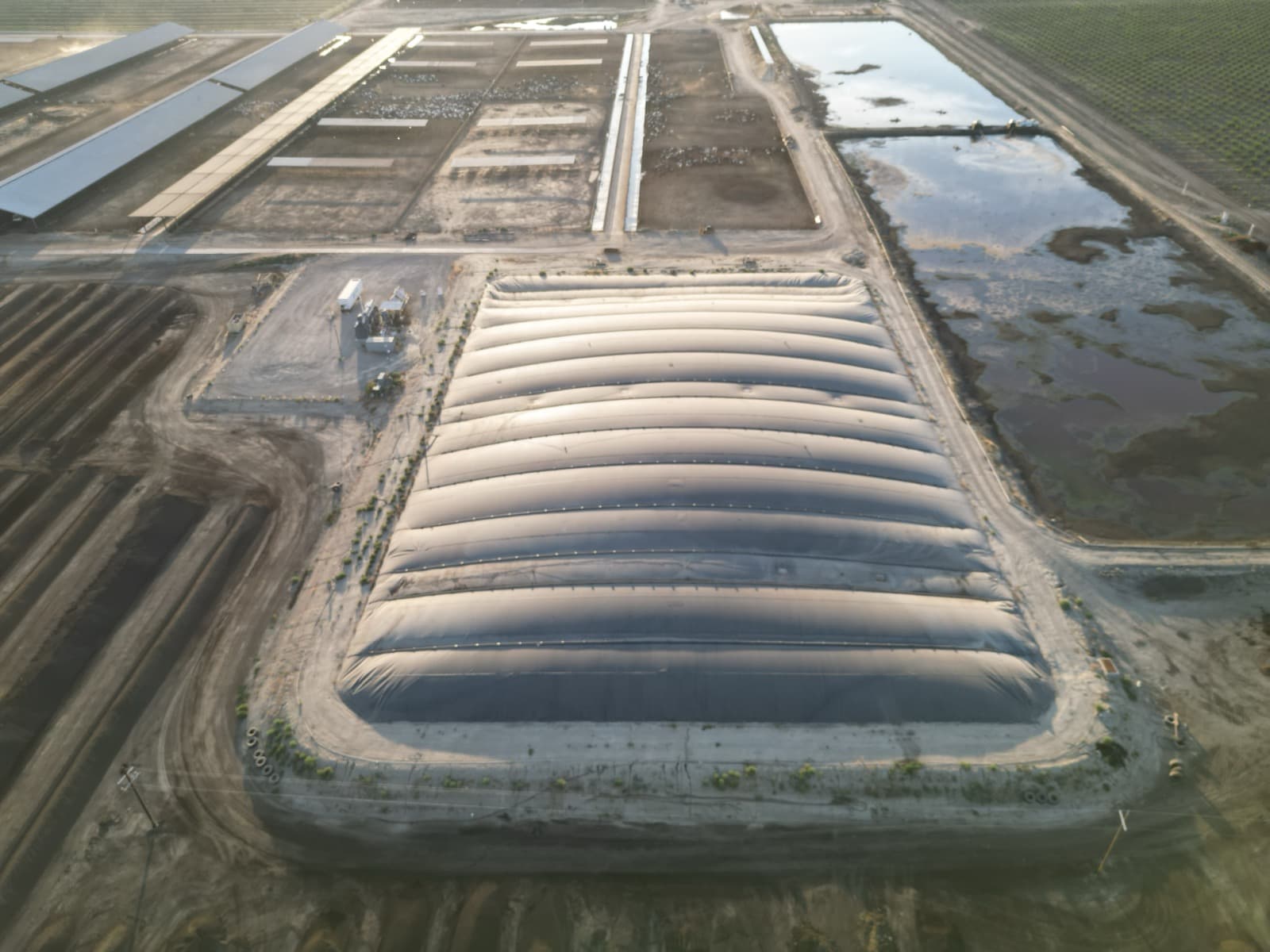
EFI's investor presentation to NYSERDA outlines a phased deployment approach for covered lagoon digesters across New York dairy operations. The presentation demonstrates EFI's methodology for project financial modeling: phased capital deployment starting with the highest-return sites, carbon credit revenue projections under both voluntary and compliance pathways, and the zero-cost model structure where EFI absorbs capital risk and shares revenue with the operator after achieving its return threshold.
The NYSERDA application process is competitive but well-structured. Applications are reviewed on technical merit, emission reduction potential, economic viability, and alignment with state clean energy goals. EFI's track record of 500+ installations provides the performance data and operational history that NYSERDA evaluators look for when assessing project risk.
North Carolina Renewable Energy Tax Credit (NC-478G)
North Carolina's renewable energy tax credit program, authorized under NC General Statute 105-129.16A and claimed on form NC-478G, provides state income tax credits for investments in renewable energy property. Biogas recovery systems -- including covered lagoon digesters and enclosed flares -- qualify under the program's definition of renewable energy property.
The NC tax credit is particularly valuable for North Carolina's swine and poultry operations, which represent a significant portion of EFI's Southeast pipeline. The credit can be applied against state income tax liability, and for operations structured as pass-through entities (LLCs, S-corps), the credit flows through to individual owners. For operations with sufficient state tax liability, the credit effectively reduces the net project cost and improves the economics for both the operator and the project developer.
Navigating the NC tax credit requires careful attention to eligibility requirements, placed-in-service dates, and the interaction between state credits and federal incentives. EFI works with operators and their tax advisors to ensure that projects are structured to maximize available credits without creating compliance issues.
USDA REAP Grants: The Federal-State Bridge
The USDA Rural Energy for America Program (REAP) provides grants and loan guarantees for renewable energy systems and energy efficiency improvements in rural areas. REAP grants can cover up to 40% of project costs (with a maximum grant of $1 million for renewable energy systems), and the program specifically lists anaerobic digesters and biogas recovery systems as eligible technologies.
REAP is a federal program, but it operates through USDA state offices and is best understood as a federal-state bridge program. Application priorities and funding levels vary by state, and the state REAP contacts -- which EFI maintains a current directory of -- provide guidance on application timing, documentation requirements, and competitive positioning. EFI's experience submitting REAP applications across multiple states has built institutional knowledge of what each state office prioritizes and how to structure applications for maximum competitiveness.
The REAP application requires a technical report documenting the energy generation potential, system design, and economic analysis of the proposed project. EFI prepares these technical reports as part of its standard project development process, leveraging engineering data from hundreds of comparable installations to provide the performance estimates and cost benchmarks that evaluators need.
Incentive Stacking: The Real Power
The real value of state incentive programs emerges when they are stacked with federal programs and carbon credit revenue. A dairy operation in North Carolina installing a covered lagoon digester might combine a USDA REAP grant covering 25% of project costs, the NC-478G state tax credit covering an additional 15-20%, carbon credit revenue under CARB or voluntary protocols, and EFI's zero-cost model covering any remaining capital gap.
In this stacked scenario, the operator pays nothing out of pocket, receives ongoing carbon credit revenue sharing after EFI's return threshold is met, benefits from the tax credit (which offsets other income tax liability), and gets a fully operational methane destruction system with odor control and regulatory compliance benefits. The combined incentive stack can cover 40-60% of project capital costs before carbon credit revenue is even considered.
State-by-State Landscape
- New York: NYSERDA grants + REAP + state renewable energy credits. Strong policy support for dairy digesters.
- California: CARB cap-and-trade compliance offsets + LCFS credits + CDFA Dairy Digester Research and Development Program. The most developed state-level support ecosystem.
- North Carolina: NC-478G tax credit + REAP + growing regulatory pressure on swine and poultry operations.
- Vermont: Clean Energy Development Fund grants for agricultural digesters. Small program but high per-project impact.
- Wisconsin: Focus on Energy program provides technical assistance and some financial support for agricultural biogas.
- Oregon: Renewable energy tax credits and state-level clean fuels program complementing federal incentives.
- Minnesota: Agricultural Improvement Loan Program and utility-level renewable energy incentives.
How EFI Navigates the Process
EFI does not claim to be a grants management firm, but the company has developed practical expertise in navigating state incentive programs through years of project development. This includes identifying applicable programs during project feasibility assessment, structuring project timelines to align with application deadlines and funding cycles, preparing technical documentation that meets program-specific requirements, and coordinating with operators and their financial advisors on tax credit utilization.
For operators evaluating biogas projects, the existence of state incentive programs can change the fundamental economics. A project that shows a 4-year payback without incentives may show a 2-year payback with a REAP grant and state tax credit. For EFI's zero-cost model projects, incentive funding reduces the capital at risk and accelerates the timeline to the revenue-sharing threshold, which benefits the operator by bringing forward their share of carbon credit revenue.
“Most operators do not know what state incentives are available for their project. That is not a criticism -- the programs are fragmented, the eligibility rules are complex, and the application deadlines change every year. It is our job to know what is out there and help operators capture every dollar they are entitled to.”
-- EFI USA