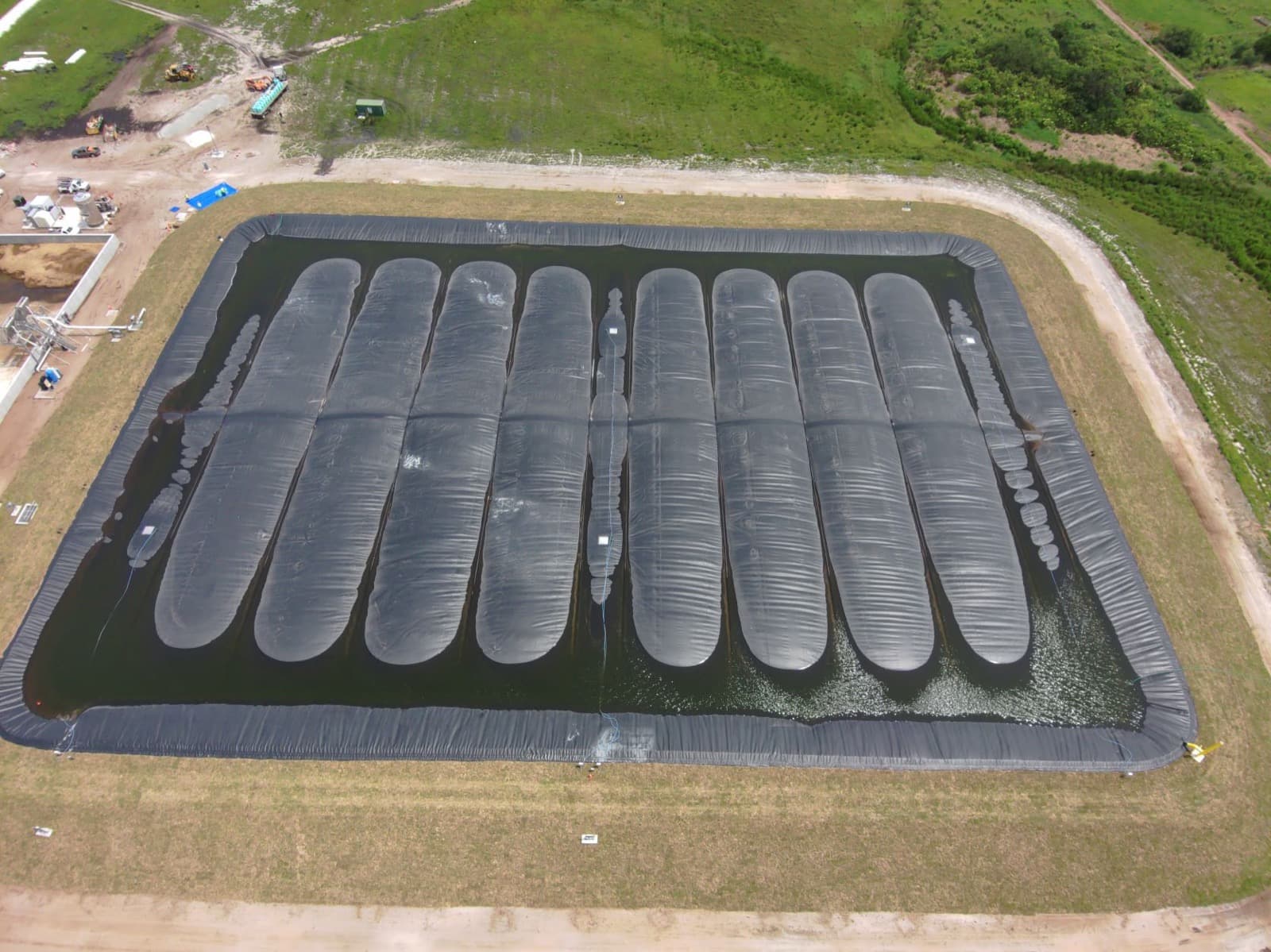
The question every dairy operator, food processor, and municipal waste manager eventually asks is the same: should we invest in a full renewable natural gas (RNG) facility, or is simple methane destruction through cap-and-flare the better economic decision? After 500+ installations and three decades of operational data, EFI has a clear perspective -- but the answer depends on your specific situation, waste stream volume, proximity to pipeline infrastructure, and risk tolerance.
The Capital Expenditure Gap
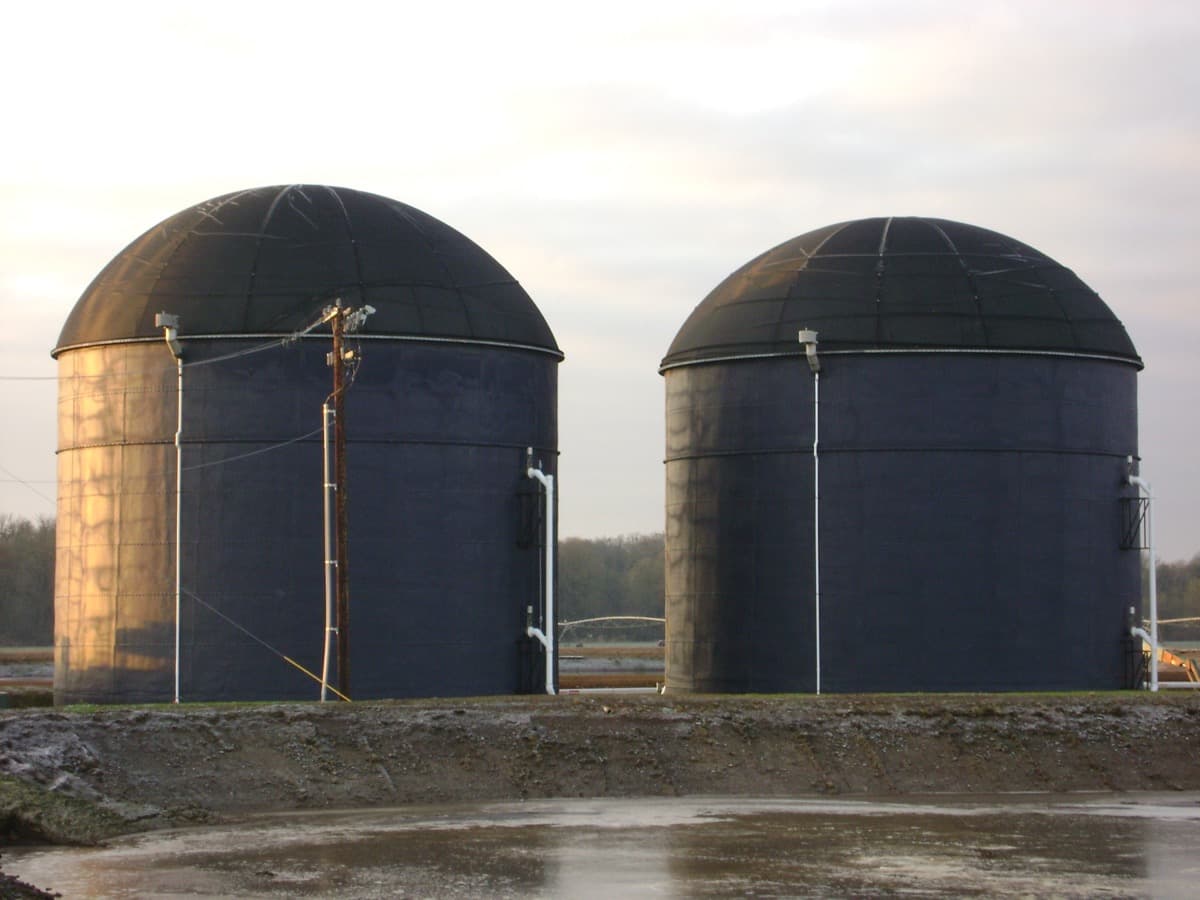
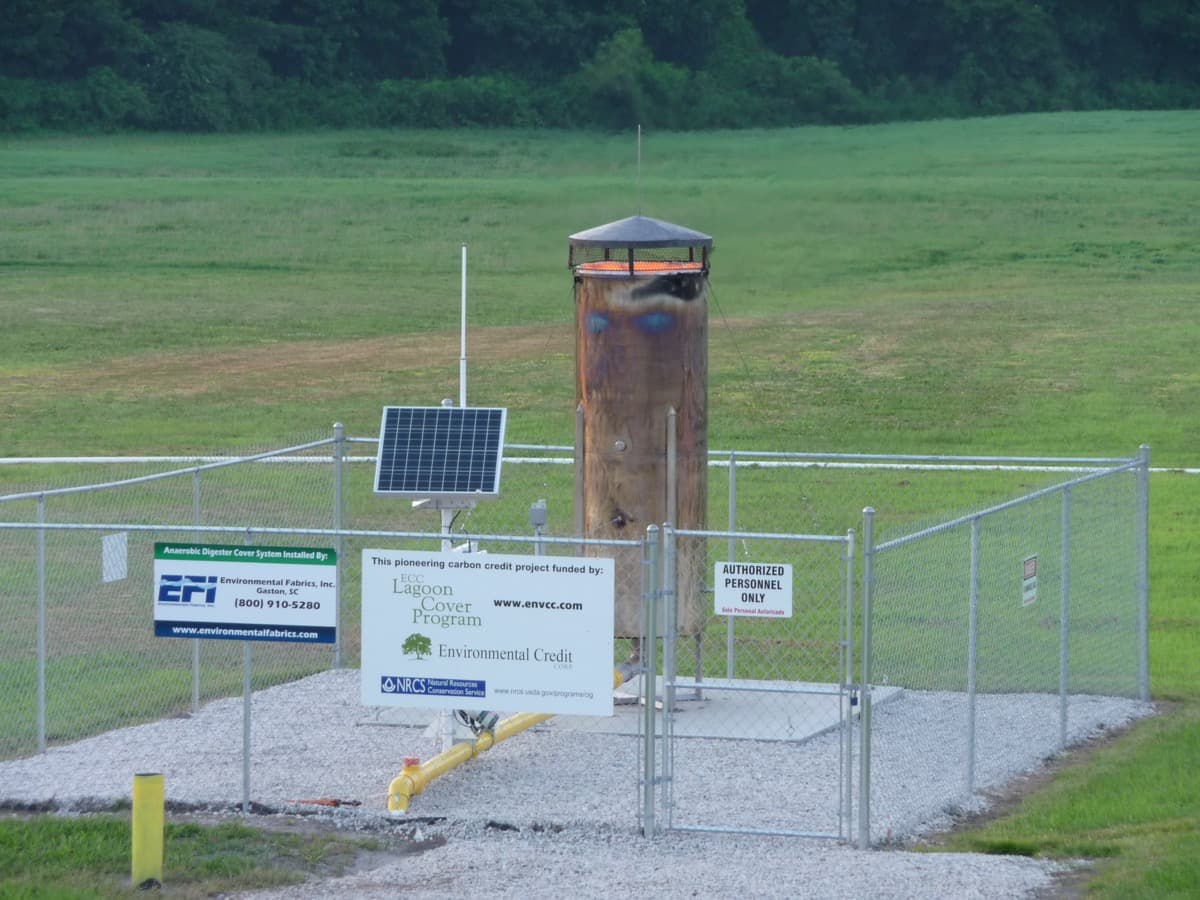
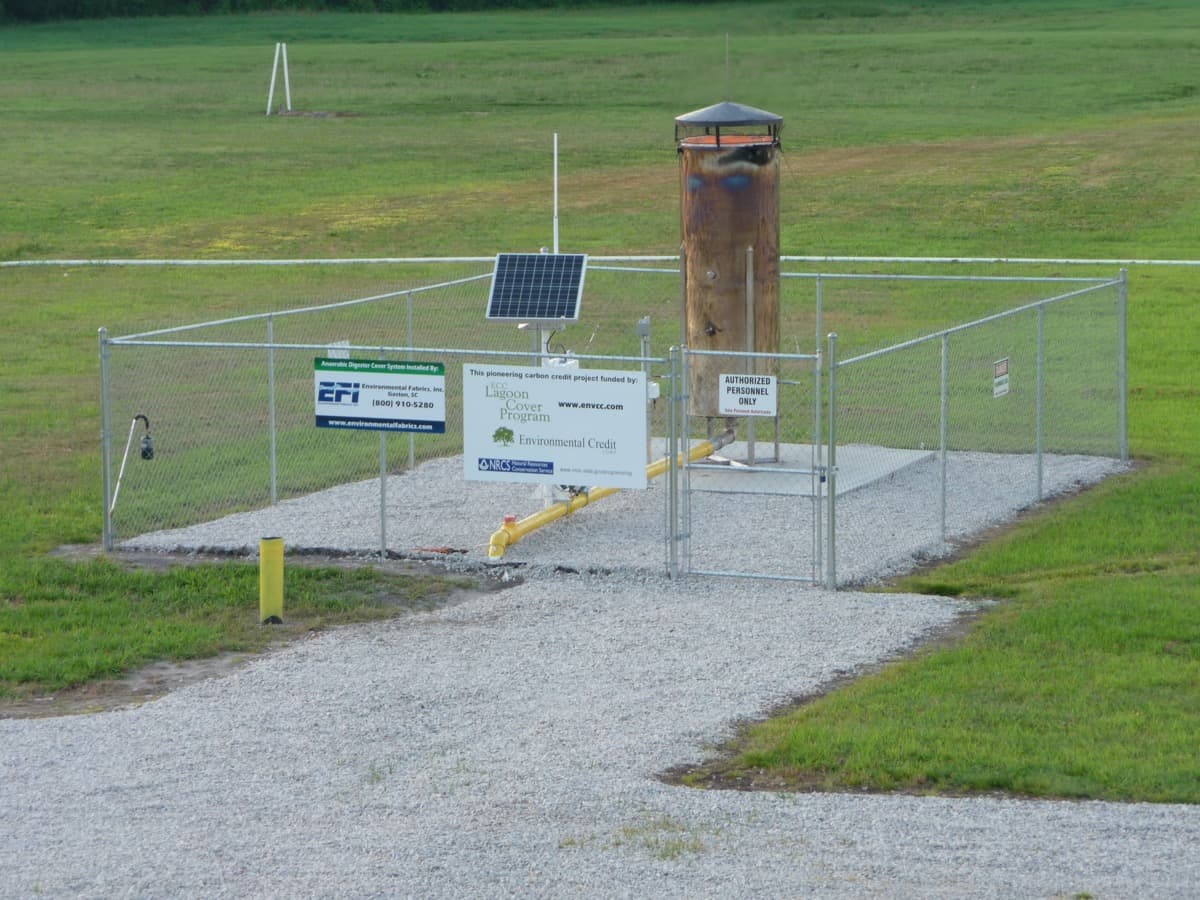
The most immediate difference between cap-and-flare and RNG is the upfront capital requirement. A complete covered lagoon digester with enclosed flare system typically costs between $300,000 and $1.5 million, depending on lagoon size, liner specifications, gas collection piping, and flare capacity. This includes site preparation, geosynthetic liner installation, gas collection manifolds, condensate management, and an enclosed flare unit rated for the expected biogas flow.
An RNG facility, by contrast, requires $15 million to $25 million or more for a mid-scale operation. That figure covers everything the cap-and-flare system requires plus gas conditioning equipment (H2S removal, siloxane removal, CO2 separation, moisture control), compression systems, pipeline interconnection infrastructure, gas quality monitoring instrumentation, and utility metering. For larger operations processing 1,000+ MMBtu per day, capital costs can exceed $50 million. The 10-50x cost differential is not a rounding error -- it fundamentally changes the project risk profile.
Revenue Streams Compared
RNG projects generate revenue primarily through the sale of pipeline-quality gas combined with environmental credits -- D3 RINs under the Renewable Fuel Standard, LCFS credits in California, and potentially state-level incentives. At peak credit prices (D3 RINs above $3.00, LCFS above $200/tonne), a well-performing RNG project could generate substantial revenue. The problem is that those peak prices are not the market reality in 2026. D3 RINs have fluctuated between $1.20 and $2.80 over the past 24 months, and LCFS credits have declined to under $75 from their 2022 highs above $200.
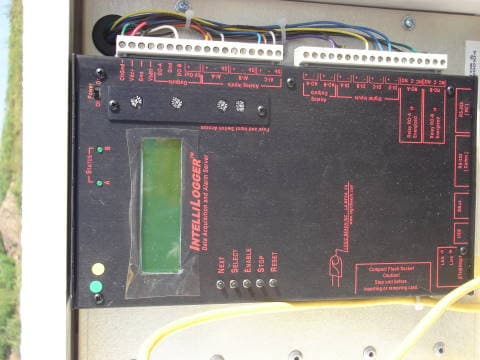
Cap-and-flare systems generate revenue through verified carbon credits from methane destruction. Under protocols like the American Carbon Registry (ACR) and Verra's Verified Carbon Standard (VCS), each tonne of methane destroyed generates carbon offset credits based on methane's global warming potential (28-84x CO2 depending on the time horizon used). A typical dairy operation destroying 500-2,000 tonnes of methane annually can generate $100,000 to $500,000+ in annual carbon credit revenue. The credit values are more stable than RIN markets, and the verification process is straightforward for enclosed flare systems with continuous monitoring.
The Timeline Factor
Time-to-revenue is where cap-and-flare has its most decisive advantage. A covered lagoon digester with flare can be designed, permitted, constructed, and commissioned in 3 to 9 months. The permitting process is relatively simple -- these are agricultural waste management systems, not industrial gas processing plants. There are no pipeline interconnection agreements to negotiate, no utility company coordination required, and no gas quality certification process.
RNG projects routinely take 3 to 5 years from initial feasibility study to first gas injection. Pipeline interconnection alone can take 12-24 months as the utility evaluates system capacity, negotiates metering and quality requirements, and completes the physical connection. Environmental permitting for an RNG facility is substantially more complex than for a flare system, often requiring air quality permits, wastewater discharge permits, and in some jurisdictions, an environmental impact assessment. Every month of delay is a month without revenue against a much larger capital base.
Risk-Adjusted Returns
When you combine the capex differential, revenue timeline, and credit market volatility, the risk-adjusted returns tell a clear story. Cap-and-flare projects consistently deliver IRRs of 30-80%, with payback periods of 1-4 years. The low capital base means that even in weak credit markets, the investment recovers quickly. A $500,000 cap-and-flare system generating $200,000 annually in carbon credits pays for itself in under three years, even before accounting for any regulatory compliance value or odor reduction benefits.
RNG projects, at current credit prices, are delivering IRRs of 5-15% in the best cases, with many projects failing to achieve positive returns at all. The USDA's 37% delinquency rate on RNG project loans is not an anomaly -- it reflects the structural mismatch between RNG project costs and current revenue potential. Projects underwritten assuming $3.00+ D3 RINs and $150+ LCFS credits are now operating in a market where those assumptions are 40-60% optimistic.
The Decision Framework
RNG can still make economic sense in narrow circumstances: operations with very large, consistent waste streams (typically 1,000+ MMBtu/day of raw biogas), direct proximity to pipeline infrastructure (within 1-2 miles), long-term fixed-price off-take agreements, and access to patient capital that can absorb multi-year construction timelines and credit market volatility. If all four conditions are met, RNG may deliver competitive returns.
For the other 90% of agricultural and municipal waste operations, cap-and-flare is the economically rational choice. Lower capex, faster deployment, simpler operations, and more predictable returns. The environmental benefit -- methane destruction -- is identical regardless of whether the gas is upgraded to pipeline quality or burned in an enclosed flare. The atmosphere does not distinguish between the two approaches. Your balance sheet will.
“Every dollar spent upgrading biogas to pipeline quality is a dollar that could have been spent capturing methane at three more sites. Scale matters more than molecule value when you're solving a methane problem.”
-- EFI USA