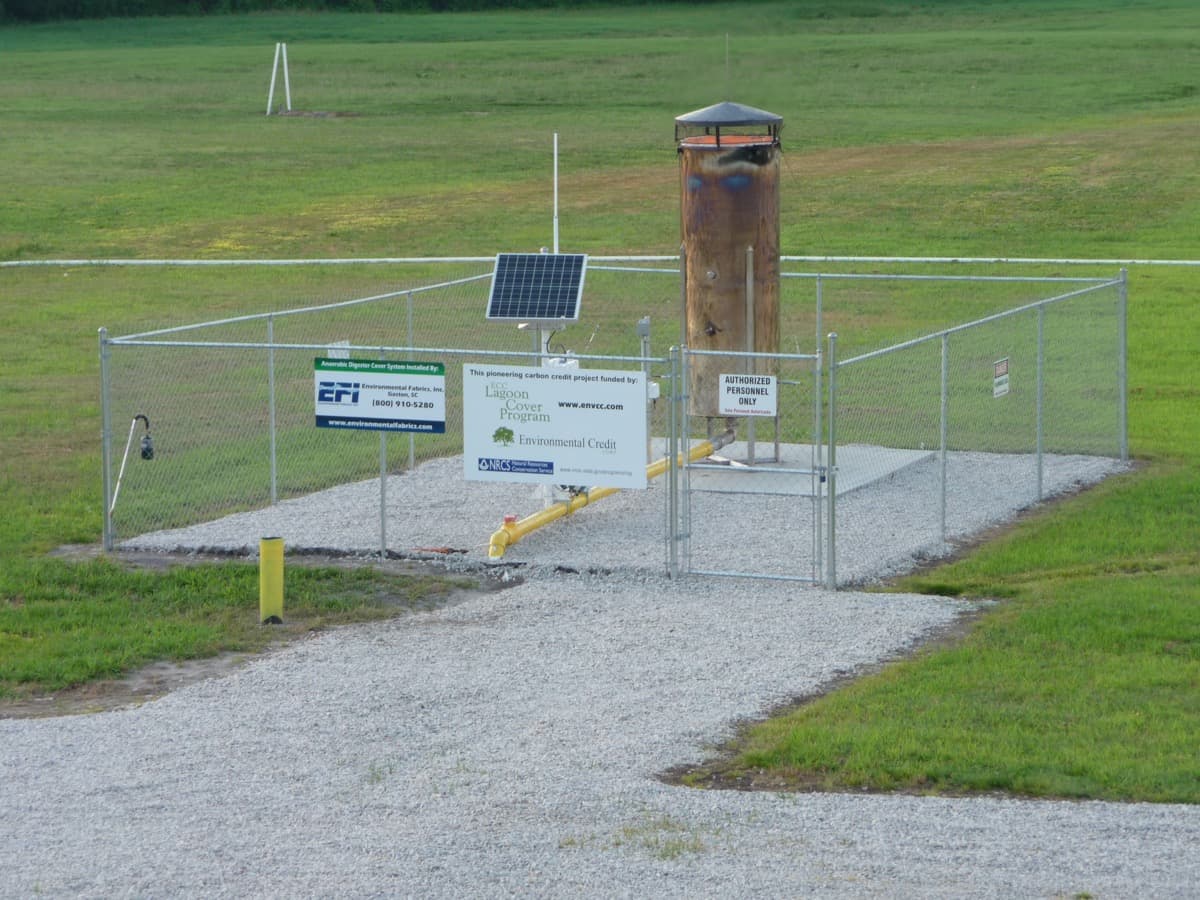
The ethanol industry generates large volumes of process water, stillage, and chemical byproducts that require engineered containment. Federal and state environmental regulations mandate secondary containment for bulk chemical storage and wastewater impoundments at ethanol production facilities. Getting containment wrong means potential groundwater contamination, regulatory enforcement actions, and production shutdowns that cost far more than the liner system would have.
What Needs Containment at an Ethanol Plant
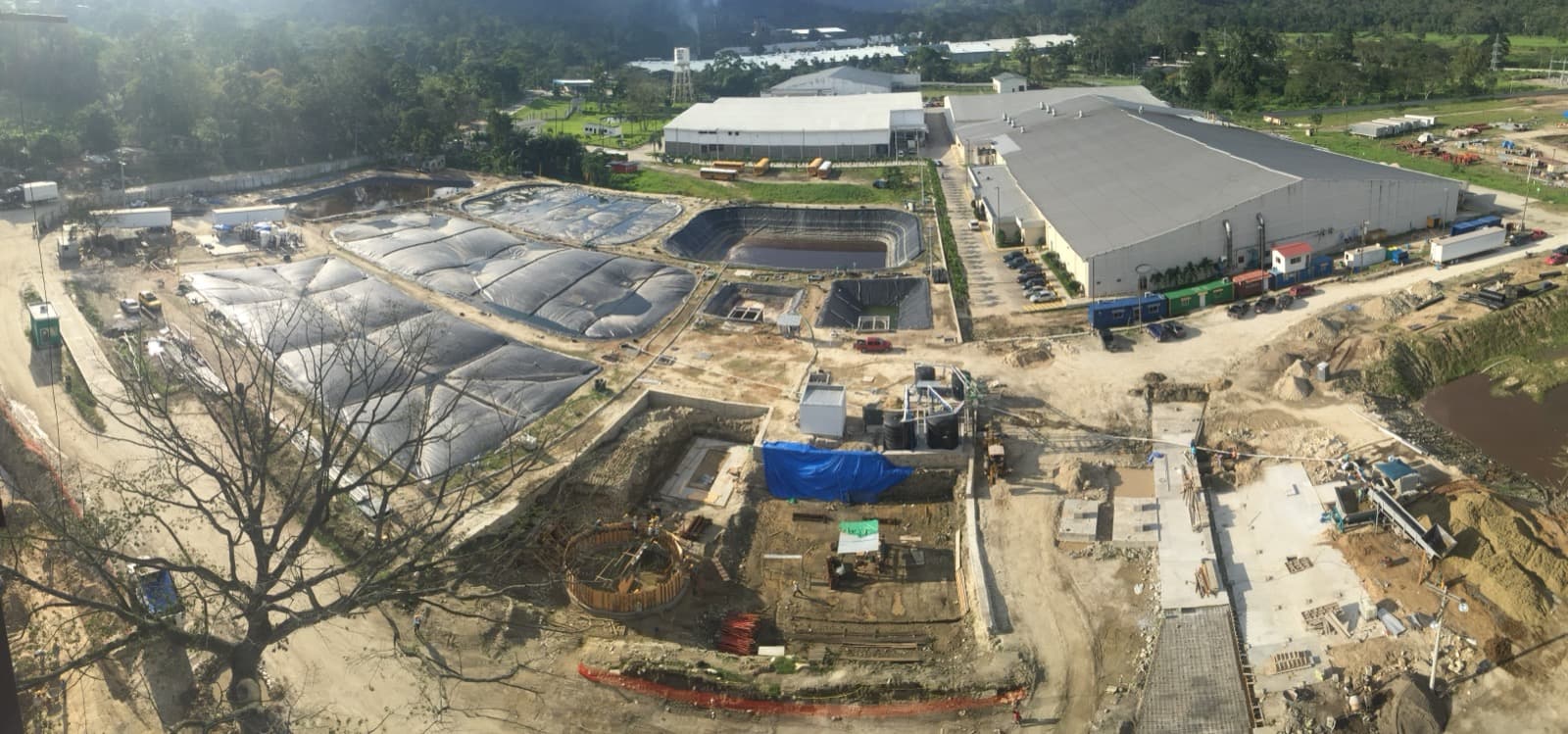
A typical dry-mill ethanol plant has multiple containment needs. Feedstock storage areas, corn piles, grain bins, and commodity sheds, generate contaminated stormwater runoff that must be captured and managed. Denaturant and chemical storage tanks require secondary containment per SPCC and EPA 40 CFR 112 regulations. Stillage and thin stillage holding ponds handle high-BOD organic waste streams that will contaminate groundwater on contact. Process water and cooling water lagoons manage thermal and chemical discharge. Each of these applications has different chemical exposure profiles, regulatory requirements, and liner performance demands.
EPA and State Regulatory Framework
- SPCC Rule (40 CFR 112): Requires secondary containment for bulk oil and denaturant storage with capacity to hold 110% of the largest tank volume
- RCRA Subtitle D: Governs non-hazardous solid waste impoundments including stillage ponds and process water lagoons
- Clean Water Act (NPDES): Regulates discharge of process water and stormwater; many states require zero-discharge from ethanol process water systems
- State-specific requirements: Many corn belt states (Iowa, Nebraska, Illinois, Indiana) have additional liner and monitoring requirements for ethanol plant impoundments that exceed federal minimums
- Groundwater monitoring: Most state permits require upgradient and downgradient monitoring wells with quarterly sampling for ethanol plant lagoons
Secondary Containment for Chemical and Fuel Storage
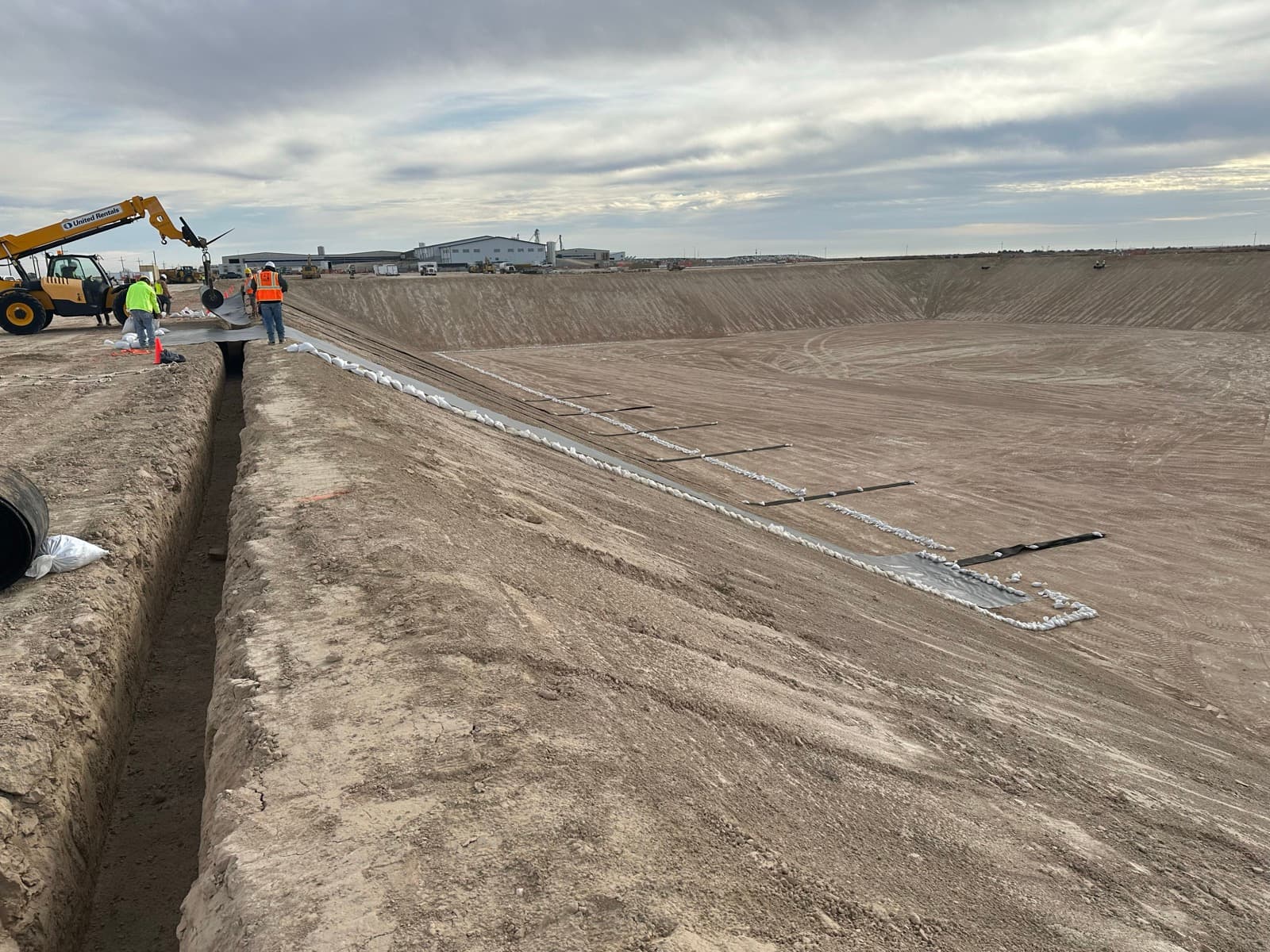
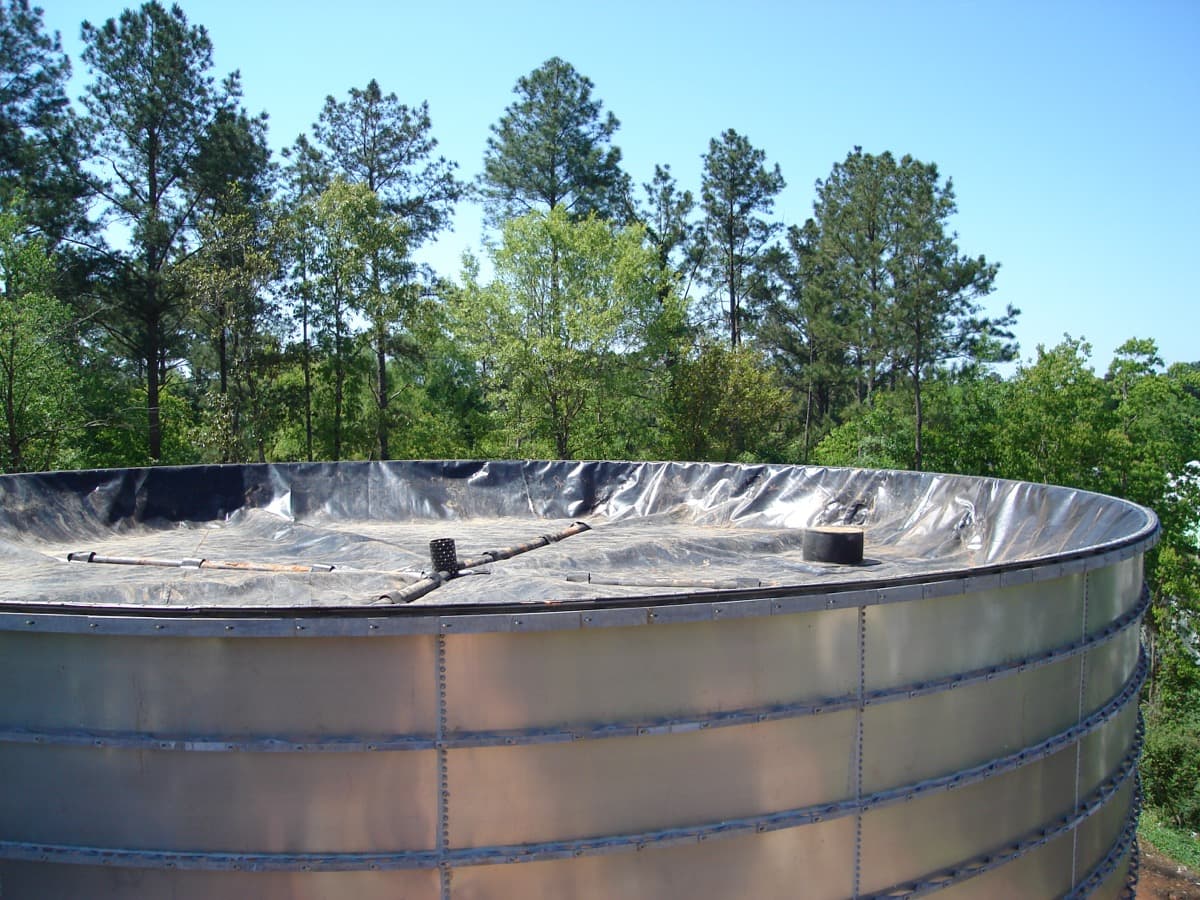
Ethanol plants store denaturant (typically gasoline), sulfuric acid, caustic soda, and other process chemicals in above-ground tanks. Federal SPCC regulations require secondary containment capable of holding 110% of the largest single tank or 100% of the largest tank plus sufficient freeboard to contain precipitation. HDPE liner systems are the standard solution, a 60-mil or 80-mil HDPE liner installed over a prepared subgrade with concrete or geomembrane containment walls. The liner must be chemically compatible with all stored materials, which for denaturant containment means using a fuel-resistant HDPE formulation or an additional chemical-resistant barrier layer.
Stillage Ponds and Process Water Lagoons
Stillage, the high-organic residual from distillation, is typically processed into distillers grains, but overflow and washdown water still requires impoundment. These ponds see high biological oxygen demand (BOD often exceeding 30,000 mg/L), elevated temperatures from fresh stillage discharge, and acidic pH levels that can drop below 4.0. Process water lagoons handle cooling tower blowdown, boiler blowdown, and general plant washdown. Both applications require engineered liner systems because the waste streams will migrate through native soils and contaminate groundwater rapidly. A single-lined 60-mil HDPE system is the minimum standard; many state permits now require double-lined systems with leak detection for stillage ponds.
HDPE vs Concrete: Choosing the Right System
Concrete containment is common for small secondary containment areas around tank farms where equipment traffic and point loads make geomembranes impractical. But for lagoons and large impoundments, HDPE liner systems are more cost-effective, faster to install, and provide equal or better chemical resistance. A concrete lagoon costs 3 to 5 times more per square foot than an HDPE-lined lagoon of equivalent capacity. Concrete also cracks, thermal cycling, differential settlement, and chemical attack cause concrete containment to develop leak paths within 5 to 10 years, requiring expensive repairs. HDPE systems, properly installed with quality-assured welding, provide 30+ years of service life with minimal maintenance. The exception is areas with heavy vehicle traffic, where concrete pads with HDPE underliner provide the best combination of durability and containment.
Design Considerations for Ethanol Plant Liners
- Chemical compatibility testing: Stillage and process chemicals must be tested against the proposed liner material per EPA 9090 immersion testing protocol
- Temperature resistance: Fresh stillage discharge can exceed 180°F, liner material and seam welds must maintain integrity at elevated temperatures
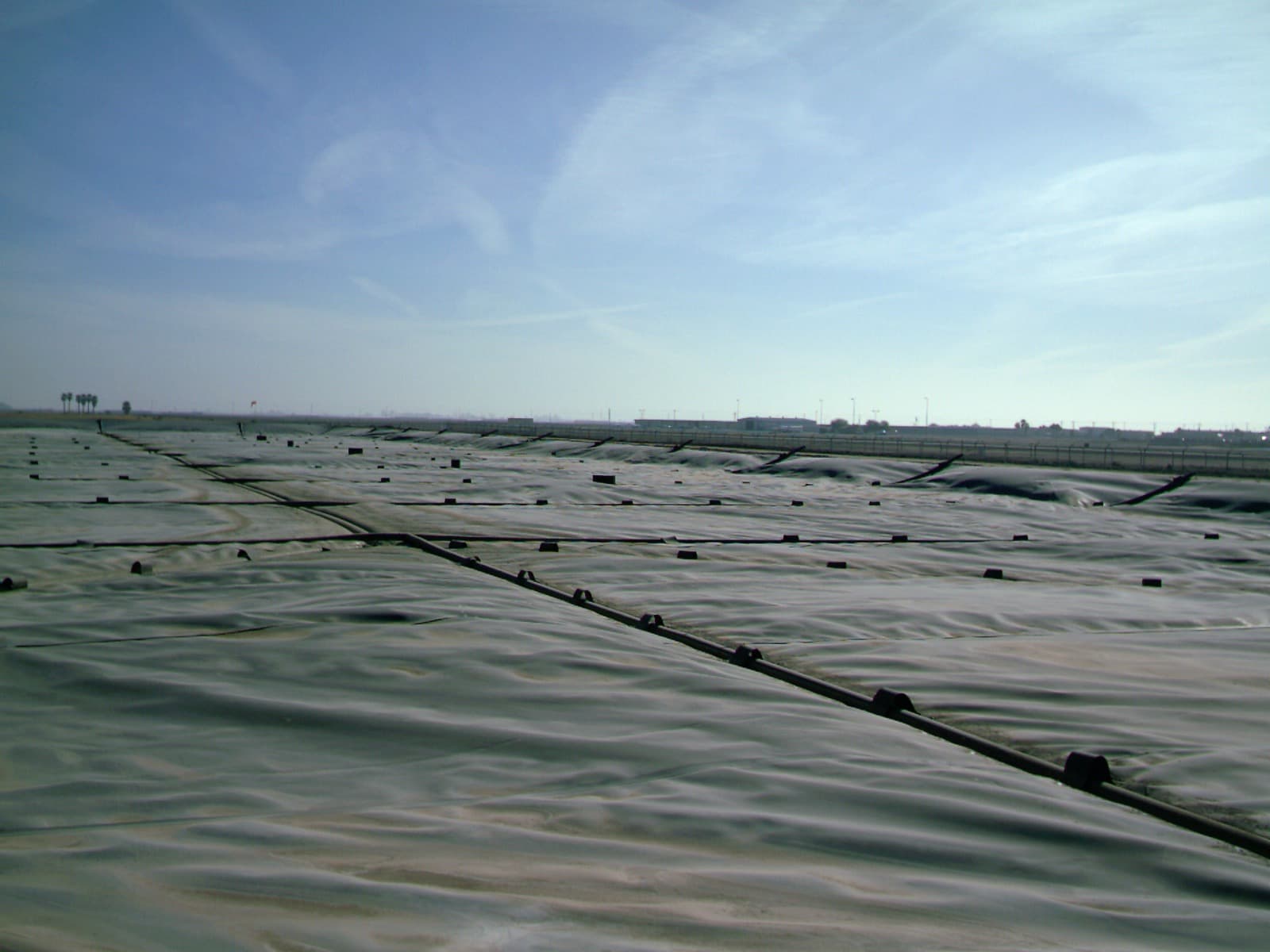
- Gas venting: Biological activity in stillage ponds generates methane and CO2 that can accumulate beneath the liner, causing uplift, gas venting systems or composite drainage layers are essential
- Slope stability: Lagoon side slopes should not exceed 3H:1V for HDPE installations to prevent liner sliding and ensure safe installation access
- Anchor trench design: High-wind zones common in corn belt states require deeper anchor trenches and may warrant concrete perimeter anchors
Avoiding Costly Compliance Gaps
The most expensive containment failures at ethanol plants are not liner failures, they are regulatory failures. Operators who install unlined or inadequately lined impoundments face EPA enforcement actions, state NOVs, mandatory groundwater remediation, and potential production shutdowns. Remediation costs for a single contaminated stillage pond regularly exceed $500,000, compared to $50,000 to $150,000 for a properly engineered HDPE liner system installed during construction. EFI USA has designed and installed containment systems at ethanol plants across the Midwest, providing turnkey liner solutions that meet both federal and state-specific requirements from day one.