A palm oil mill running 720 tons of fresh fruit per day discharges more than 1,000 cubic meters of effluent in the same 24 hours. At the Olmeca III mill operated by Grupo Hame in Tecun Uman, Guatemala, that effluent stream produces 24,000 cubic meters of biogas a day, and the mill runs on its own power.
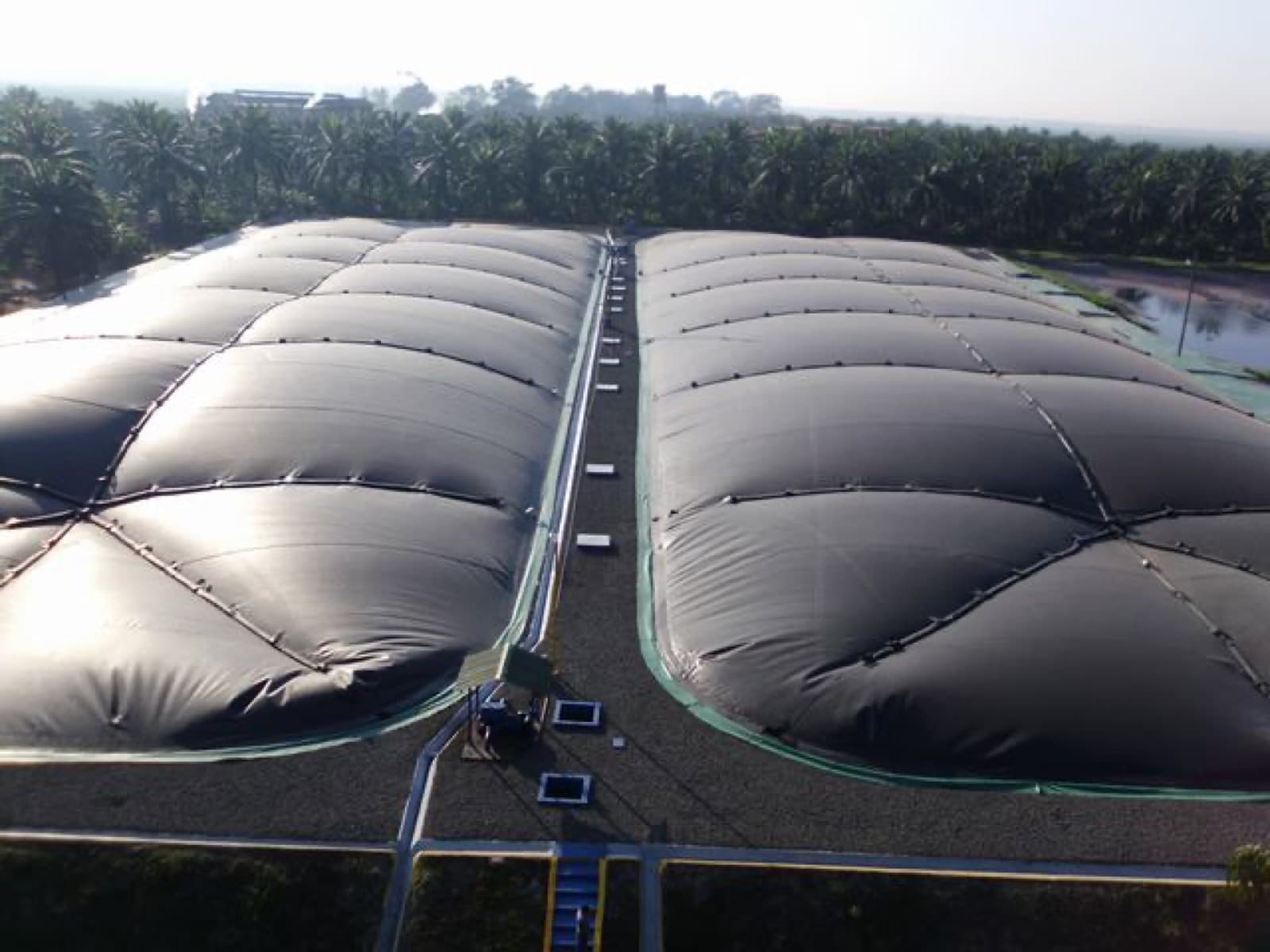
EFI fabricated and installed the anaerobic lagoon covers and the biogas collection system on that site, and the project was completed in 2009. It remains one of the clearest examples of what a concentrated agricultural wastewater stream will do once it is covered and measured. The engineering questions it raised are the same ones that come up on dairy and food processing lagoons in the United States.
Palm oil mill effluent is an unusually strong feedstock
Palm oil extraction is a water heavy process. Fruit bunches are sterilized with steam, threshed, pressed, and clarified, and water carries away the residual oil, fiber fines, and cell debris at every stage. What leaves the mill is hot, acidic, and heavily loaded with readily degradable organic material.
That loading is what separates mill effluent from most agricultural waste streams. Compared with dairy manure at a similar volume, palm oil mill effluent carries far more organic material per unit of liquid, and the bacteria in an anaerobic lagoon convert it quickly. At Olmeca III the numbers work out to roughly 24 cubic meters of biogas for every cubic meter of effluent entering the system, at 54 to 65 percent methane. A dairy lagoon of comparable surface area produces a fraction of that, because it is treating a more dilute stream.
Temperature is the constraint that gets overlooked. Effluent leaves the mill too hot to go directly under a cover, so mills hold it in open cooling ponds first. Two separate limits apply. The methanogens work best in a mesophilic range and lose ground when the incoming stream runs hot, and the geomembrane itself has a service temperature that has to be respected over a 20 year life. The cooling stage upstream of the covered cell is part of the design, not an afterthought.
What the cover has to do
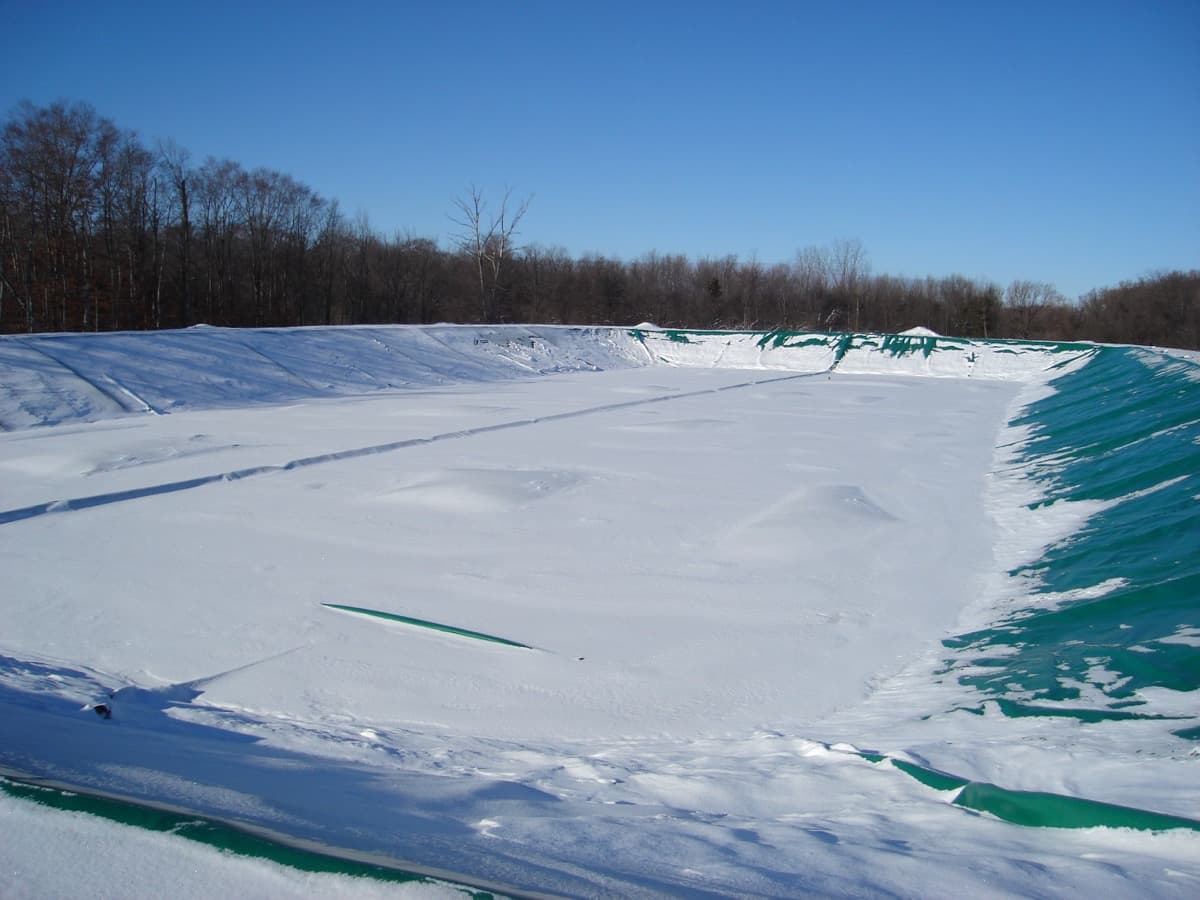
The covers at Olmeca III were fabricated from 60 and 80 mil HDPE. A cover on a stream like this is doing three jobs at once. It seals the surface so gas is collected instead of vented. It holds that gas at a stable pressure so the downstream equipment sees a steady supply rather than a fluctuating one. And it has to survive the site, where tropical UV load, heavy seasonal rainfall, and the corrosive gas underneath all act on the same sheet.
The perimeter anchor and the ballast layout are what determine whether the cover does those jobs. Gas collects under the sheet and lifts it, which is why a working cover has a pillowed shape rather than a flat one. Ballast controls where that gas travels and directs it toward the collection points instead of letting it pool in a corner. Rainwater has to be shed rather than allowed to pond, and condensate has to drain to a low point where it can be removed.
None of this is exotic, but all of it has to be resolved before fabrication starts. Panels are cut and welded to a specific basin geometry, and the gas collection layout is built into the cover as it is made. Changes in the field are expensive and rarely as good as the design that was worked out on paper.
Two megawatts, continuously
The captured gas feeds generators producing 2 MW of continuous electrical output, which makes the plantation energy self-sufficient. That figure is checkable from the gas numbers, and it is worth walking through, because it is the calculation that decides whether a project of this kind is worth building.
At 24,000 cubic meters of biogas per day and roughly 60 percent methane, the stream delivers about 14,400 cubic meters of methane daily. Methane carries roughly 35.8 megajoules per cubic meter, so the site is producing on the order of 6 MW of thermal energy on a continuous basis. Reciprocating gensets convert about a third of that to electricity. Two megawatts is what the arithmetic predicts, and it is what the site delivers.
For the mill the practical result is that its electrical demand is met by a waste stream it was already producing and already had to manage. The generation is not a benefit layered on top of a treatment project. It is the reason the treatment project pays for itself.
The measurement system is part of the asset
The site generates 37,370 Certified Emission Reductions annually, purchased by Bunge Emissions Group. A monitoring system tracks the volume of biogas collected and converts that measurement to carbon dioxide equivalent for verification.
That instrumentation is not an accessory to the gas system. Under any credit framework, an unmeasured cubic meter of methane is worth nothing. Flow, methane concentration, and confirmed destruction or utilization all have to be recorded continuously and in a form a third party verifier will accept. Retrofitting that instrumentation onto a system built without it costs more than installing it at the start, and it usually leaves a gap in the record that cannot be recovered.
Credited volume is also lower than captured volume, and owners are often surprised by the size of that difference. Baseline methodologies credit only the emissions that would otherwise have occurred under the prior practice, then subtract the project's own emissions. Anyone sizing a project on captured gas rather than on the baseline calculation is working from the wrong number. That math belongs in the analysis before the capital decision, not after.
What carries over to work in the United States
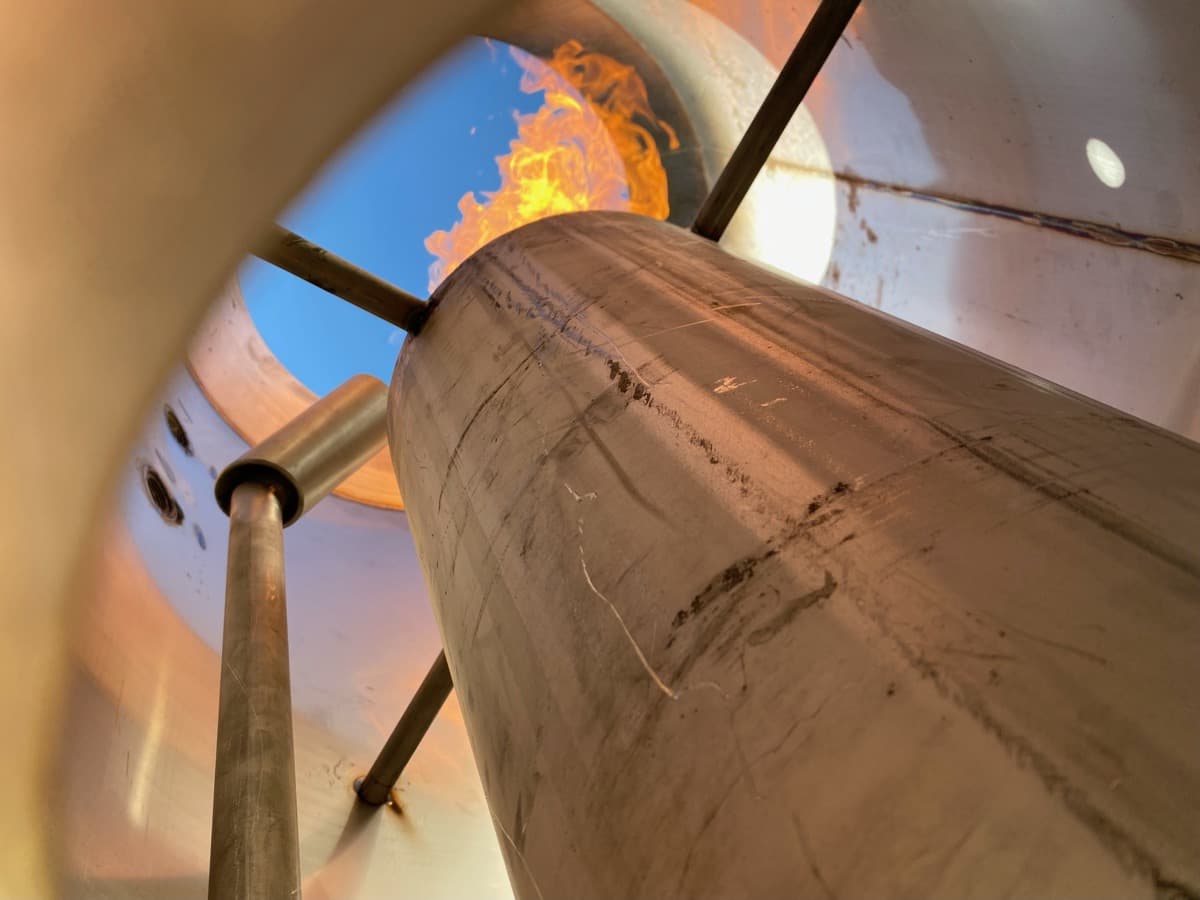
Olmeca III is one of more than 300 covered lagoon digester systems EFI has installed across Latin America, and the sequence that made it work is the sequence we still follow. Characterize the feedstock before sizing anything. Size the cover and the gas train to the gas the stream will realistically produce, not to the surface area of the basin. Design the measurement system in from the beginning. Decide what the gas is for, whether power, flaring, or upgrading, before the cover is fabricated, because that decision changes the treatment train ahead of it.
The feedstocks change from site to site. Dairy manure, swine waste, poultry processing water, and brewery and food processing effluent all behave differently in a lagoon, and each one produces a different quantity and quality of gas. The engineering discipline that turns any of them into a working system does not change.
“The mill was already producing the gas. The work was capturing it, holding it at a usable pressure, and measuring it well enough that someone would pay for it.”
-- EFI USA
EFI USA has been design-building covered lagoon and digester systems since 1993, from our headquarters in Gaston, South Carolina, with projects across the United States and Latin America. If you are evaluating whether a high-strength wastewater stream at your facility can support a covered digester, we can review the loading and tell you what it would realistically produce.