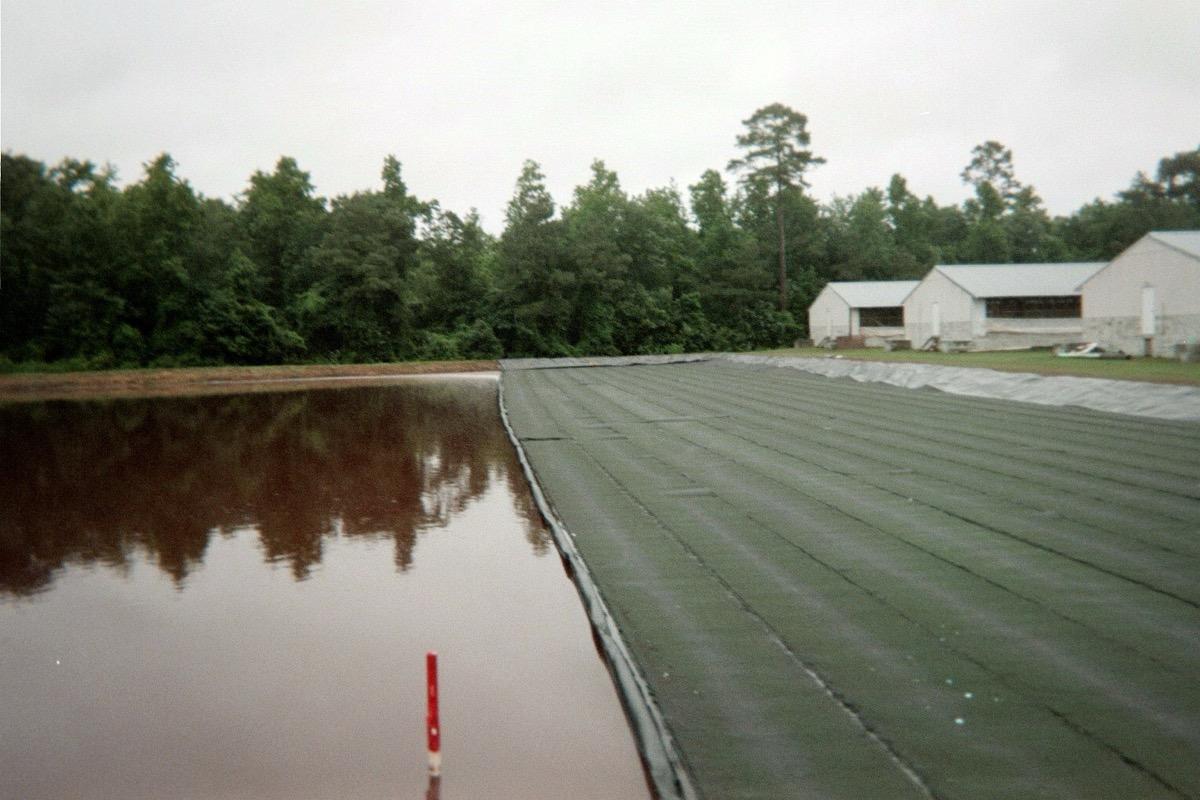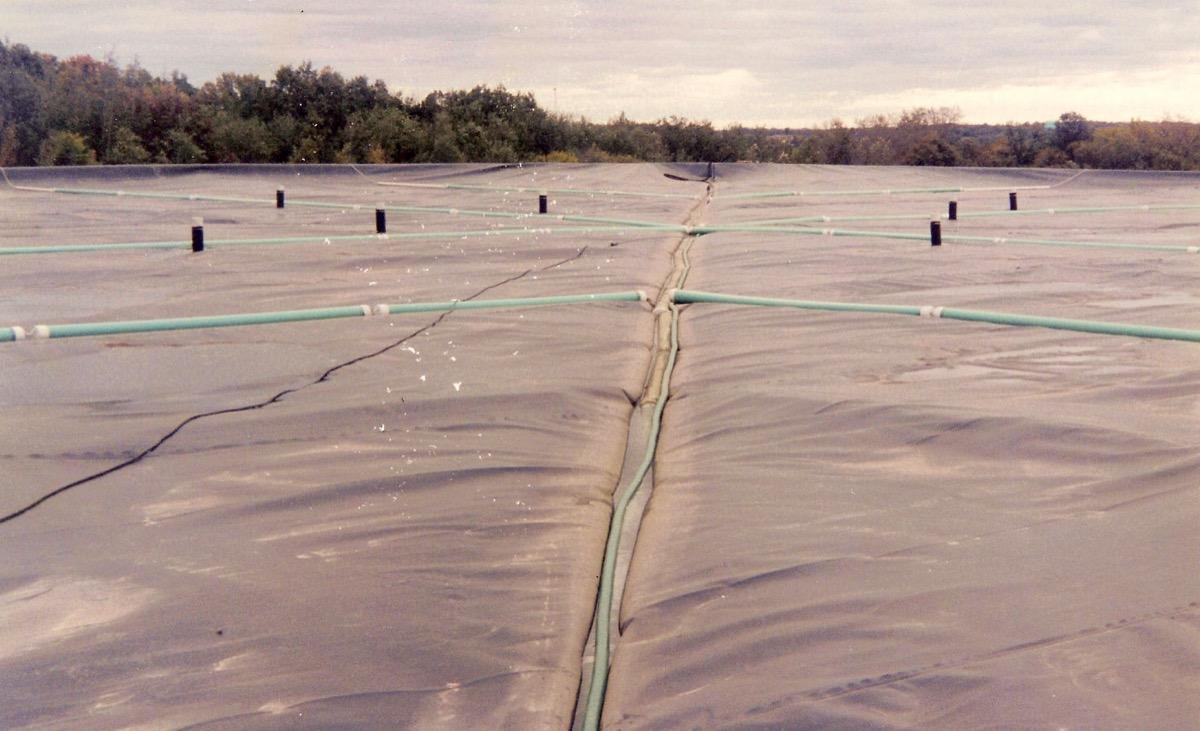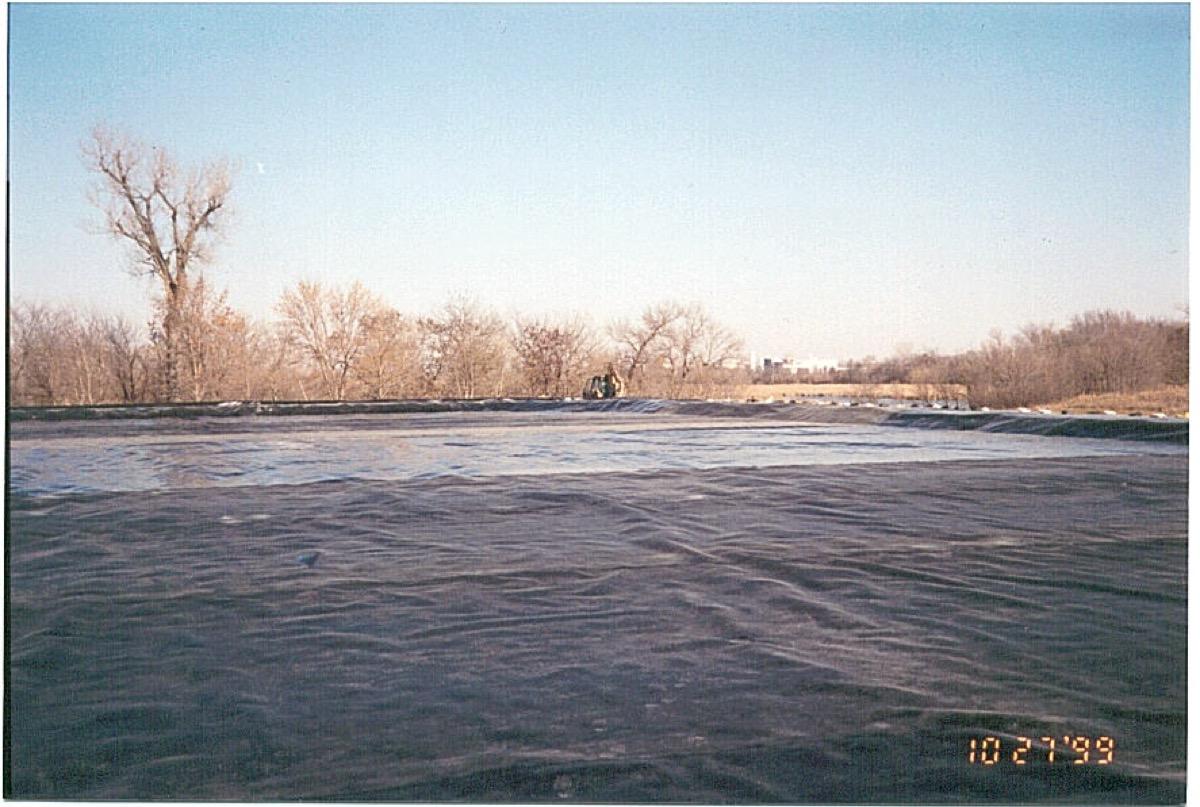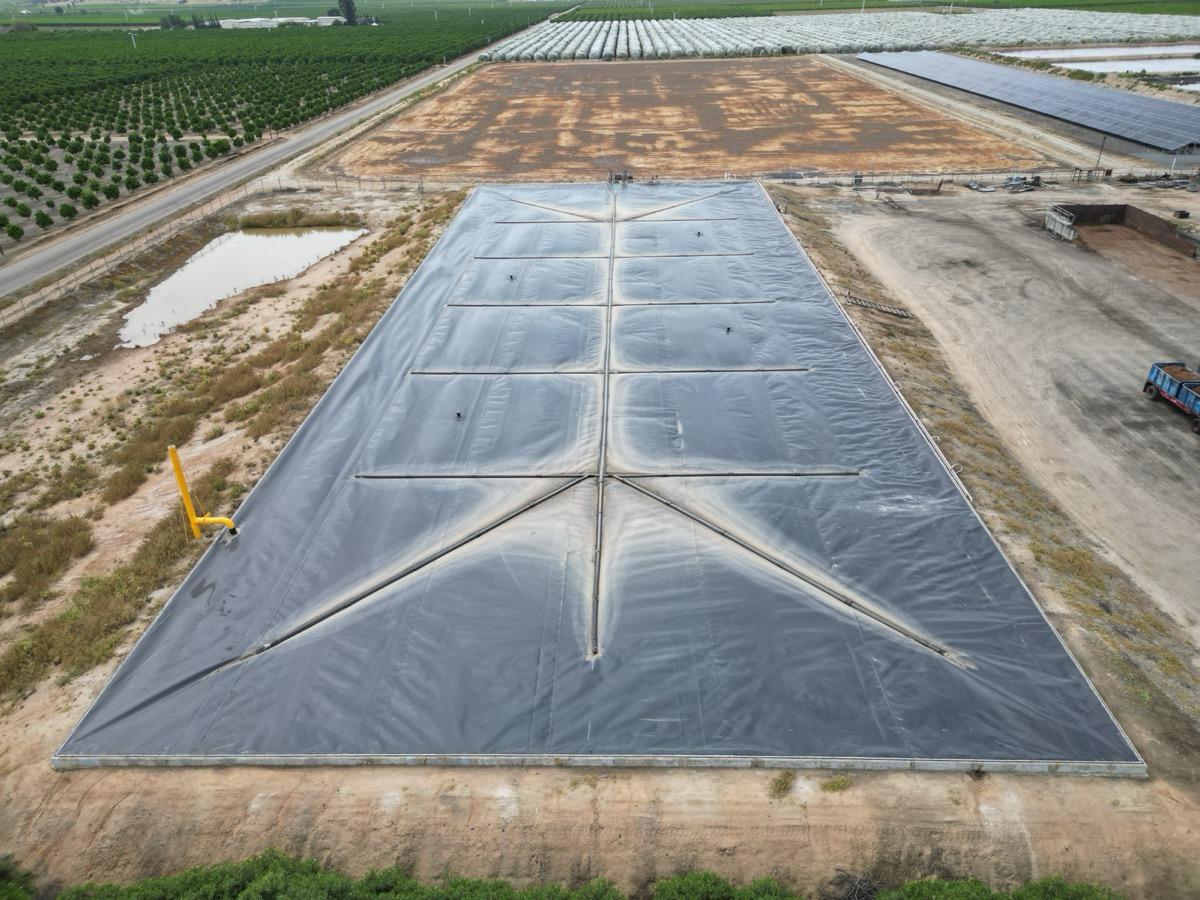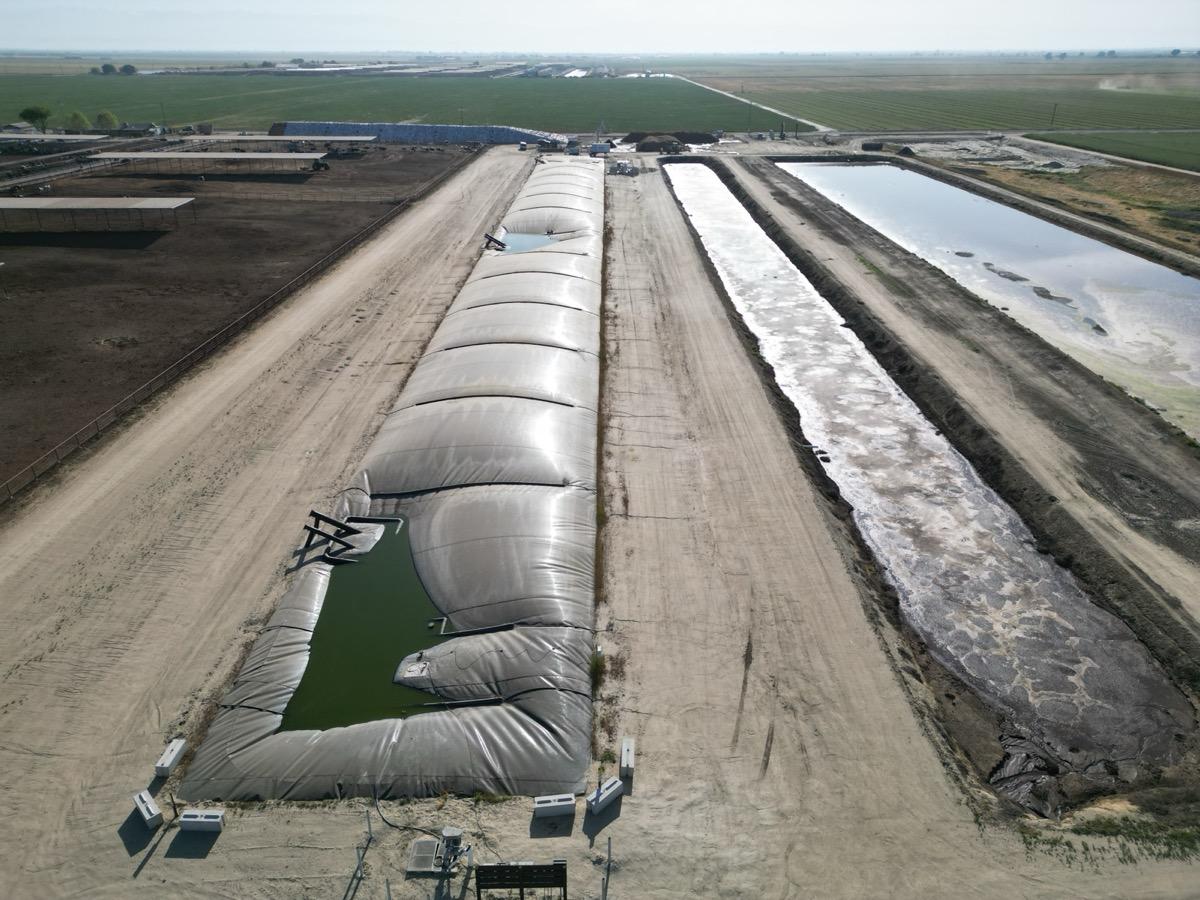
EFI's covered lagoon digester specification calls for at least ten access hatches, six sample ports and three manway hatches in every gas-tight cover. All of them carry gas seals. Each one is a planned hole in a membrane whose whole job is to keep gas in.
That looks like a contradiction until you consider how long a cover stays on. The lagoon under it keeps working for decades. Someone will need to sample it, measure the sludge, check a pipe, or reach a damaged section. The openings decide whether that work happens through a sealed port or by cutting into the cover.
What the specification calls for
The minimums come from EFI's condensate and sludge management specification for covered lagoon digesters:
- Access hatches: at least 10, each at least 1.5 feet in diameter or 1.5 by 1.5 feet, gas-sealed.
- Sample ports: at least 6, each 6 inches, gas-sealed, for wastewater and sludge sampling.
- Manway hatches: at least 3, located along or near the center of the lagoon, gas-sealed.
- Sludge draw-off pipes: run across the entire digester floor and terminated at the berm for a pump connection.
- Stormwater sumps on impermeable covers: automatic submersible pumps, with sumps no more than 50 feet apart.
These are minimums. A long basin, a basin with baffles, or one with mixers or recirculation lines may need more. The count follows the work the owner expects to do under the cover.
Sample ports: reading the lagoon without opening it
A covered lagoon cannot be checked by looking at it. Sludge depth, liquid quality and solids buildup all sit under the membrane. A 6 inch sealed port lets an operator lower a sampler or a sludge judge and close the port again without venting the gas space.
Where the ports go matters as much as how many there are. Ports clustered near the inlet tell you about the inlet. Spread along the length of the basin, they show how sludge is building up from one end to the other. That profile is what a removal plan is built on, as EFI covered in its earlier post on sludge in covered lagoons.
Manways belong in the middle
The perimeter of a cover can be reached from the berm. The center cannot. That is why the specification puts the three manway hatches along or near the lagoon center, where inspection and equipment access would otherwise mean working out across the membrane.
Access hatches fill in the ground between the berm and the center. Spread across the cover, they put most of the basin within reach of a sealed opening.
Some openings are pipes
Not every way into the basin is a hatch. Draw-off pipes are laid across the floor before the cover goes on and brought out at the berm. To remove standard sludge, a pump connects at the berm and withdraws it. If the sludge is too thick to pump, the specification describes reversing the flow: pump low-solids water from the upper zone into the draw-off pipe to fluidize the thickened sludge, then reverse again and withdraw.
The gas side has its own openings. Varec Figure No. 246 rotating disc drip traps sit at every low point in the gas piping. When the gas connection is open the drain is closed, and the reverse, so condensate leaves without letting gas out. P-trap moisture separators work only while they are full of water, which is why the specification lists checking them as a daily task.
What work under a cover looks like
Two EFI case histories show what work below a cover can involve. At Brown Packing in Gaffney, South Carolina, in 2006, the worn cover on the anaerobic digester was removed and sludge was taken out before EFI installed the new 142 by 276 foot insulated cover. At Excel Corporation in Fort Morgan, Colorado, in 1996, a damaged cover had to be cleared from a treatment cell that could not be taken out of service, and EFI sent divers to remove the damaged material and weights.
Neither record says the original covers lacked access, and neither should be read that way. They show the scale of work that sits below a cover over its life, and why the way in is worth settling before the membrane goes on.
Every opening is also a leak path
EFI's post on finding leaks in installed covers lists access hatches, sample lines and penetration boots among the places leaks concentrate, along with the perimeter and seam intersections. A hatch left unlatched after sampling lets air in. A dry P-trap is an open pipe to atmosphere.
So each opening gets a gas seal, a position where it will actually be used, and a place on the inspection round. An operator who records oxygen in the gas analysis has an early warning when one of them is not closing.
Questions to settle before the cover is built
Openings are easiest to place while the cover is still on paper. Adding a penetration after the fact means cutting into a gas-tight membrane and welding a repair on a cover in service. Before fabrication, the owner and engineer should be able to answer:
- Where will sludge build up first, and where do the sample ports need to be to measure it?
- Which pipes, mixers or pumps will need service, and is there a hatch within reach of each?
- Can the center of the basin be reached without walking the membrane?
- Where do the draw-off lines come out at the berm, and can a pump truck reach them?
- Which hatches and traps go on the daily round, and who checks that each one is sealed?
Access is designed in
EFI USA has fabricated and installed floating covers, liners and biogas collection systems from Gaston, South Carolina since 1993, with more than 30 years in geosynthetics. Its covered lagoon digester work includes more than 500 systems, roughly 82 percent of the US covered lagoon digester market. On a new cover, EFI settles the hatch, port and draw-off layout with the cover design, based on the work the owner expects to do under it.
Send EFI the basin dimensions, the inlet and outlet locations, any mixers or recirculation lines, and the sludge plan. The openings can then be placed for the work the basin will need over the life of the cover.